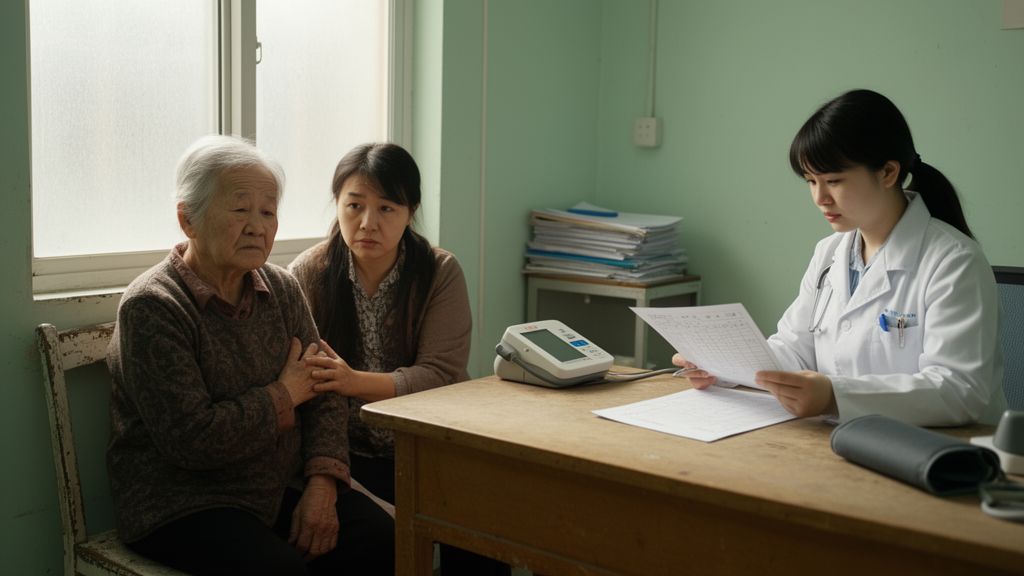
General practitioners and family caregivers in urban Beijing face overlapping barriers to providing integrated dementia care after diagnosis, according to a qualitative study published in BMC Primary Care.
The analysis identified seven themes with 16 sub-themes, mapped onto the model’s six dimensions of integrated care. At the clinical level, the researchers found insufficient proactivity and integration in clinical services, with care described as reactive rather than anticipatory. At the professional level, there was a lack of institutional guidance for interprofessional collaboration, leaving doctors and other providers without a clear framework for working together around a shared patient.
At the organisational level, existing inter-organisational collaboration mechanisms were found to be ineffective, and at the system level, top-level design was judged to fail to meet practical needs. Functional gaps compounded these problems: the study reports significant obstacles to information continuity and a lack of workable dementia care pathways, meaning that records and referrals do not follow patients smoothly between providers and that caregivers lack navigable routes to support services.
The final dimension concerned values. The authors found that person-centred care remains superficial in practice, with misaligned incentives cited among the barriers alongside fragmented information continuity and weak coordination between professionals and organisations. Importantly, the study characterises the functional gaps in information, navigation, and practical tools as compounding the clinical, professional, and organisational barriers rather than operating in isolation, so that problems in one dimension reinforce those in others.
The study’s authors conclude that practice and policy should prioritise GP-led care planning, formal care-navigation roles, dementia-sensitive payment models, and shared information systems in order to address these interrelated barriers. Such measures, they suggest, could strengthen the continuity and integration of post-diagnostic dementia care in China, where primary care is the preferred setting for integrated dementia support but faces substantial structural and operational obstacles.
The authors note that the identified barriers correspond to the dimensions of the Rainbow Model of Integrated Care, providing a structured account of where Beijing’s primary care system falls short of proactive, continuous, and coordinated post-diagnostic dementia support, and where policy attention may be directed.
Subject of Research: Barriers to integrated post-diagnostic dementia care in urban Beijing primary care
Article Title: Intersecting challenges in integrated post-diagnostic dementia care in urban Beijing primary care: a qualitative study using the Rainbow Model of Integrated Care
Article References: Zhu, C., Li, H., Shao, S., Feng, Z., Li, H., Du, J., & Zhang, J. (2026). Intersecting challenges in integrated post-diagnostic dementia care in urban Beijing primary care: a qualitative study using the Rainbow Model of Integrated Care. BMC Primary Care. https://doi.org/10.1186/s12875-026-03586-x
Image Credits: AI Generated
DOI: 10.1186/s12875-026-03586-x
Keywords: dementia, primary care, Beijing, qualitative study, integrated care, caregivers, general practitioners, care pathways, health policy, Rainbow Model of Integrated Care, Intersecting, challenges
News Source: Ophelia Keating. (October 28, 2026). Beijing primary care struggles to deliver integrated post-diagnostic dementia care. Scienmag.