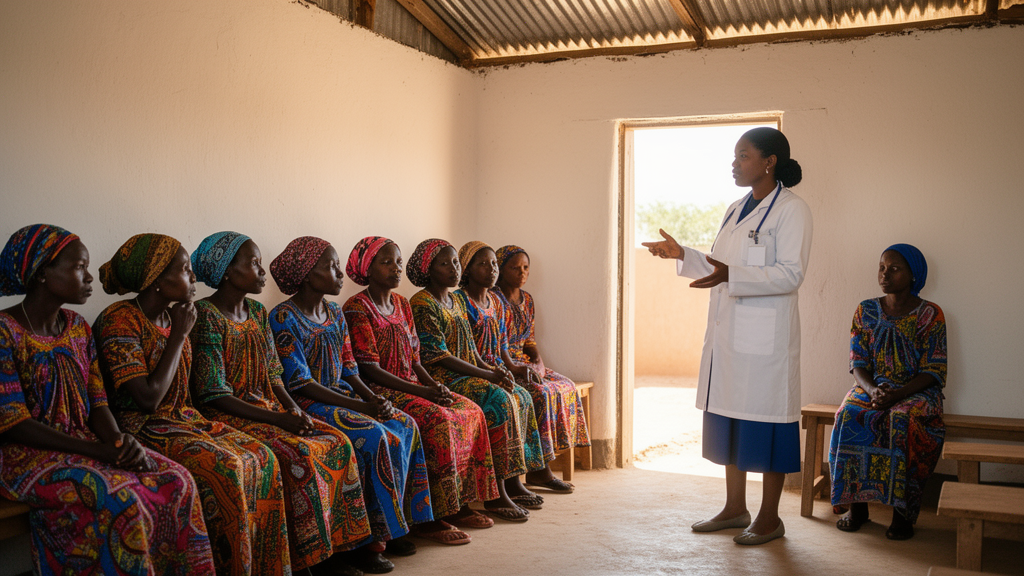
Nearly 85 percent of rural women attending public health facilities in Dalle district, Sidama National Regional State, Ethiopia, had poor knowledge of breast cancer, according to a facility-based cross-sectional study published in BMC Public Health. The study, conducted among 356 women aged 18 years and older who lived in rural kebeles of the district and attended selected public health facilities for reproductive health services, also found that 38.76 percent had inadequate knowledge of cervical cancer.
Attitudes toward the two cancers were similarly concerning. Negative attitudes toward breast cancer were reported by 53.36 percent of participants, while 54.71 percent held negative attitudes toward cervical cancer.
The researchers collected data using a pretested structured questionnaire. Descriptive statistics were used to summarize participant characteristics and the distribution of study variables, while binary and multivariable logistic regression analyses were used to identify factors associated with breast cancer knowledge. Statistical significance was set at p < 0.05 with 95 percent confidence intervals.
Three factors emerged as significantly associated with better breast cancer knowledge. Younger women had higher odds of good knowledge, with an adjusted odds ratio of 5.22 (95 percent CI: 1.72–15.90). Higher educational attainment was also linked to better knowledge, with an adjusted odds ratio of 6.54 (95 percent CI: 2.91–14.73). Access to information raised the odds as well, with an adjusted odds ratio of 3.21 (95 percent CI: 1.66–6.21).
The study’s authors note that breast and cervical cancers are the leading causes of cancer-related morbidity and mortality among women worldwide, and that Ethiopia has limited context-specific evidence on women’s knowledge, attitudes, and preventive practices related to these cancers in rural communities. The research was designed to evaluate these dimensions among rural women in Dalle district, filling a gap in locally relevant evidence.
The authors conclude that among rural women, knowledge and preventive practices related to breast and cervical cancer were limited, with substantial gaps in cancer-related knowledge, unfavorable attitudes, and low breast self-examination practice. They propose strengthening community-based and school-based, age-appropriate health education delivered through accessible information channels as a way to improve cancer knowledge, attitudes, and preventive practices among rural women.
As a cross-sectional study conducted at health facilities among women seeking reproductive health services, the findings describe the participants surveyed at a single point in time and cannot establish causal relationships between the associated factors and knowledge. The sample was drawn from women attending selected public facilities in one district, so the results reflect that specific population and setting. Within those limits, the study provides a detailed picture of where knowledge and preventive behavior gaps lie in this rural Ethiopian population, and identifies education and information access as the characteristics most strongly tied to better breast cancer knowledge among the women studied.
Subject of Research: Knowledge, attitudes, and preventive practices related to breast and cervical cancer among rural women in Dalle district, Sidama, Ethiopia
Article Title: Knowledge, attitudes, and preventive practices related to breast and cervical cancer among rural women in Sidama, Ethiopia: a facility-based cross-sectional study
Article References: Tuasha, N., Rike, M., & Anato, T. (2026). Knowledge, attitudes, and preventive practices related to breast and cervical cancer among rural women in Sidama, Ethiopia: a facility-based cross-sectional study. BMC Public Health. https://doi.org/10.1186/s12889-026-30042-3
Image Credits: AI Generated
DOI: 10.1186/s12889-026-30042-3
Keywords: breast cancer, cervical cancer, Ethiopia, rural women, health knowledge, breast self-examination, cross-sectional study, health education, public health, Sidama, Knowledge, attitudes
News Source: Nathaniel Bowman. (October 28, 2026). Rural Ethiopian women show large gaps in breast and cervical cancer knowledge. Scienmag.