• HOME
  • NEWS
  • EXPLORE
    • CAREER
      • Companies
      • Jobs
    • EVENTS
    • iGEM
      • News
      • Team
    • PHOTOS
    • VIDEO
    • WIKI
  • BLOG
  • COMMUNITY
    • FACEBOOK
    • INSTAGRAM
    • TWITTER
Wednesday, October 28, 2026
BIOENGINEER.ORG
No Result
View All Result
  • Login
  • HOME
  • NEWS
  • EXPLORE
    • CAREER
      • Companies
      • Jobs
        • Lecturer
        • PhD Studentship
        • Postdoc
        • Research Assistant
    • EVENTS
    • iGEM
      • News
      • Team
    • PHOTOS
    • VIDEO
    • WIKI
  • BLOG
  • COMMUNITY
    • FACEBOOK
    • INSTAGRAM
    • TWITTER
No Result
View All Result
Bioengineer.org
No Result
View All Result
Home NEWS Science News Health

Diffusion-enhanced AI framework segments and classifies brain tumors with 98.1% accuracy

by
October 28, 2026
in Health, Technology
Reading Time: 2 mins read
0
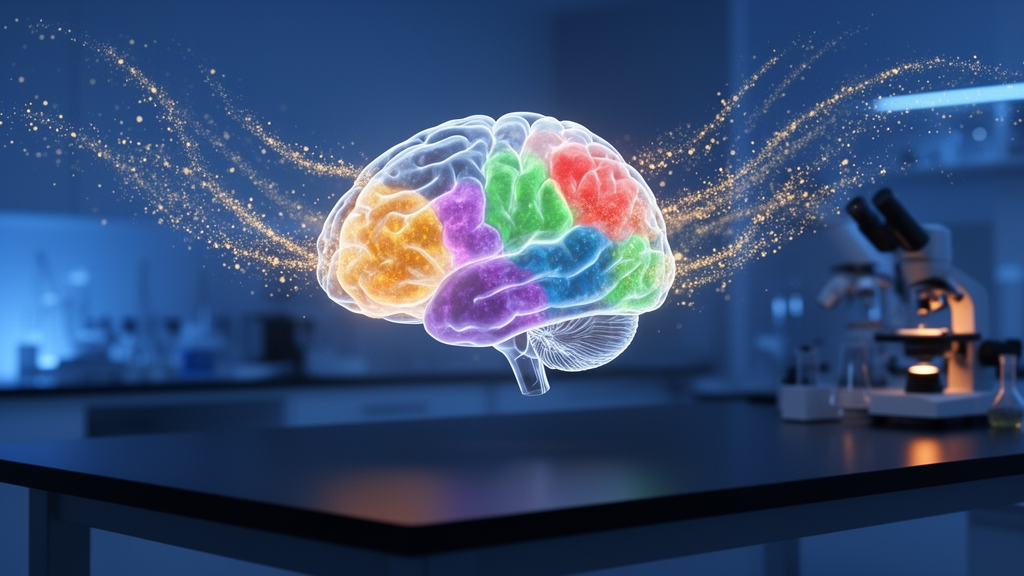
Diffusion-enhanced AI framework segments and classifies brain tumors with 98.1% accuracy

Diffusion-enhanced AI framework segments and classifies brain tumors with 98.1% accuracy

Share on FacebookShare on TwitterShare on LinkedinShare on RedditShare on Telegram

Diagnosing brain tumors from magnetic resonance imaging (MRI) remains a difficult task, complicated by tumor heterogeneity, low contrast between tumor and healthy tissue, imaging artifacts and differences between tumor types. A new study published in Brain Informatics introduces a Promptable Diffusion-Enhanced Foundation Framework designed to perform both tumor segmentation and classification in a single, explainable pipeline, tested on the recent BRISC 2025 dataset.

The framework addresses a known weakness of today’s deep learning methods, which the authors note often lack explainability, tolerance to corrupted imaging conditions and the ability to interpret complex tumor structures. The system works in stages. First, a diffusion-based enhancement module improves the visibility of tumor boundaries and reduces imaging artifacts before any features are extracted. A pre-trained foundation encoder then extracts strong semantic representations from the enhanced images, and prompt-guided attention mechanisms adaptively localize tumor areas within the scans.

Unlike conventional pipelines that handle segmentation and classification separately, the framework performs both tasks jointly. Interpretation is supported by attention visualization and attention-based explanation maps, which are intended to make the model’s decisions more transparent to the user. According to the reported experimental results, the approach achieved a classification accuracy of 98.1%, a Dice score of 93.2% for segmentation, and an area under the curve (AUC) of 99.0%, which the authors describe as superior to conventional CNN and transformer-based comparison methods.

The study also reports that the framework demonstrated high robustness in the presence of imaging noise and low MRI contrast conditions. The authors argue that this robustness, combined with the built-in explainability features, would be important for clinically reliable and interpretable analysis of brain tumors. The article is published open access, with the version shared early as a peer-reviewed, accepted manuscript that is citable and carries a permanent DOI, subject to further edits before the final Version of Record.

Subject of Research: A deep learning framework combining diffusion-based MRI enhancement, foundation model features and prompt-guided attention for explainable brain tumor segmentation and classification.

Article Title: Promptable diffusion-enhanced foundation framework for explainable brain tumor segmentation and classification

Article References: Joseph, J. (2026). Promptable diffusion-enhanced foundation framework for explainable brain tumor segmentation and classification. Brain Informatics. https://doi.org/10.1186/s40708-026-00341-x

Image Credits: AI Generated

DOI: 10.1186/s40708-026-00341-x

Keywords: brain tumor, MRI, segmentation, classification, diffusion model, foundation model, explainable AI, attention mechanism, BRISC 2025, deep learning, medical imaging, Promptable

News Source: Ophelia Keating. (October 28, 2026). Diffusion-enhanced AI framework segments and classifies brain tumors with 98.1% accuracy. Scienmag.


Tags: Attention Mechanismbrain tumorBRISC 2025classificationdeep learningdiffusion modelExplainable AIfoundation modelMedical ImagingMRIPromptablesegmentation
Share12Tweet7Share2ShareShareShare1

Related Posts

Survey of nearly 10,000 women maps contraceptive use in Lagos

Survey of nearly 10,000 women maps contraceptive use in Lagos

October 28, 2026
Big Science Procurement Could Be a Powerful Innovation Lever, If Redesigned

Big Science Procurement Could Be a Powerful Innovation Lever, If Redesigned

October 28, 2026

Diffusion AI generates synthetic dysarthric speech to sharpen intelligibility classifiers

October 28, 2026

Prompt-engineered embeddings fail to beat strong tabular models in demand forecasting benchmark

October 28, 2026

POPULAR NEWS

  • Diffusion AI generates synthetic dysarthric speech to sharpen intelligibility classifiers

    Diffusion AI generates synthetic dysarthric speech to sharpen intelligibility classifiers

    29 shares
    Share 12 Tweet 7
  • Prompt-engineered embeddings fail to beat strong tabular models in demand forecasting benchmark

    29 shares
    Share 12 Tweet 7
  • Photon-counting CT sharpens lung nodule images at lower radiation doses, review finds

    29 shares
    Share 12 Tweet 7
  • Psychiatric Service Dogs Ease Loneliness in South African Adults With Mental Illness

    29 shares
    Share 12 Tweet 7

About

We bring you the latest biotechnology news from best research centers and universities around the world. Check our website.

Follow us

Recent News

Sea star larvae build the same organ in three different ways, study finds

Survey of nearly 10,000 women maps contraceptive use in Lagos

Big Science Procurement Could Be a Powerful Innovation Lever, If Redesigned

Subscribe to Blog via Email

Enter your email address to subscribe to this blog and receive notifications of new posts by email.

Join 85 other subscribers
  • Contact Us

Bioengineer.org © Copyright 2023 All Rights Reserved.

Welcome Back!

Login to your account below

Forgotten Password?

Retrieve your password

Please enter your username or email address to reset your password.

Log In
No Result
View All Result
  • Homepages
    • Home Page 1
    • Home Page 2
  • News
  • National
  • Business
  • Health
  • Lifestyle
  • Science

Bioengineer.org © Copyright 2023 All Rights Reserved.