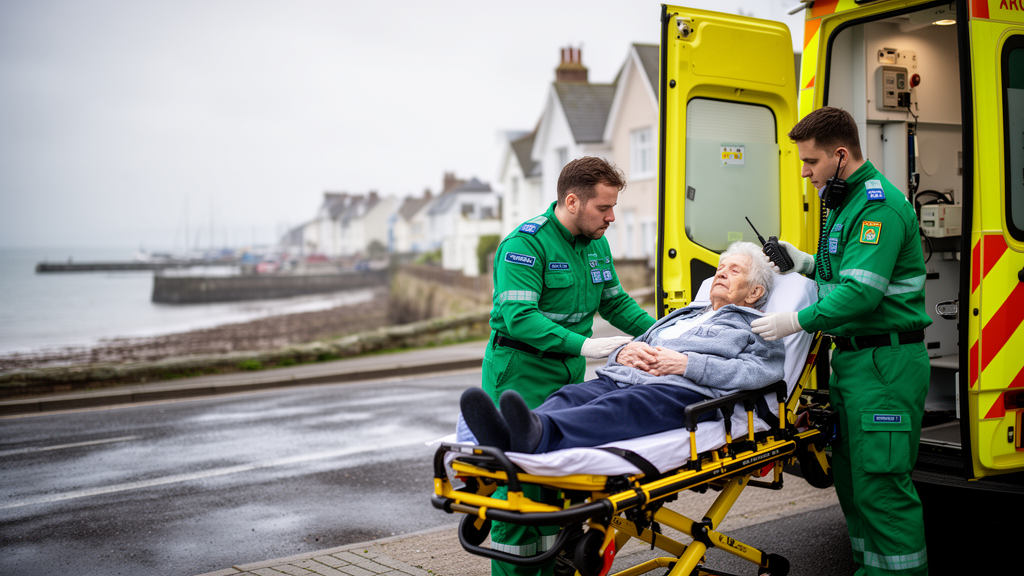
A qualitative study of prehospital stroke care in East Suffolk and North Essex has found that inequities in emergency stroke response arise not only from patients’ individual circumstances but from the way the emergency system itself is designed and organised. The research, published in BMC Emergency Medicine, examined how recognition, dispatch prioritisation, on-scene assessment, pre-alerting and transfer to specialist care can work differently for different groups of people in coastal and rural communities.
Between May 2024 and July 2025, researchers conducted semi-structured interviews with 11 purposively selected stakeholders, including paramedics, stroke nurses, general practitioners, managers, a neurologist and an academic stroke researcher. The work was classified as a service evaluation, and the interview data were analysed thematically in NVivo 14. The team then mapped the findings to the World Health Organization Health System Performance Assessment framework and to Tanahashi’s coverage model, using an intersectional lens to examine how organisational processes interact with social and geographical circumstances.
The analysis showed that rural and coastal distance became far more consequential when it combined with other disadvantages, such as limited mobility, complex patient extrication, queueing for Category 2 ambulances, or the need for secondary transfer between hospitals. In these situations, the physical separation from stroke-capable care was compounded by operational pressures, meaning that some patients faced systematically longer and more uncertain pathways to definitive treatment than others.
Communication barriers emerged as a second compounding factor. Limited English, general communication difficulty and atypical stroke symptoms became more consequential when ambulance crews lacked consistent access to translation services, digital decision-support tools or specialist advice. Because early recognition of stroke drives the entire downstream pathway, participants described how gaps in this support could turn a manageable language or presentation issue into a missed or delayed priority dispatch.
The study also highlighted the limits of the Face, Arm, Speech, Time (FAST) recognition framework. Participants reported that FAST-oriented recognition intersected problematically with patients who lived alone, had multiple coexisting conditions, or presented with subtle symptoms. In such cases, the standard screening approach could under-detect genuine stroke, delaying the call for help or reducing the urgency assigned to the response, and thereby reducing effective access to time-sensitive care.
Across all these domains, the researchers found that disadvantage was compounded when social and geographical circumstances interacted with uneven organisational capability and pathway design. Rather than a single point of failure, inequity emerged from the accumulation of small mismatches between what the system assumes about patients and what patients’ actual circumstances require.
The authors conclude that inequities in prehospital stroke care arise from interactions between patients’ circumstances and emergency-system design, and that organisational arrangements governing recognition, prioritisation, workforce capability, digital support and transfer can make particular social, clinical and geographical circumstances more consequential. They identify potential areas for local service review, including workforce development, digital and specialist support, transfer processes and equity-sensitive feedback, while noting that the feasibility and effectiveness of such changes require further evaluation.
An important limitation is that patients and carers were not interviewed; the findings therefore reflect provider and system-stakeholder accounts rather than the direct experiences of people who experienced stroke or their families. As a qualitative service evaluation involving 11 stakeholders in a single region of eastern England, the study describes how participants perceive system-driven inequities rather than measuring their size or frequency, and the authors frame their conclusions as identifying potential areas for review rather than proven interventions.
Subject of Research: How emergency-system arrangements drive intersectional inequities in prehospital stroke care in coastal eastern England
Article Title: Emergency-system drivers of intersectional inequities in prehospital stroke care in coastal eastern England
Article References: Udendeh, D., Vlahovic, J., Kareem, A., & Majdzadeh, R. (2026). Emergency-system drivers of intersectional inequities in prehospital stroke care in coastal eastern England. BMC Emergency Medicine. https://doi.org/10.1186/s12873-026-01816-0
Image Credits: AI Generated
DOI: 10.1186/s12873-026-01816-0
Keywords: prehospital stroke care, health inequities, emergency medical services, qualitative study, East Suffolk and North Essex, FAST recognition, ambulance response, rural health access, service evaluation, stroke pathways, intersectionality, WHO health systems framework
News Source: Cassandra Pierce. (October 28, 2026). Emergency system design drives unequal prehospital stroke care in coastal England. Scienmag.