• HOME
  • NEWS
  • EXPLORE
    • CAREER
      • Companies
      • Jobs
    • EVENTS
    • iGEM
      • News
      • Team
    • PHOTOS
    • VIDEO
    • WIKI
  • BLOG
  • COMMUNITY
    • FACEBOOK
    • INSTAGRAM
    • TWITTER
Saturday, February 7, 2026
BIOENGINEER.ORG
No Result
View All Result
  • Login
  • HOME
  • NEWS
  • EXPLORE
    • CAREER
      • Companies
      • Jobs
        • Lecturer
        • PhD Studentship
        • Postdoc
        • Research Assistant
    • EVENTS
    • iGEM
      • News
      • Team
    • PHOTOS
    • VIDEO
    • WIKI
  • BLOG
  • COMMUNITY
    • FACEBOOK
    • INSTAGRAM
    • TWITTER
  • HOME
  • NEWS
  • EXPLORE
    • CAREER
      • Companies
      • Jobs
        • Lecturer
        • PhD Studentship
        • Postdoc
        • Research Assistant
    • EVENTS
    • iGEM
      • News
      • Team
    • PHOTOS
    • VIDEO
    • WIKI
  • BLOG
  • COMMUNITY
    • FACEBOOK
    • INSTAGRAM
    • TWITTER
No Result
View All Result
Bioengineer.org
No Result
View All Result
Home NEWS Science News Biology

Soil amendments for healthier spinach

Bioengineer by Bioengineer
October 4, 2017
in Biology
Reading Time: 2 mins read
0
Share on FacebookShare on TwitterShare on LinkedinShare on RedditShare on Telegram
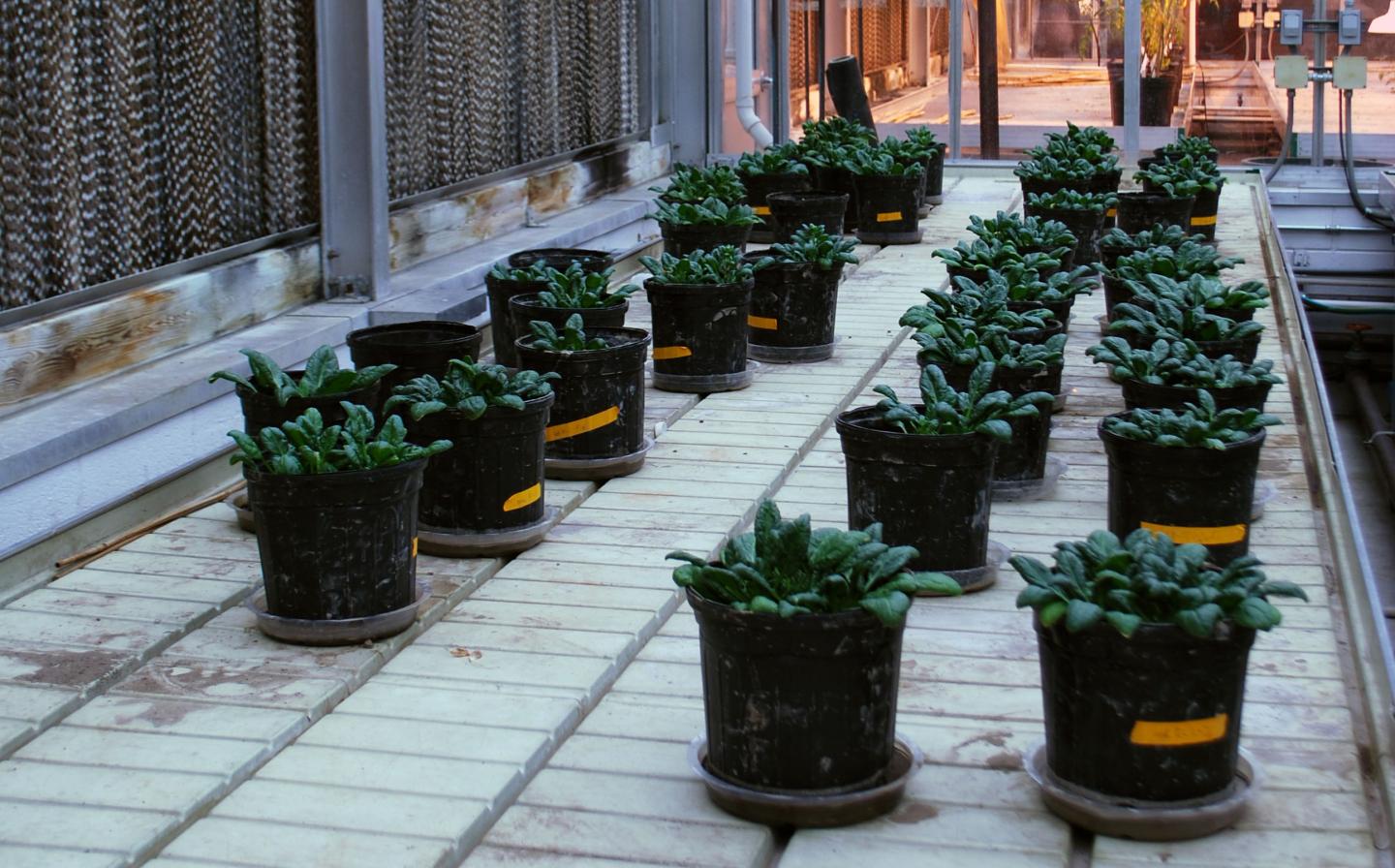
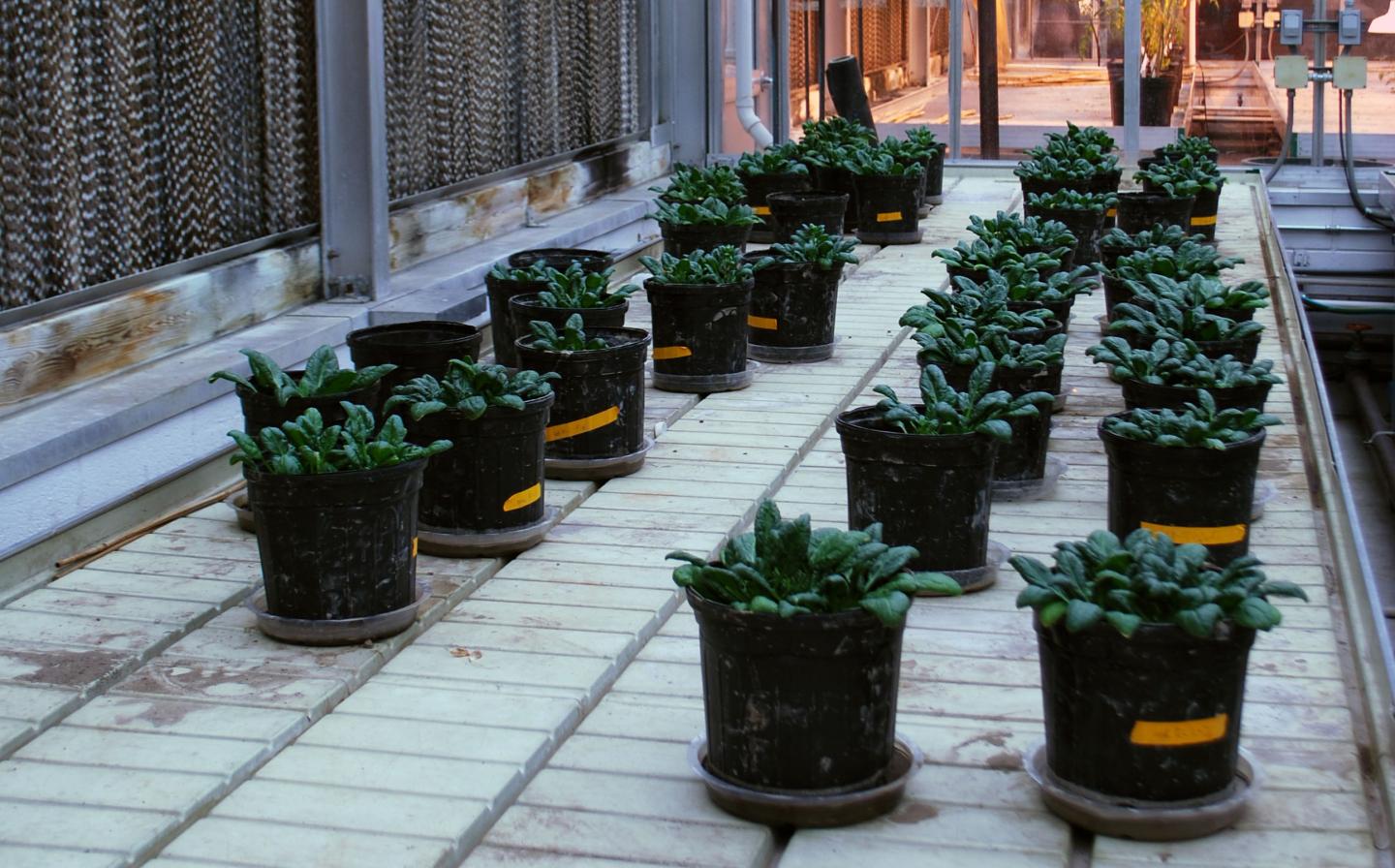
IMAGE

Credit: Carrie Green.

Soils keep plants healthy by providing plants with water, helpful minerals, and microbes, among other benefits. But what if the soil also contains toxic elements?

In areas like Salinas Valley, California, the soils are naturally rich in the element cadmium. Leafy vegetables grown in these soils can take up the cadmium and become harmful to humans. What to do? The solution goes back to the soil. Adrian Paul, a former researcher now working in the Sustainable Mineral Institute in Brisbane, Australia, is working to find which soil additives work best.

Cadmium appears in very low levels or in forms that prevent contamination in soils across the world. However some soils, like those in this California study, naturally have more than others. It can result from the erosion of local rock formations. In some instances, it's present due to human activity. Metal processing, fertilizer or fossil fuel combustion, for example, can leave cadmium behind.

Cadmium may decrease people's kidney function and bone density. As a result, international guidelines set safety limits on cadmium found in food. Growers with otherwise fertile fields need to grow food within these safe levels. Their livelihood depends on it.

"Our research aims to protect local producers and consumers by lowering the cadmium in vegetables. This gives producers the ability to grow safe, profitable crops," Paul says. "Consumers need to be able to safely eat what the farmers grow."

Paul worked with four additives: zinc and manganese salts, limestone, and biosolids compost. (Biosolids are nutrient-rich organic materials from sewage processed at a treatment facility. They are typically used to improve soil's physical and chemical characteristics and fertilize the soil.)

Although each works in a slightly different manner, the soil amendments generally solve the cadmium problem in two ways. They can prevent the passage of cadmium from the soil to the plant by offering competing nutrients. They can also chemically alter the cadmium so it is unavailable.

The researchers found that a combination of compost, zinc, and limestone brought the levels of cadmium in spinach down to nontoxic levels. The next step in this work is to better determine the ideal combination of the soil amendments. Researchers also want to study vegetables besides spinach, and other elements.

"Farmlands provide for us all," Paul says. "Rehabilitating agricultural fields, by removing heavy metals like cadmium, means healthier soils and healthier food."

For this research, Paul worked with Rufus Chaney and his team. Read more about this study in the Journal of Environmental Quality. This research was done in collaboration with researchers at the USDA Agricultural Research Service.

###

Media Contact

Susan Fisk
[email protected]
608-273-8091
@ASA_CSSA_SSSA

http://www.agronomy.org

Related Journal Article

http://dx.doi.org/10.2134/jeq2016.07.0251

Share12Tweet8Share2ShareShareShare2

Related Posts

Florida Cane Toad: Complex Spread and Selective Evolution

Florida Cane Toad: Complex Spread and Selective Evolution

February 7, 2026
New Study Uncovers Mechanism Behind Burn Pit Particulate Matter–Induced Lung Inflammation

New Study Uncovers Mechanism Behind Burn Pit Particulate Matter–Induced Lung Inflammation

February 6, 2026

DeepBlastoid: Advancing Automated and Efficient Evaluation of Human Blastoids with Deep Learning

February 6, 2026

Navigating the Gut: The Role of Formic Acid in the Microbiome

February 6, 2026
Please login to join discussion

POPULAR NEWS

  • Robotic Ureteral Reconstruction: A Novel Approach

    Robotic Ureteral Reconstruction: A Novel Approach

    82 shares
    Share 33 Tweet 21
  • Digital Privacy: Health Data Control in Incarceration

    63 shares
    Share 25 Tweet 16
  • Study Reveals Lipid Accumulation in ME/CFS Cells

    57 shares
    Share 23 Tweet 14
  • Breakthrough in RNA Research Accelerates Medical Innovations Timeline

    53 shares
    Share 21 Tweet 13

About

We bring you the latest biotechnology news from best research centers and universities around the world. Check our website.

Follow us

Recent News

Decoding Prostate Cancer Origins via snFLARE-seq, mxFRIZNGRND

Digital Health Perspectives from Baltic Sea Experts

Florida Cane Toad: Complex Spread and Selective Evolution

Subscribe to Blog via Email

Enter your email address to subscribe to this blog and receive notifications of new posts by email.

Join 73 other subscribers
  • Contact Us

Bioengineer.org © Copyright 2023 All Rights Reserved.

Welcome Back!

Login to your account below

Forgotten Password?

Retrieve your password

Please enter your username or email address to reset your password.

Log In
No Result
View All Result
  • Homepages
    • Home Page 1
    • Home Page 2
  • News
  • National
  • Business
  • Health
  • Lifestyle
  • Science

Bioengineer.org © Copyright 2023 All Rights Reserved.