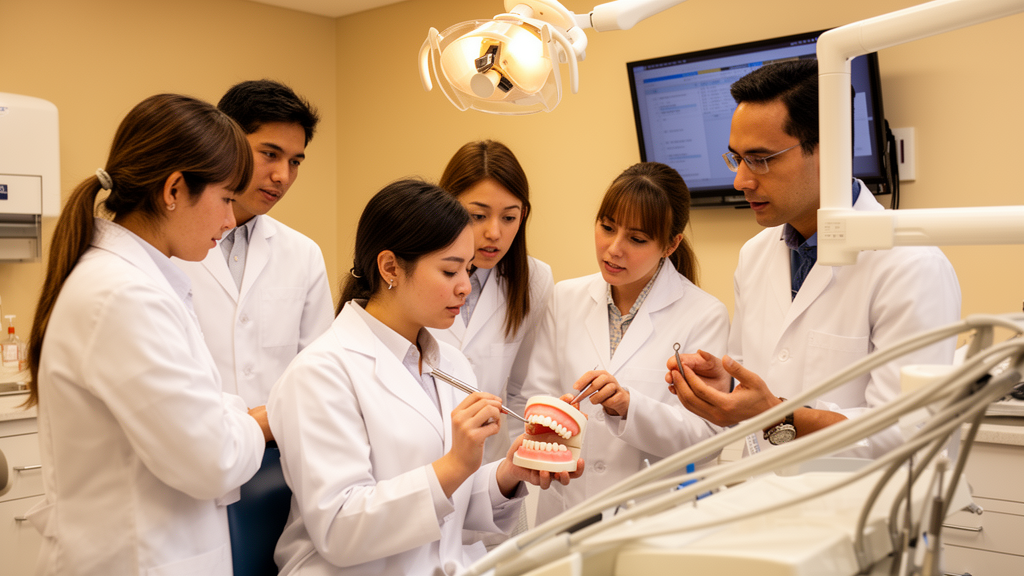
An improved version of problem-based learning (PBL) produced measurable gains in specific clinical competencies among dental residents training in endodontics, according to a randomized study published in BMC Medical Education. The trial, conducted between January 2023 and December 2025, randomly assigned 120 residents undergoing standardized residency training in endodontics to either an experimental group taught with the improved PBL method or a control group taught with conventional PBL, with 60 residents in each arm. The researchers evaluated clinical competency using the Directly Observed Procedural Skills (DOPS) assessment, applied independently at baseline, when the course started, and again upon completion.
Two procedures were assessed: root canal treatment (RCT) and rubber dam isolation (RDI). Feedback questionnaires were also used to capture how residents and teachers perceived each teaching approach. Both groups showed significant within-group improvements across most DOPS dimensions for both procedures, indicating that either form of PBL was associated with skill development over the course of training.
The more meaningful differences emerged in the between-group comparisons, where the improved PBL group outperformed the conventional group in specific, procedure-dependent domains. For root canal treatment, a technically demanding procedure, the improved PBL group showed significant advantages in operational capability and in obtaining patient consent. These findings suggest the refined method may strengthen both hands-on execution and the interpersonal steps involved in preparing patients for complex endodontic work.
The advantages of the improved PBL model were primarily observed in interpersonal domains, including communication skills and humanistic care, while no significant difference was found in operational capability between the two groups. The authors interpret this contrast as evidence that the pedagogical benefits of improved PBL depend on the complexity and technical demands of the specific clinical procedure being taught. Where technical difficulty is high, as in root canal treatment, the improved method appeared to support operational skill; where the procedure is less technically demanding, its effects were more visible in communication and patient-centered care.
The questionnaire findings pointed to generally positive perceptions of the improved PBL method among both residents and teachers. The strongest endorsements related to theoretical understanding, clinical teaching, and autonomous learning, suggesting the approach was well received by the people actually engaged in delivering and receiving the training. Standardized residency training in stomatology is considered essential for developing competent dental professionals, yet improving clinical skills effectively remains a recognized challenge in dental education.
The study addresses that gap by testing whether a modified PBL format could deliver targeted advantages over the conventional version within real clinical practice settings. The researchers caution that further multicenter studies with larger sample sizes are needed to confirm the effectiveness and generalizability of the improved PBL approach. Overall, the study offers a nuanced picture: rather than uniformly outperforming conventional PBL, the improved method demonstrated distinct, procedure-specific strengths, fostering particular clinical competencies in endodontic trainees while leaving other dimensions, such as operational skill in simpler procedures, largely unchanged between the two teaching models.
Subject of Research: Effect of an improved problem-based learning method on clinical competency in endodontic residency training
Article Title: Application of an improved problem-based learning method in clinical endodontic training of standardized residents
Article References: Jiang, W., Yang, J., Yu, Q., Chen, Y., & Tu, Y. (2026). Application of an improved problem-based learning method in clinical endodontic training of standardized residents. BMC Medical Education. https://doi.org/10.1186/s12909-026-10199-6
Image Credits: AI Generated
DOI: 10.1186/s12909-026-10199-6
Keywords: problem-based learning, endodontics, residency training, dental education, DOPS assessment, root canal treatment, rubber dam isolation, clinical competency, randomized trial, medical education, Application, improved
News Source: Courtney Benton. (October 27, 2026). Improved Problem-Based Learning Boosts Specific Skills in Endodontic Resident Training. Scienmag.