• HOME
  • NEWS
  • EXPLORE
    • CAREER
      • Companies
      • Jobs
    • EVENTS
    • iGEM
      • News
      • Team
    • PHOTOS
    • VIDEO
    • WIKI
  • BLOG
  • COMMUNITY
    • FACEBOOK
    • INSTAGRAM
    • TWITTER
Saturday, February 7, 2026
BIOENGINEER.ORG
No Result
View All Result
  • Login
  • HOME
  • NEWS
  • EXPLORE
    • CAREER
      • Companies
      • Jobs
        • Lecturer
        • PhD Studentship
        • Postdoc
        • Research Assistant
    • EVENTS
    • iGEM
      • News
      • Team
    • PHOTOS
    • VIDEO
    • WIKI
  • BLOG
  • COMMUNITY
    • FACEBOOK
    • INSTAGRAM
    • TWITTER
  • HOME
  • NEWS
  • EXPLORE
    • CAREER
      • Companies
      • Jobs
        • Lecturer
        • PhD Studentship
        • Postdoc
        • Research Assistant
    • EVENTS
    • iGEM
      • News
      • Team
    • PHOTOS
    • VIDEO
    • WIKI
  • BLOG
  • COMMUNITY
    • FACEBOOK
    • INSTAGRAM
    • TWITTER
No Result
View All Result
Bioengineer.org
No Result
View All Result
Home NEWS Science News Biology

Tiny poisonous Brazilian frogs are ‘deaf’ to their own call

Bioengineer by Bioengineer
October 3, 2017
in Biology
Reading Time: 2 mins read
0
Share on FacebookShare on TwitterShare on LinkedinShare on RedditShare on Telegram
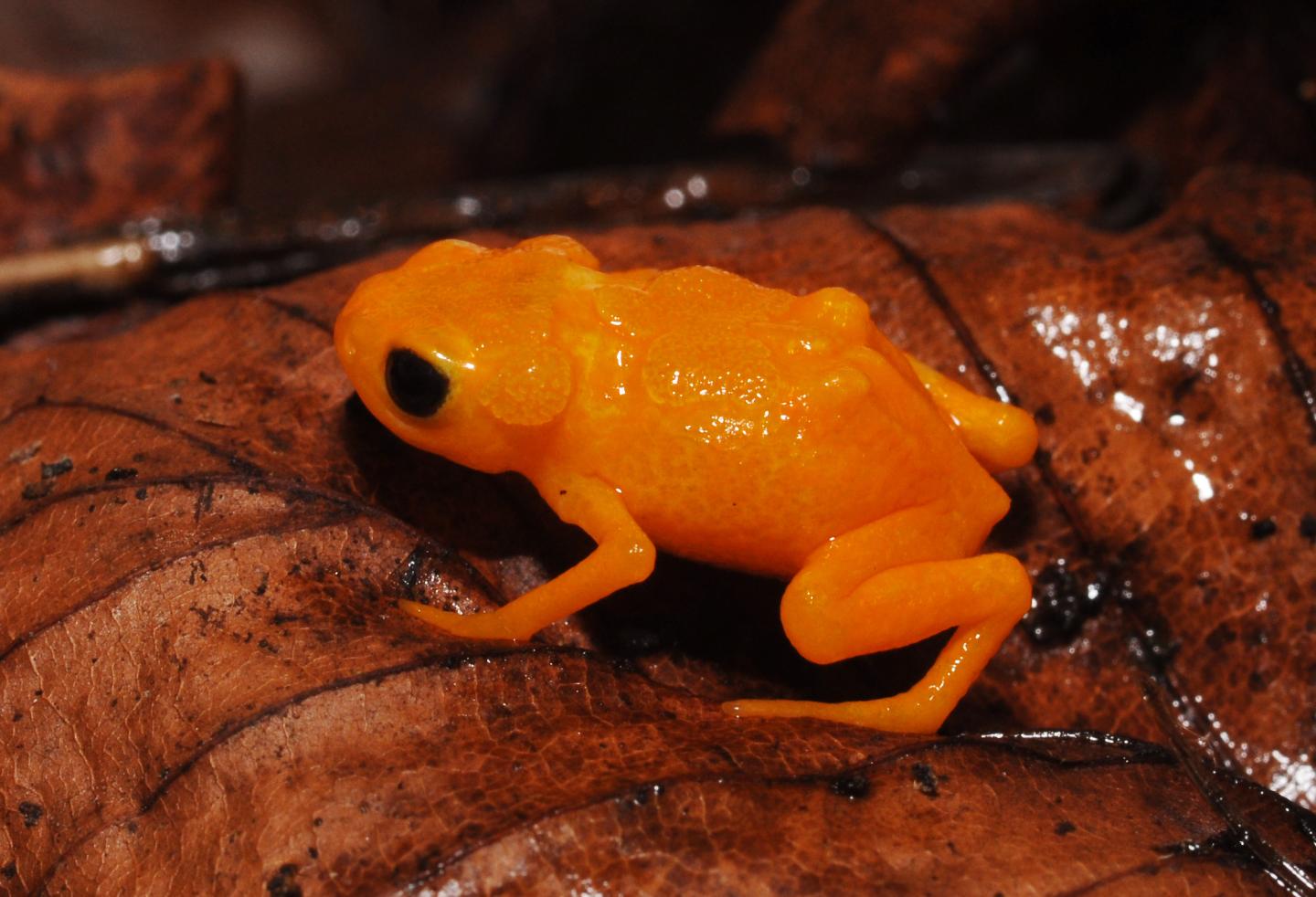
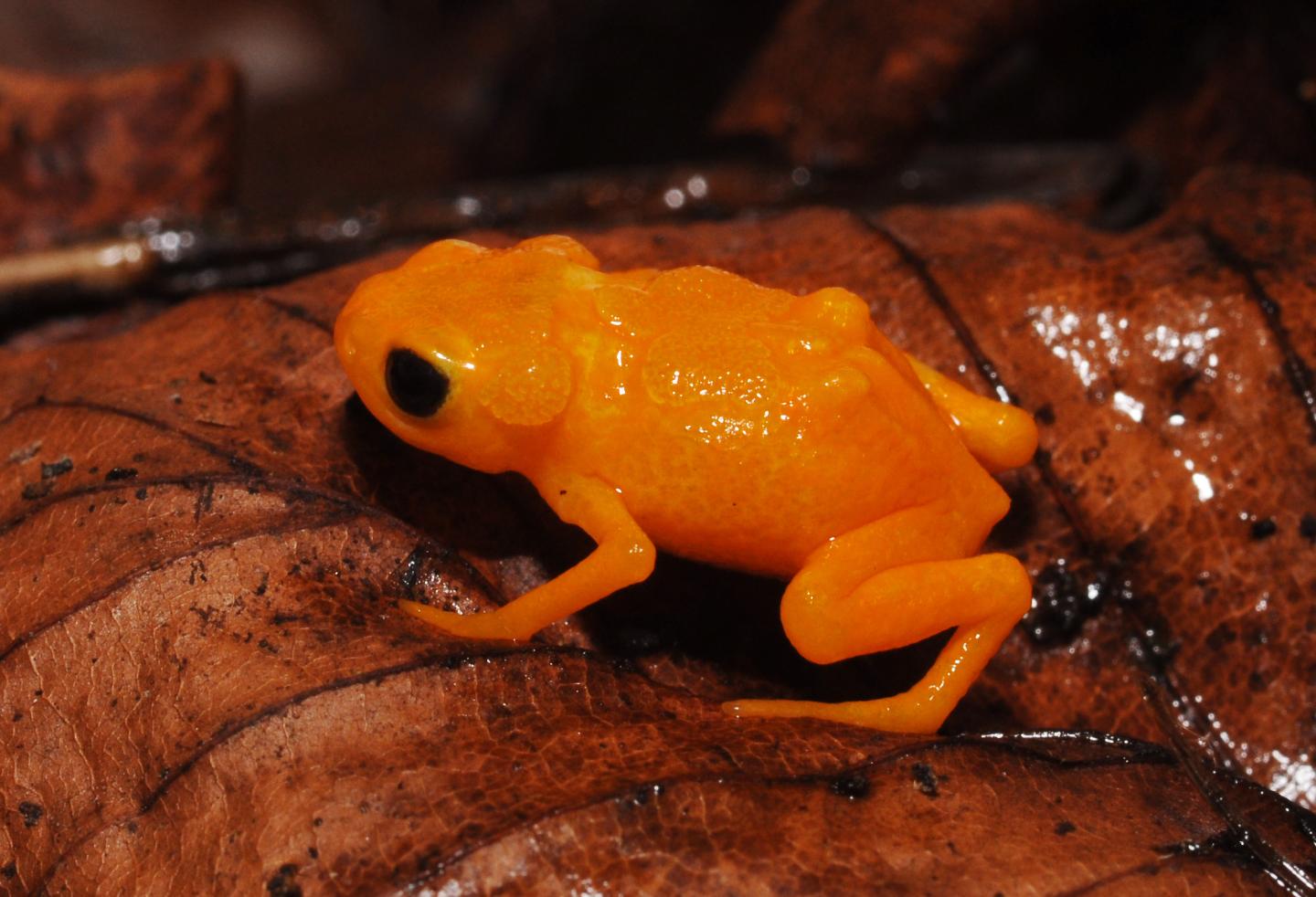
IMAGE

Credit: Sandra Goutte

Tiny Brazilian frogs still 'sing' despite not being able to hear themselves – this is the surprising discovery of new scientific research.

The new study, published in the journal Scientific Reports from the publishers of Nature, reveals that two species of pumpkin toadlets found on the leaf litter of Brazil's Atlantic forest are insensitive to the sound of their own calls, producing sounds outside their hearing sensitivity range due to a partly undeveloped inner ear.

The findings show that these species differ dramatically from other frogs and toads, who have their ears tuned to the dominant frequency of their vocalisations and rely heavily on their acoustic communication to find a mate.

The results are particularly surprising due the potential costs associated with signal production. Male frogs calling to signal their presence to the opposite sex use valuable energy stores and could alert predators and parasites to their presence. However, like many brightly-coloured tropical frogs, pumpkin toadlets are highly toxic which researchers believe could lessen the threat to them from predators.

The research was led by scientists from a number of international universities, including the University of Campinas, Brazil, the University of Southern Denmark, Denmark, and the University of Lincoln, UK.

As pumpkin toadlets do not have ears, researchers exposed them to broadband signals and non-invasively scanned their body with a micro-scanning laser Doppler vibrometer, to detect vibrations, aiming to identify potential areas that vibrate at the frequency of the male calls. While vibrations were detected in the lungs, neural recordings suggest that the frogs do not 'hear' these frequencies.

The frogs are thought to be a unique case in the animal kingdom of a communication signal persisting even after its target audience has lost the ability to detect, and could be an example of evolution in the making where visual communication is replacing acoustic communication.

The movement of the throat made when males call out could constitute a visual signal, representing a by-product of the true signalling behaviour.

Dr Fernando Montealegre-Z, Head of the Bioacoustics and Sensory Biology Lab in the School of Life Sciences at the University of Lincoln, said: "These species effectively sing for nothing. It is a default behaviour after losing their hearing. They may be in a stage of evolution towards the complete loss of acoustic communication, where the hearing system has been lost but the vocal signals still occur."

Studying the unique status of acoustic communication in these pumpkin toadlets further is likely to provide additional insights into the evolution and degeneration of acoustic communication systems in vertebrates.

###

The study, 'Evidence of auditory insensitivity to vocalisation frequencies in two frogs', is available to view online (Doi:10.1038/s41598-017-12145-5).

Media Contact

Laura Jones
[email protected]
01-522-886-242
@unilincoln

http://www.lincoln.ac.uk/home/

Original Source

http://www.lincoln.ac.uk/news/2017/10/1399.asp http://dx.doi.org/10.1038/s41598-017-12145-5

Share12Tweet8Share2ShareShareShare2

Related Posts

Florida Cane Toad: Complex Spread and Selective Evolution

Florida Cane Toad: Complex Spread and Selective Evolution

February 7, 2026
New Study Uncovers Mechanism Behind Burn Pit Particulate Matter–Induced Lung Inflammation

New Study Uncovers Mechanism Behind Burn Pit Particulate Matter–Induced Lung Inflammation

February 6, 2026

DeepBlastoid: Advancing Automated and Efficient Evaluation of Human Blastoids with Deep Learning

February 6, 2026

Navigating the Gut: The Role of Formic Acid in the Microbiome

February 6, 2026
Please login to join discussion

POPULAR NEWS

  • Robotic Ureteral Reconstruction: A Novel Approach

    Robotic Ureteral Reconstruction: A Novel Approach

    82 shares
    Share 33 Tweet 21
  • Digital Privacy: Health Data Control in Incarceration

    63 shares
    Share 25 Tweet 16
  • Study Reveals Lipid Accumulation in ME/CFS Cells

    57 shares
    Share 23 Tweet 14
  • Breakthrough in RNA Research Accelerates Medical Innovations Timeline

    53 shares
    Share 21 Tweet 13

About

We bring you the latest biotechnology news from best research centers and universities around the world. Check our website.

Follow us

Recent News

Personalized Guide to Understanding and Reducing Chemicals

Inflammasome Protein ASC Drives Pancreatic Cancer Metabolism

Phage-Antibiotic Combo Beats Resistant Peritoneal Infection

Subscribe to Blog via Email

Enter your email address to subscribe to this blog and receive notifications of new posts by email.

Join 73 other subscribers
  • Contact Us

Bioengineer.org © Copyright 2023 All Rights Reserved.

Welcome Back!

Login to your account below

Forgotten Password?

Retrieve your password

Please enter your username or email address to reset your password.

Log In
No Result
View All Result
  • Homepages
    • Home Page 1
    • Home Page 2
  • News
  • National
  • Business
  • Health
  • Lifestyle
  • Science

Bioengineer.org © Copyright 2023 All Rights Reserved.