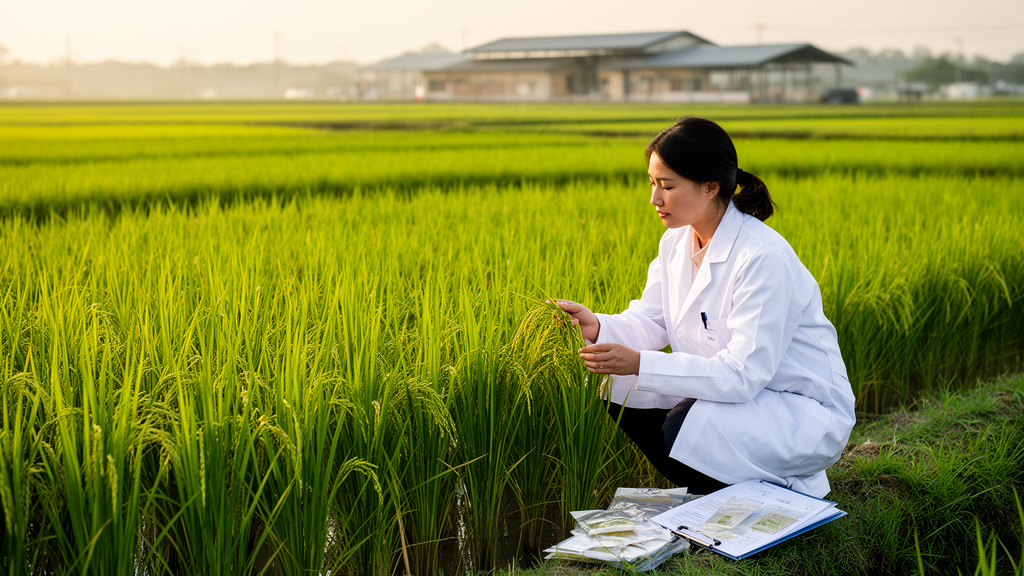
A multivariate analysis of 110 green super rice (GSR) lines has identified genotypes combining high yield with resistance to brown leaf spot, offering breeding material for high-yielding, disease-resistant rice cultivars. The study assessed genetic diversity, agronomic performance and disease resistance across two growing seasons, 2021 and 2022, using an alpha-lattice design.
The researchers measured ten morpho-physiological and yield characteristics and evaluated resistance to brown leaf spot under natural field conditions. A combined analysis of variance showed highly significant genotypic effects at P < 0.01 across all traits, indicating substantial genetic variation among the lines for the characteristics measured.
Broad-sense heritability values varied widely, from 8.83% for days to maturity to 45.56% for plant height. This range suggests that some traits, such as maturity timing, were more strongly influenced by environmental conditions, while plant height showed comparatively greater genetic control within this panel.
K-means clustering grouped the genotypes into five distinct clusters. Cluster 4 recorded the highest mean yield at 10.64 tonnes per hectare and was characterized by early flowering. Cluster 5 reached a productivity of 10.2 tonnes per hectare, attributed to its large grain size. These cluster-level differences illustrate how flowering time and grain morphology align with yield performance in this material.
Resistance to brown leaf spot also varied considerably across clusters, with a chi-square statistic of 50.1 and P < 0.001. Cluster 1 contained 60% highly resistant genotypes, while Cluster 2 displayed 60% resistant genotypes, and no entries in the study were classified as susceptible.
Several individual lines stood out. NGSR.18 achieved a multi-trait score of 70.77%, GSR1 reached a yield of 12.76 tonnes per hectare, and GSR34, GSR49 and GSR50 exhibited high resistance to brown leaf spot. These entries represent candidates for direct use in breeding programs targeting either productivity, disease resistance, or both.
Correlation analysis showed genetic independence between yield and disease resistance in this panel. According to the authors, this independence supports the feasibility of improving both characteristics simultaneously rather than facing a trade-off between grain output and brown leaf spot resistance.
The study, published in BMC Plant Biology as open access research, positions the 110 GSR lines as a significant genetic resource for rice improvement. Because the evaluation covered two seasons under natural disease pressure with a replicated alpha-lattice design, the cluster assignments and trait estimates provide a structured basis for selecting parental lines in breeding strategies aimed at high-quality cultivars.
Subject of Research: Multivariate analysis of genetic diversity, yield traits and brown leaf spot resistance in 110 green super rice lines
Article Title: Multivariate analysis of 110 green super rice (GSR) lines for morpho-physiological diversity attributes
Article References: Ahmed, M. S., Abdelghany, A. M., Majeed, A., Siddique, F., Lamlom, S. F., Javaid, R. A., & Hassan, H. J. (2026). Multivariate analysis of 110 green super rice (GSR) lines for morpho-physiological diversity attributes. BMC Plant Biology, 26(1), Article 1682. https://doi.org/10.1186/s12870-025-08049-6
Image Credits: AI Generated
DOI: 10.1186/s12870-025-08049-6
Keywords: green super rice, genetic diversity, multivariate analysis, brown leaf spot, rice breeding, K-means clustering, heritability, yield, disease resistance, BMC Plant Biology, Multivariate, analysis
News Source: Alan Morgan. (October 27, 2026). Genetic Diversity Study of 110 Green Super Rice Lines Reveals High-Yield, Disease-Resistant Candidates. Scienmag.