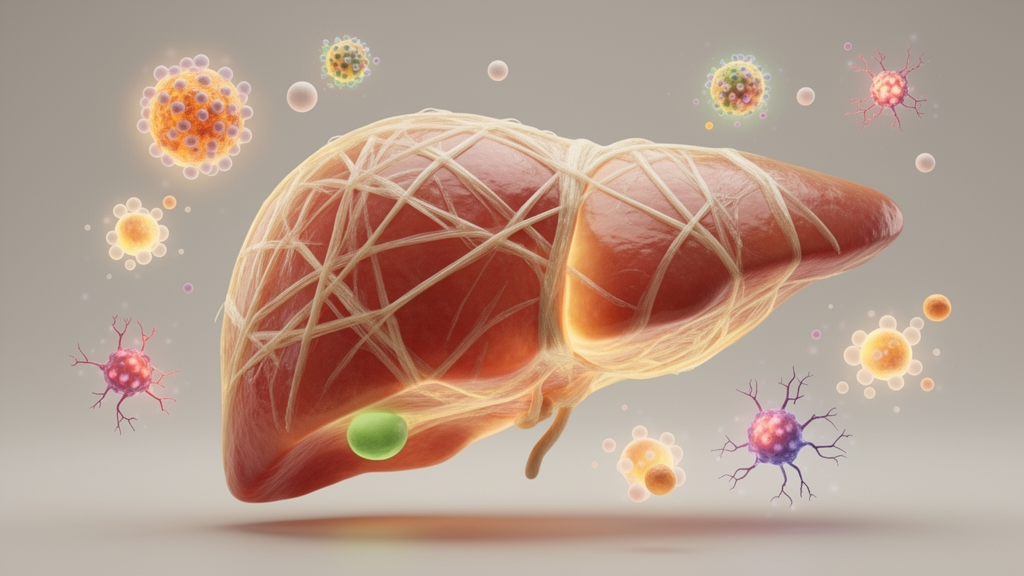
Pediatric liver fibrosis can progress to cirrhosis unusually quickly, and a new narrative review argues that the key lies in an imbalance between two competing processes: the liver’s remarkable capacity for regenerative repair and the excessive accumulation of scar tissue. The review, published in BMC Pediatrics, focuses on chronic childhood liver conditions such as biliary atresia, autoimmune hepatitis and metabolic disorders, in which unchecked fibrogenesis often predominates even though children’s livers show greater regenerative plasticity than those of adults.
The authors, Qing-Yu Lu, Yan Chen and Paul Kwong Hang Tam, conducted a comprehensive literature search across PubMed, Web of Science and Scopus, covering English-language peer-reviewed publications from inception to April 2026 using explicit Boolean queries. Document screening and study selection were carried out independently by two authors, with discrepancies resolved through consensus discussions involving a senior investigator.
A central theme of the review is the distinct pattern of rapid fibrogenesis seen in pediatric-specific conditions, with biliary atresia highlighted as a prime example. The review also examines the regulatory mechanisms underlying several pivotal signalling pathways, including Hippo/YAP/TAZ, TGF-β/Smad, HGF/c-Met, Notch and Wnt, which together govern the balance between regeneration and scarring in the developing liver.
Another focus is the physiological threshold at which effective regeneration ceases. Understanding where this tipping point lies, the authors suggest, is essential for timing intervention, because once regeneration can no longer keep pace with fibrogenesis, scarring accelerates toward end-stage liver disease. The review is framed as a synthesis of existing knowledge rather than a report of new experimental findings, and as a narrative review it does not itself test therapies.
The stated aim is to guide early clinical intervention strategies that leverage the unique regenerative plasticity of the young liver and to support the development of prospective molecular targets. The authors also intend the synthesis to inform future research priorities aimed at halting or reversing pediatric end-stage liver disease. As with any narrative review, the conclusions reflect the literature surveyed and the authors’ interpretation, and the therapeutic targets discussed remain prospective rather than established treatments.
Subject of Research: Signalling pathways governing regeneration versus scarring in pediatric liver fibrosis
Article Title: Balancing regeneration and scarring in pediatric liver fibrosis: key signalling pathways and potential therapeutic targets—a narrative review
Article References: Lu, Q.-Y., Chen, Y., & Tam, P. K. H. (2026). Balancing regeneration and scarring in pediatric liver fibrosis: key signalling pathways and potential therapeutic targets—a narrative review. BMC Pediatrics. https://doi.org/10.1186/s12887-026-07921-0
Image Credits: AI Generated
DOI: 10.1186/s12887-026-07921-0
Keywords: pediatric liver fibrosis, biliary atresia, cirrhosis, liver regeneration, Hippo/YAP/TAZ, TGF-beta/Smad, HGF/c-Met, Notch, Wnt signalling, narrative review, BMC Pediatrics, Balancing
News Source: Harold Sullivan. (October 27, 2026). Young livers heal fast but scar faster: review maps pediatric liver fibrosis pathways. Scienmag.