• HOME
  • NEWS
  • EXPLORE
    • CAREER
      • Companies
      • Jobs
    • EVENTS
    • iGEM
      • News
      • Team
    • PHOTOS
    • VIDEO
    • WIKI
  • BLOG
  • COMMUNITY
    • FACEBOOK
    • INSTAGRAM
    • TWITTER
Wednesday, October 28, 2026
BIOENGINEER.ORG
No Result
View All Result
  • Login
  • HOME
  • NEWS
  • EXPLORE
    • CAREER
      • Companies
      • Jobs
        • Lecturer
        • PhD Studentship
        • Postdoc
        • Research Assistant
    • EVENTS
    • iGEM
      • News
      • Team
    • PHOTOS
    • VIDEO
    • WIKI
  • BLOG
  • COMMUNITY
    • FACEBOOK
    • INSTAGRAM
    • TWITTER
No Result
View All Result
Bioengineer.org
No Result
View All Result
Home NEWS Science News Biology

Nanopore RNA Sequencing Method Yields Candidate Motifs for Three RNA Modifications

by
October 27, 2026
in Biology, Technology
Reading Time: 2 mins read
0
Nanopore RNA Sequencing Method Yields Candidate Motifs for Three RNA Modifications

Nanopore RNA Sequencing Method Yields Candidate Motifs for Three RNA Modifications

Share on FacebookShare on TwitterShare on LinkedinShare on RedditShare on Telegram

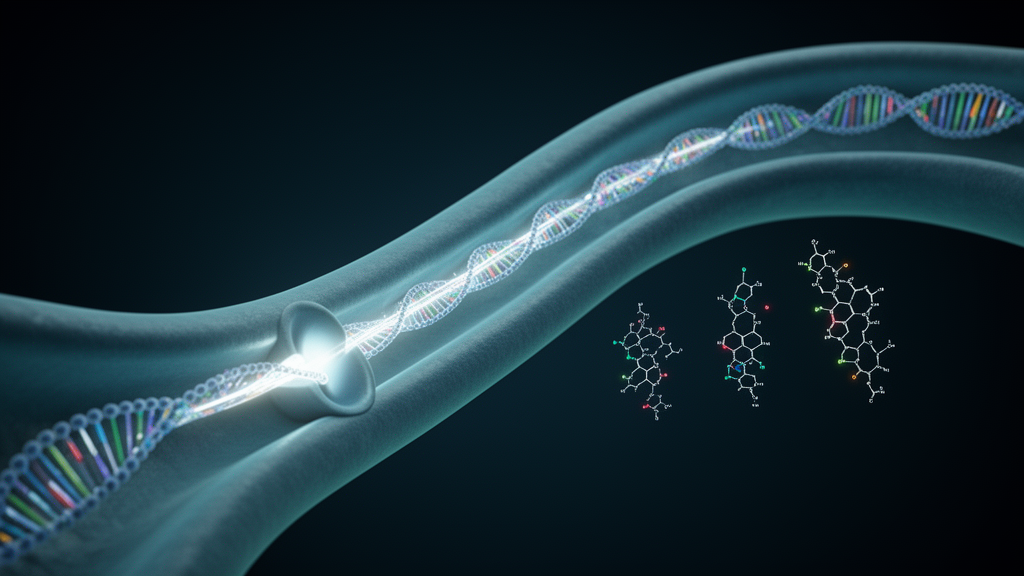
Researchers have developed a computational framework that identifies candidate sequence motifs for RNA modifications using direct RNA sequencing data, according to a study published in BMC Bioinformatics.

RNA modifications act as key regulators of many aspects of RNA biology, which has fueled interest in computational methods for detecting them across the transcriptome. For some modifications, the search space can be narrowed by exploiting characteristic sequence motifs. The best-known example is the canonical DRACH motif associated with N6-methyladenosine, or m6A. However, comparable sequence preferences remain largely unknown for most other RNA modifications, making systematic motif discovery considerably more challenging.

In the new study, Nicolò Alagna, Johannes Miedema, Yahia Basiony and Susanne Gerber applied a technique called exponential population analysis to direct RNA sequencing data. The data came from two human sources: HEK293T cells, a widely used laboratory cell line, and peripheral human blood samples. The goal was to identify candidate motif patterns for three RNA modifications: pseudouridine, inosine and 5-methylcytosine.

Direct RNA sequencing, a nanopore-based approach, allows RNA molecules to be read natively, and computational predictions of modification sites can be derived from such data. The exponential population analysis method provides a systematic way to mine these predictions for recurring sequence contexts, the authors report. Rather than delivering confirmed biological mechanisms, the analysis prioritizes sequence contexts that merit future biological validation.

The authors emphasize that the framework’s output is a set of candidate motif patterns, not experimentally validated motifs. Because sequence preferences for pseudouridine, inosine and 5-methylcytosine are not well characterized, the identified candidates could guide the design of follow-up experiments aimed at confirming whether the predicted contexts reflect genuine modification signatures. The study was published as an open-access research article on 23 October 2026, and the version shared early is subject to further editorial edits before the final version of record appears.

Subject of Research: Computational discovery of candidate sequence motifs for RNA modifications using direct RNA sequencing

Article Title: Extracting candidate motif patterns for multiple RNA modifications using direct RNA sequencing

Article References: Alagna, N., Miedema, J., Basiony, Y., & Gerber, S. (2026). Extracting candidate motif patterns for multiple RNA modifications using direct RNA sequencing. BMC Bioinformatics, 27(1), Article 246. https://doi.org/10.1186/s12859-026-06724-5

Image Credits: AI Generated

DOI: 10.1186/s12859-026-06724-5

Keywords: RNA modifications, direct RNA sequencing, nanopore sequencing, pseudouridine, inosine, 5-methylcytosine, m6A, DRACH motif, exponential population analysis, HEK293T cells, transcriptome, motif discovery

News Source: Juliet Wilcox. (October 27, 2026). Nanopore RNA Sequencing Method Yields Candidate Motifs for Three RNA Modifications. Scienmag.


Tags: 5-methylcytosinedirect RNA sequencingDRACH motifexponential population analysisHEK293T cellsinosinem6Amotif discoveryNanopore SequencingpseudouridineRNA modificationstranscriptome
Share12Tweet7Share2ShareShareShare1

Related Posts

Blood sedimentation rate predicts death risk in dogs with chronic kidney disease

Blood sedimentation rate predicts death risk in dogs with chronic kidney disease

October 28, 2026
New DARPA-funded project aims to cut AI energy use by up to half

New DARPA-funded project aims to cut AI energy use by up to half

October 28, 2026

Antarctic Pond Bacterium Survives Calcium Levels Once Thought Fatal to Life

October 28, 2026

Heatwaves Could Push European Power Grids Toward Their Thermal Limits

October 28, 2026

POPULAR NEWS

  • Neutrophils Shift Metabolism in a Triple-Negative Breast Cancer Coculture Model

    Neutrophils Shift Metabolism in a Triple-Negative Breast Cancer Coculture Model

    29 shares
    Share 12 Tweet 7
  • Melatonin eases drought injury in maize seedlings, with effects differing by dose

    29 shares
    Share 12 Tweet 7
  • One-Week Smartphone Intervention for Autistic Adults Falls Short in First Trial

    29 shares
    Share 12 Tweet 7
  • Two New Waxcap Mushrooms Discovered in Southeast China

    29 shares
    Share 12 Tweet 7

About

We bring you the latest biotechnology news from best research centers and universities around the world. Check our website.

Follow us

Recent News

Blood sedimentation rate predicts death risk in dogs with chronic kidney disease

Poor Preoperative Nutrition Linked to Higher Complications and Lower Survival After Hip Replacement

New DARPA-funded project aims to cut AI energy use by up to half

Subscribe to Blog via Email

Enter your email address to subscribe to this blog and receive notifications of new posts by email.

Join 85 other subscribers
  • Contact Us

Bioengineer.org © Copyright 2023 All Rights Reserved.

Welcome Back!

Login to your account below

Forgotten Password?

Retrieve your password

Please enter your username or email address to reset your password.

Log In
No Result
View All Result
  • Homepages
    • Home Page 1
    • Home Page 2
  • News
  • National
  • Business
  • Health
  • Lifestyle
  • Science

Bioengineer.org © Copyright 2023 All Rights Reserved.