• HOME
  • NEWS
  • EXPLORE
    • CAREER
      • Companies
      • Jobs
    • EVENTS
    • iGEM
      • News
      • Team
    • PHOTOS
    • VIDEO
    • WIKI
  • BLOG
  • COMMUNITY
    • FACEBOOK
    • INSTAGRAM
    • TWITTER
Saturday, February 7, 2026
BIOENGINEER.ORG
No Result
View All Result
  • Login
  • HOME
  • NEWS
  • EXPLORE
    • CAREER
      • Companies
      • Jobs
        • Lecturer
        • PhD Studentship
        • Postdoc
        • Research Assistant
    • EVENTS
    • iGEM
      • News
      • Team
    • PHOTOS
    • VIDEO
    • WIKI
  • BLOG
  • COMMUNITY
    • FACEBOOK
    • INSTAGRAM
    • TWITTER
  • HOME
  • NEWS
  • EXPLORE
    • CAREER
      • Companies
      • Jobs
        • Lecturer
        • PhD Studentship
        • Postdoc
        • Research Assistant
    • EVENTS
    • iGEM
      • News
      • Team
    • PHOTOS
    • VIDEO
    • WIKI
  • BLOG
  • COMMUNITY
    • FACEBOOK
    • INSTAGRAM
    • TWITTER
No Result
View All Result
Bioengineer.org
No Result
View All Result
Home NEWS Science News Biology

Stone Age child reveals that modern humans emerged more than 300,000 years ago

Bioengineer by Bioengineer
September 28, 2017
in Biology
Reading Time: 2 mins read
0
Share on FacebookShare on TwitterShare on LinkedinShare on RedditShare on Telegram
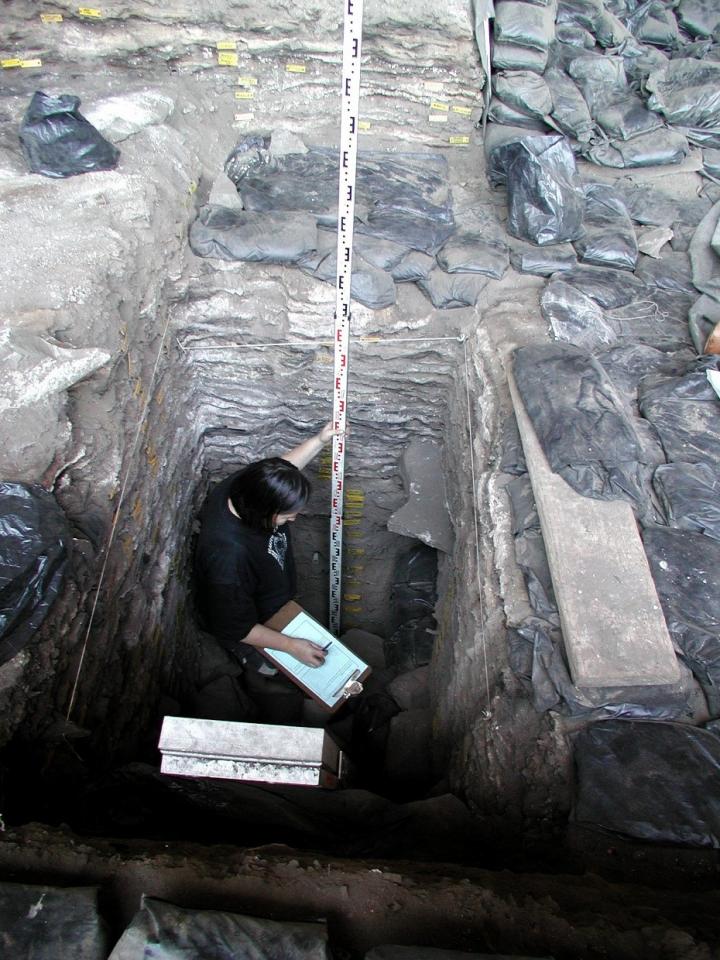
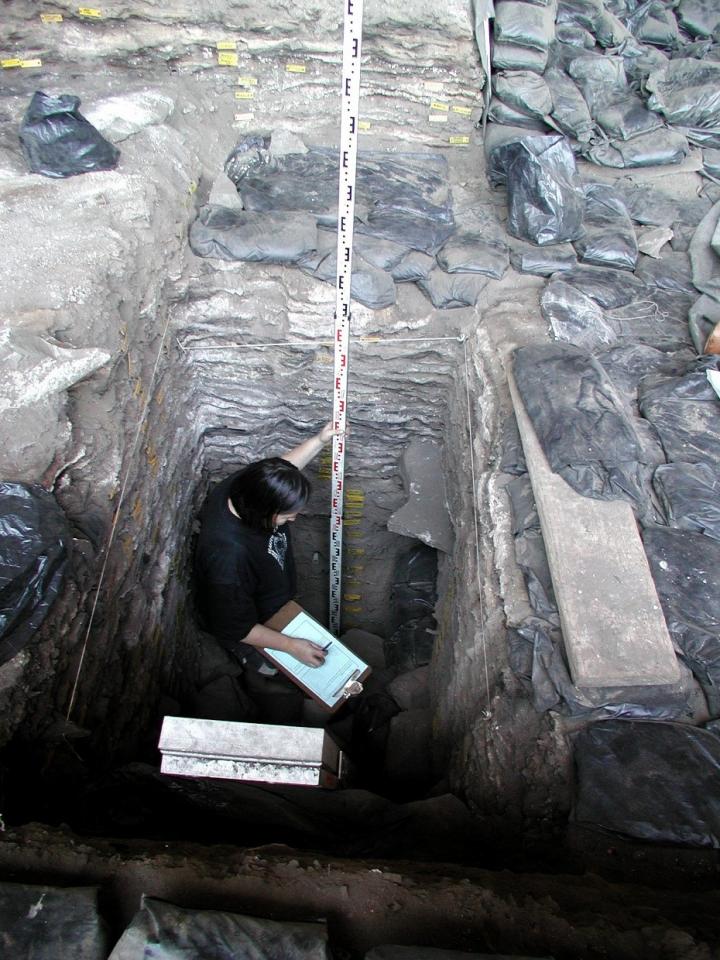
IMAGE

Credit: Photograph: Lyn Wadley, University of the Witwatersrand.

South Africa is well-known for its hominin fossil record. But this time, results from a study of ancient DNA presented in the September 28th First Release early online issue of Science show that the 2000-year-old remains of a boy found at Ballito Bay in KwaZulu-Natal during the 1960s, helped to rewrite human history.

Marlize Lombard, Professor of Stone Age archaeology at the University of Johannesburg, initiated collaboration with geneticists from Uppsala University in Sweden and the University of the Witwatersrand, who put together a team of experts at the Uppsala laboratory.

They reconstructed the full genome of the Ballito Bay child, together with the genomes of six other individuals from KwaZulu-Natal who lived between 2300 and 300 years ago.

Three Stone Age individuals who lived between 2300 and 1800 years ago were found to be genetically related to the descendants of Khoe-San groups living in southern Africa today. The remains of the other four individuals who lived 500-300 years ago during the Iron Age, were genetically related to present-day South Africans of West African descent.

Because the boy from Ballito Bay was of hunter-gatherer descent, living at a time before migrants from further north in Africa reached South African shores, his DNA could be used to estimate the split between modern humans and earlier human groups as occurring between 350 000 and 260 000 years ago. "This means that modern humans emerged earlier than previously thought", says Mattias Jakobsson, population geneticist at Uppsala University, who headed the project together with Marlize Lombard from the University of Johannesburg.

The 350 000 to 260 000 years estimate also coincides with the Florisbad skull, who was a contemporary of the small-brained Homo naledi in South Africa. "It now seems that at least two or three Homo species occupied the southern African landscape during this time, which also represents the early phases of the Middle Stone Age", says Lombard.

Cumulatively, the fossil, ancient DNA and archaeological records indicate that the transition from archaic to modern humans might not have occurred in only one place in Africa. Instead, regions including southern and northern Africa (as recently reported) probably played a role. "Thus, both palaeo-anthropological and genetic evidence increasingly points to multiregional origins of anatomically modern humans in Africa, i.e. Homo sapiens did not originate in one place in Africa, but might have evolved from older forms in several places on the continent with gene flow between groups from different places", says Carina Schlebusch.

These findings from South Africa shed new light on our species' deep African history and show that there is still much more to learn about our process of becoming modern humans. The results of this study also emphasise that the interplay between genetics and archaeology has an increasingly important role to play.

###

Media Contact

Prof Marlize Lombard
[email protected]
27-711-398-407
@go2uj

http://www.uj.ac.za

Share12Tweet8Share2ShareShareShare2

Related Posts

Florida Cane Toad: Complex Spread and Selective Evolution

Florida Cane Toad: Complex Spread and Selective Evolution

February 7, 2026
New Study Uncovers Mechanism Behind Burn Pit Particulate Matter–Induced Lung Inflammation

New Study Uncovers Mechanism Behind Burn Pit Particulate Matter–Induced Lung Inflammation

February 6, 2026

DeepBlastoid: Advancing Automated and Efficient Evaluation of Human Blastoids with Deep Learning

February 6, 2026

Navigating the Gut: The Role of Formic Acid in the Microbiome

February 6, 2026
Please login to join discussion

POPULAR NEWS

  • Robotic Ureteral Reconstruction: A Novel Approach

    Robotic Ureteral Reconstruction: A Novel Approach

    82 shares
    Share 33 Tweet 21
  • Digital Privacy: Health Data Control in Incarceration

    63 shares
    Share 25 Tweet 16
  • Study Reveals Lipid Accumulation in ME/CFS Cells

    57 shares
    Share 23 Tweet 14
  • Breakthrough in RNA Research Accelerates Medical Innovations Timeline

    53 shares
    Share 21 Tweet 13

About

We bring you the latest biotechnology news from best research centers and universities around the world. Check our website.

Follow us

Recent News

Decoding Prostate Cancer Origins via snFLARE-seq, mxFRIZNGRND

Digital Health Perspectives from Baltic Sea Experts

Florida Cane Toad: Complex Spread and Selective Evolution

Subscribe to Blog via Email

Enter your email address to subscribe to this blog and receive notifications of new posts by email.

Join 73 other subscribers
  • Contact Us

Bioengineer.org © Copyright 2023 All Rights Reserved.

Welcome Back!

Login to your account below

Forgotten Password?

Retrieve your password

Please enter your username or email address to reset your password.

Log In
No Result
View All Result
  • Homepages
    • Home Page 1
    • Home Page 2
  • News
  • National
  • Business
  • Health
  • Lifestyle
  • Science

Bioengineer.org © Copyright 2023 All Rights Reserved.