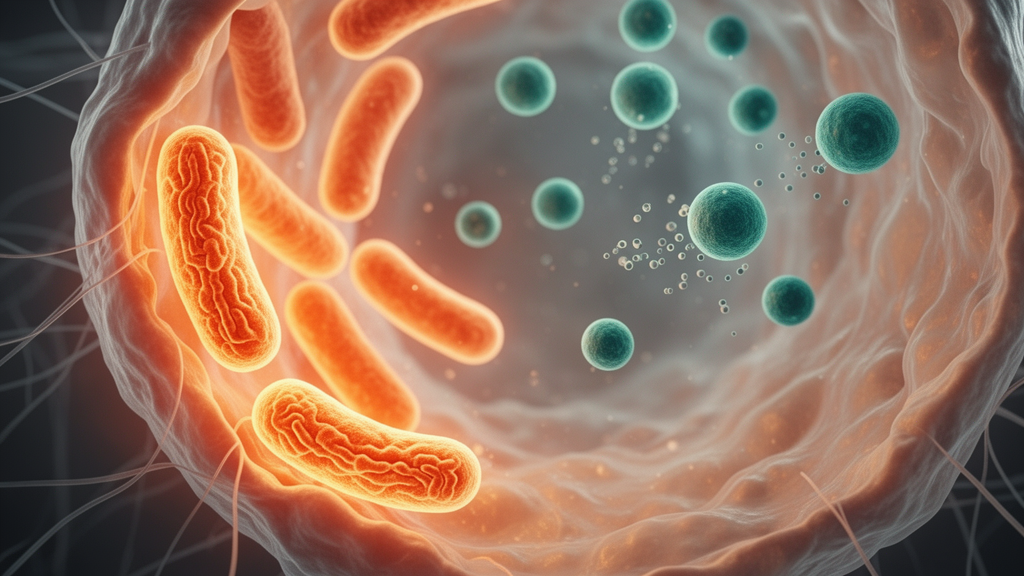
Mitochondria do far more than keep cancer cells alive on their way to new tissues. According to a comprehensive review published in Frontiers in Pharmacology, these organelles act as what the authors call a “mechanometabolic conductor” of metastasis, simultaneously supplying the physical energy that lets tumour cells invade tissue and the chemical signals that reprogram them for life in distant organs. The review, by Subhajit Dutta of University Medical Center Hamburg-Eppendorf and Namrata Maity of Ariel University, also introduces a provocative complication: peroxisomes, long treated as metabolic afterthoughts, share machinery with mitochondria in ways that could confound drug targeting across the entire field.
The authors coin “mechanometabolic” to capture mitochondria’s dual role. Metastasising cells must generate mechanical force to breach basement membranes, squeeze through stroma, survive detachment in the bloodstream and adapt to unfamiliar organ environments. Mitochondria supply ATP locally for actin dynamics and membrane remodelling while simultaneously emitting reactive oxygen species, calcium signals and oncometabolites that switch on invasive transcriptional programmes. This coupling of energy production and signalling at sites of active movement is what distinguishes the mitochondrial contribution from purely metabolic or purely signalling models, the authors argue.
The evidence for this centrality is strongest in breast cancer, melanoma and hepatocellular carcinoma models. Metastatic cells frequently show higher mitochondrial membrane potential, greater oxidative phosphorylation capacity and more dynamic fission-fusion cycling than their non-metastatic counterparts. Critically, mitochondria physically relocate to lamellipodia, invadopodia and the leading edge of migrating cells, where local ATP production drives actin polymerisation and the secretion of matrix-degrading proteases such as MMP-2 and MT1-MMP. Restricting mitochondrial trafficking to these invasive structures reduces matrix invasion in experimental systems, although the authors caution that glycolysis can also supply cortical ATP, so the relative contribution depends on tumour lineage and nutrient state.
Mitochondrial reactive oxygen species occupy a narrow functional window. Moderate oxidant signals reinforce invasion by oxidising PTEN and protein tyrosine phosphatases, prolonging PI3K-AKT signalling, and by activating NF-κB, AP-1 and HIF-1α. Excessive ROS, by contrast, causes damage or death. The review also highlights VDAC1, the most abundant channel of the outer mitochondrial membrane, as a convergence point where metabolite exchange, calcium transfer at mitochondria-ER contacts, apoptotic regulation and even mitochondrial DNA release intersect. VDAC1 is elevated in multiple solid tumours and supports glycolytic-mitochondrial coupling through hexokinase II, making it a candidate for more mitochondria-restricted drug strategies.
Hypoxia adds another layer. As oxygen falls, HIF-1α accumulates and redirects carbon away from mitochondrial oxidation while inducing BNIP3 and BNIP3L/NIX, mitophagy receptors that clear damaged mitochondria. In melanoma, mitochondrial ROS sustain HIF-1α under mild hypoxia, creating a reciprocal feedback circuit that supports metastatic behaviour. The coactivator PGC-1α shows strikingly lineage-dependent effects: it promotes OXPHOS and metastatic colonisation in breast cancer models yet suppresses invasion in melanoma, illustrating that the same mitochondrial programme can push dissemination in one tissue and restrain it in another.
The review’s most distinctive argument concerns peroxisomes. These organelles share terminal fission machinery with mitochondria: the adaptors FIS1 and MFF serve both organelles, whereas the MIEF1 and MIEF2 adaptors act only at mitochondria. This creates what the authors call a selectivity problem with real pharmacological teeth. The inhibitor P110 blocks the DRP1-FIS1 interaction and is therefore adaptor-selective but organelle-agnostic, since FIS1 is the shared adaptor. An apparently mitochondrial drug phenotype could thus reflect altered peroxisomal division, respiratory inhibition or off-target effects. Mdivi-1, a widely used fission inhibitor, additionally inhibits mitochondrial Complex I independently of DRP1, further muddying attribution.
Peroxisomes also reshape the metabolic and redox conditions under which mitochondria operate. They shorten very-long-chain fatty acids that mitochondria handle poorly, passing medium-chain products back for complete oxidation, and they both generate and detoxify hydrogen peroxide through ACOX enzymes and catalase. Ether-lipid synthesis, which begins in peroxisomes, influences membrane curvature, receptor organisation and invadopodial turnover, and also determines ferroptosis susceptibility, because polyunsaturated ether phospholipids become oxidisable substrates when GPX4 defences fail. The same pathway can therefore support pro-invasive membrane remodelling while simultaneously creating a ferroptotic liability, making therapeutic direction impossible to predict from peroxisome abundance alone.
The tumour microenvironment adds intercellular transfer to the picture. Mitochondria move between cells through tunnelling nanotubes, extracellular vesicles and gap junctions. Adipose-derived stromal cells transfer mitochondria to breast cancer cells, conferring multidrug resistance through enhanced OXPHOS, while melanoma cells recruit bone-marrow stromal cells and stimulate PGC-1α-dependent biogenesis in them before acquiring their organelles. In a striking immune-evasion mechanism, cancer-cell mitochondria carrying mtDNA mutations can enter tumour-infiltrating T cells, resist mitophagy through co-transferred USP30, and progressively replace endogenous T-cell mitochondria, leaving the lymphocytes senescent and less responsive to PD-1 blockade. Transfer also occurs in the opposite direction, and extracellular vesicles carrying mutant mtDNA can confer metastatic traits on low-metastatic recipient cells.
The authors are explicit about the limits of their framework. The mitochondrial arm rests on direct experimental evidence, but a causal contribution of mitochondria-peroxisome contacts to invasion, transit or colonisation has not been demonstrated. Oxidant transfer at ACBD5-PTPIP51 contacts was characterised outside metastatic cancer, and several tether architectures derive from yeast or non-malignant systems. The interface is therefore advanced as a testable framework for target selection and pharmacological attribution, not as an established driver of metastasis. The decisive missing experiment, the authors propose, is to perturb the contact while preserving organelle abundance and core enzyme expression, then measure invasion or colonisation directly.
Therapeutically, the review proposes a demanding validation framework: direct target engagement, paired mitochondrial and peroxisomal morphometry, organelle-resolved redox analysis, lipid flux measurements, genetic rescue separating organelle-specific effects, testing in stromal and immune cells, and metastatic endpoints spanning invasion, transit survival and colonisation. VDAC1-directed peptides that disrupt the hexokinase-II interface show a favourable cancer-versus-normal cytotoxicity profile in preclinical lung carcinoma models, offering a mitochondria-restricted comparator. Meanwhile, existing clinical agents such as MEK, MET and mTOR inhibitors could access upstream fission control, and belzutifan’s HIF-2α inhibition offers a testable prediction about peroxisome abundance. The message for the field is clear: until paired organelle-resolved measurements become routine, organelle selectivity should be considered unestablished, even when adaptor selectivity has been demonstrated.
Subject of Research: The role of mitochondria and the mitochondria-peroxisome interface in cancer metastasis and pharmacological targeting
Article Title: The mitochondrion as a mechanometabolic conductor of cancer metastasis: pharmacological insights from the mitochondria–peroxisome interface
Article References: Dutta, S., & Maity, N. (2026). The mitochondrion as a mechanometabolic conductor of cancer metastasis: pharmacological insights from the mitochondria–peroxisome interface. Frontiers in Pharmacology, 17, Article 1983363. https://doi.org/10.3389/fphar.2026.1983363
Image Credits: AI Generated
DOI: 10.3389/fphar.2026.1983363
Keywords: mitochondria, peroxisomes, cancer metastasis, VDAC1, DRP1, reactive oxygen species, HIF-1α, mitophagy, ferroptosis, mitochondrial transfer, drug targeting, PGC-1α
News Source: Nathaniel Bowman. (October 27, 2026). Mitochondria Orchestrate Cancer Spread, With Peroxisomes Setting the Rules. Scienmag.