Cancer cells often become hooked on specific nutrients, and glutamine is one of the most notorious. A new study in Genome Biology offers a systematic way to map such dependencies, using extracellular glutamine dependence as a test case. Researchers led by Karin Ortmayr, Meret Ringwald and Mattia Zampieri measured the rates at which 54 cancer cell lines exchanged metabolites with their surroundings, comparing lines with different degrees of reliance on glutamine.
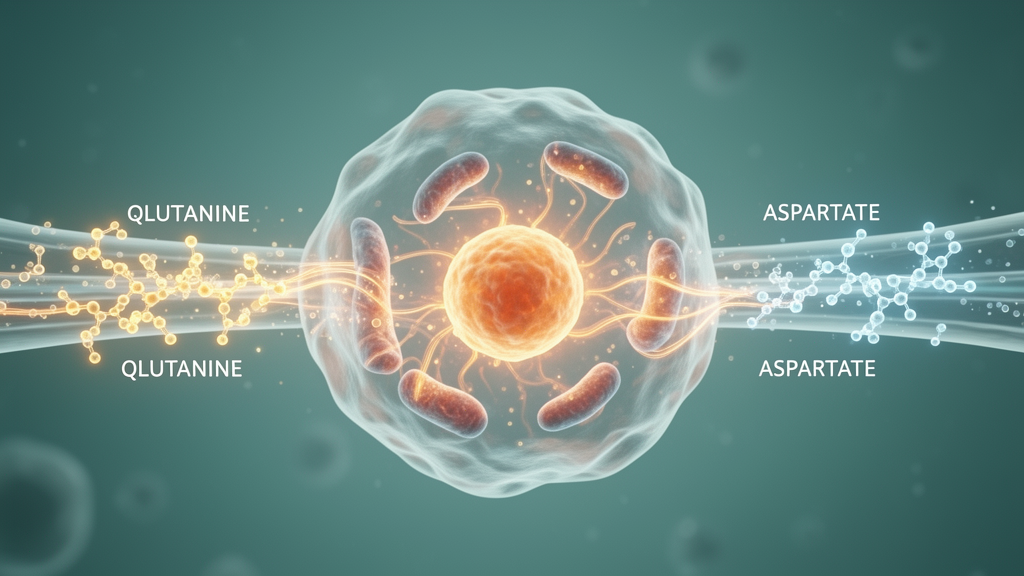
They combined this with metabolic profiling of human stem-cell differentiation to ask how normal and malignant cells handle the same chemistry differently. The central discovery is a tissue-associated split in how cells make glutamate, a central metabolic intermediate. Some cell types lean on glutamine as the source, while others preferentially use aspartate.
This difference is not arbitrary: the two strategies are linked to a trade-off between rapid proliferation and metabolic flexibility. Cells built for fast growth exploit one route heavily, which makes them efficient but vulnerable when their preferred nutrient disappears, while cells that keep both routes open grow less explosively but tolerate changing nutrient conditions better. To probe what happens when the fuel is removed, the team performed time-resolved intracellular metabolomics following glutamine withdrawal.
This shared bottleneck shows why glutamine is so deeply woven into the machinery of proliferation, and it demonstrates the power of the framework to pinpoint which specific metabolic reactions a nutrient dependency constrains. Yet the purine shortage was only part of the story. The researchers found that this metabolic limitation alone was insufficient to explain glutamine dependency, meaning that additional regulatory responses to glutamine deprivation must contribute to the growth arrest that follows.
The inclusion of human stem-cell differentiation data adds an important dimension. By comparing cancer cell lines with differentiating stem cells, the study ties the glutamine-versus-aspartate preference to tissue-associated metabolic states rather than to malignancy alone. The broader significance lies in the framework itself.
Rather than testing one nutrient and one cell line at a time, the approach links measured metabolite exchange rates across many lines to the degree of nutrient dependence, then validates the resulting hypotheses with time-resolved metabolomics. The authors report that the method coordinates the established functions of glutamine, aspartate and asparagine across diverse cancer cell types, and they argue it can be extended to characterize and pharmacologically target metabolic dependencies beyond glutamine addiction. Important caveats remain.
The findings rest on cultured cancer cell lines and stem-cell differentiation models, so how the trade-off plays out in living tumors, with their fluctuating nutrient environments, will require further study. The regulatory mechanisms behind the growth arrest also remain unidentified.
Subject of Research: Glutamine and aspartate metabolism in cancer cell nutrient dependency
Article Title: The glutamine-aspartate metabolic tradeoff between fast growth and metabolic flexibility
Article References: Ortmayr, K., Ringwald, M., Schuhknecht, L., Dubuis, S., Panoussis, E., Blaesi, M., Jehanno, C., Grieder, S. D., Bentires-Alj, M., Mall, M., & Zampieri, M. (2026). The glutamine-aspartate metabolic tradeoff between fast growth and metabolic flexibility. Genome Biology. https://doi.org/10.1186/s13059-026-04314-5
Image Credits: AI Generated
DOI: 10.1186/s13059-026-04314-5
Keywords: glutamine, aspartate, glutamate biosynthesis, cancer metabolism, metabolic flexibility, purine biosynthesis, nutrient dependency, metabolomics, cancer cell lines, stem-cell differentiation, Genome Biology, glutamine-aspartate
News Source: Nathaniel Bowman. (October 27, 2026). Glutamine-aspartate tradeoff shapes cancer cell growth and flexibility. Scienmag.