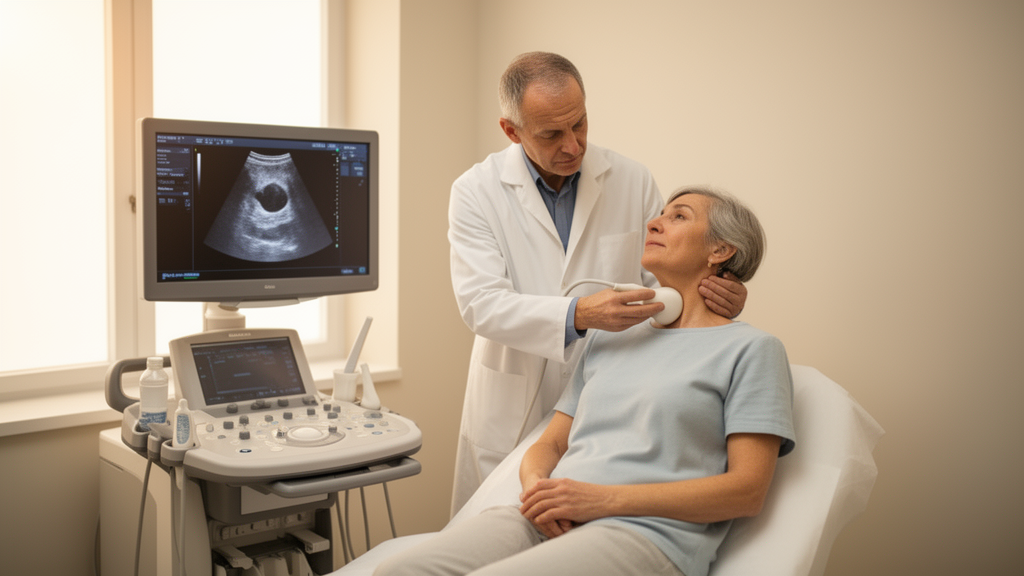
A new large-scale cross-sectional analysis, published in BMC Endocrine Disorders, suggests that the amount of fat stored deep inside the abdomen may be an overlooked correlate of these nodules, adding body composition to the list of factors clinicians may want to consider when assessing thyroid screening risk. The retrospective study drew on individuals who underwent health screenings between 2022 and June 2025 at a hospital-based center. After applying inclusion and exclusion criteria, the researchers analyzed data from 21,011 participants, combining thyroid ultrasound findings with detailed body composition measurements.
To avoid overfitting their statistical model, the team first used LASSO regression—a technique that shrinks less informative variables toward zero—to select candidate predictors, and then applied multivariable logistic regression to identify which factors remained independently associated with thyroid nodules. The results confirmed several well-established patterns. Older age was strongly linked to nodule presence, with each additional year of age raising the odds by roughly 2.8 percent (odds ratio 1.028, 95% confidence interval 1.025–1.031).
Higher systolic blood pressure also showed a small but statistically robust positive association (OR 1.008 per unit increase). The most novel finding concerned fat distribution. Among the body composition parameters examined, higher visceral fat area—the fat surrounding internal organs in the abdominal cavity, measured during screening—was independently and positively associated with thyroid nodule risk (OR 1.002, 95% CI 1.001–1.003).
Because thyroid nodules are known to differ between men and women in prevalence and behavior, the researchers repeated their analyses separately for each sex. Age and systolic blood pressure remained significant correlates in both groups, reinforcing their status as general risk markers. A new pattern emerged, however, when the team examined body water compartments: extracellular water—the fluid outside cells, which bioimpedance devices can estimate—was positively associated with thyroid nodules in males (OR 1.055, 95% CI 1.033–1.078) and also in females (OR 1.078, 95% CI 1.005–1.156), although the association in women was weaker and reached only marginal statistical significance (P = 0.035).
Several limitations temper the conclusions. As a retrospective, hospital-based screening cohort, the study captures people who chose to undergo health checks, which may not represent the general population. Cross-sectional data show association, not causation: higher visceral fat may influence nodule development, or both may reflect shared underlying metabolic factors.
For now, the study adds visceral fat area and extracellular water to the growing list of measurable body composition traits that appear to travel with thyroid nodules, alongside the long-recognized influences of age, sex, and blood pressure.
Subject of Research: Association between body composition measures and thyroid nodules in a large health screening cohort
Article Title: The correlation between thyroid nodules and body composition: a large-scale cross-sectional study from a health screening cohort
Article References: Zhang, J., Guo, L., Shao, Z., Zhao, P., Tian, F., Zhang, T., & Zeng, X. (2026). The correlation between thyroid nodules and body composition: a large-scale cross-sectional study from a health screening cohort. BMC Endocrine Disorders. https://doi.org/10.1186/s12902-026-02696-y
Image Credits: AI Generated
DOI: 10.1186/s12902-026-02696-y
Keywords: thyroid nodules, visceral fat, body composition, extracellular water, cross-sectional study, health screening, systolic blood pressure, LASSO regression, logistic regression, BMC Endocrine Disorders, sex differences, risk factors
News Source: Ophelia Keating. (October 27, 2026). Visceral Fat Linked to Higher Thyroid Nodule Risk in 21,000-Person Screening Study. Scienmag.