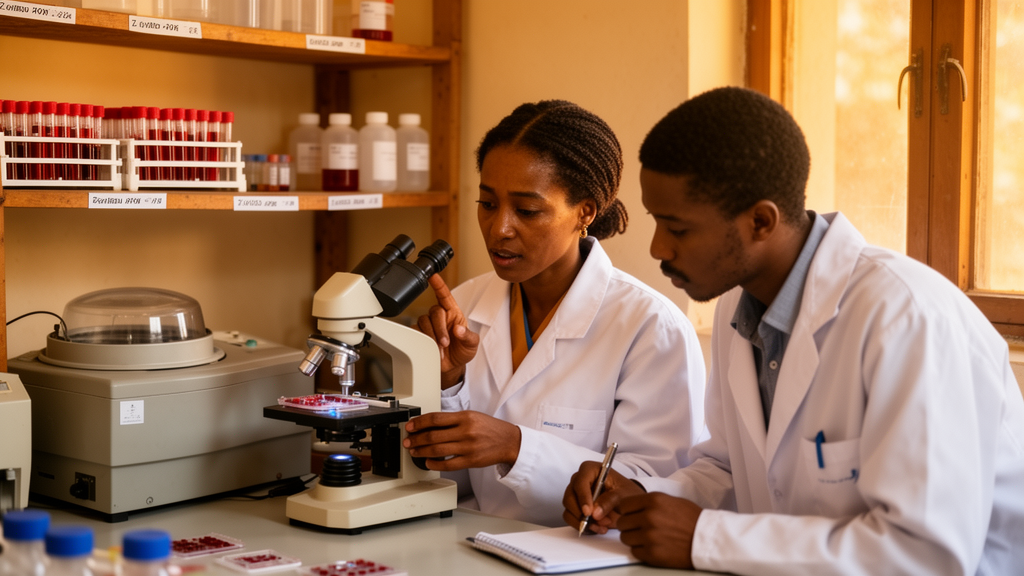
A twenty-year collaboration between the Drugs for Neglected Diseases initiative (DNDi) and Ethiopia's Leishmaniasis Research and Treatment Centre (LRTC) substantially strengthened the country's capacity to treat and study visceral leishmaniasis, according to a qualitative case study published in Frontiers in Tropical Diseases. The analysis, covering the period from 2003 to 2022, traced how the partnership improved infrastructure, advanced training, embedded effective treatment protocols into national policy, and connected Ethiopian researchers to wider clinical trial networks across East Africa. Visceral leishmaniasis is one of the neglected tropical diseases that remain marginalised within the global health innovation system.
The study set out to examine how the DNDi–LRTC partnership began, how it evolved over two decades, and what outcomes it produced, with the aim of drawing lessons for future initiatives in Ethiopia and in the other countries of the Leishmaniasis East Africa Platform: Sudan, South Sudan, Uganda, and Kenya. The researchers used a qualitative case study design, conducting key informant interviews with a semi-structured guide to capture perspectives from stakeholders involved at different stages of the partnership. Participants were selected purposively according to whether they had joined at the beginning, mid, or mature phase of the collaboration.
The interview material was then examined using conventional content analysis, allowing the team to organise what they heard into recurring themes rather than testing predefined hypotheses. Three broad themes emerged from the analysis: health system strengthening, partnership successes, and partnership challenges. Under the first theme, the collaboration was found to have improved infrastructure and advanced training at the LRTC, fostering a stronger foundation for clinical research and enabling more rigorous research outputs.
The second theme documented concrete gains in treatment and policy. Effective treatment protocols were developed through the partnership and integrated into national health policies, which the authors report led to better patient outcomes. Beyond the clinic, awareness and advocacy work built on the research findings helped embed them into national strategies, and this in turn secured additional resources for visceral leishmaniasis management in Ethiopia.
The partnership also facilitated productive collaborations with other stakeholders in clinical research, clinical trials, and action on access to treatment, broadening its impact beyond the original bilateral relationship. In the Ethiopian case, the pathway ran from strengthened infrastructure and training, through better research outputs and treatment protocols, into national policy adoption, and finally into mobilised resources for disease control. The study did not present an unbroken record of success.
The third theme identified persistent challenges, including bureaucratic delays, communication gaps, and infrastructure limitations. The authors point to these as areas where further capacity strengthening would benefit future efforts. Their conclusion is measured: the partnership significantly enhanced clinical research capacity, treatment outcomes, and policy uptake for visceral leishmaniasis in Ethiopia, but structural and operational challenges remain, and addressing them will be essential to sustain the impact and optimise future partnerships.
The authors argue that the case offers practical insights for designing effective and sustainable collaborations in neglected tropical disease research and health system strengthening more broadly. Several caveats attach to the findings. The study is a single-country case study of one centre and one partnership, based on interviews with purposively selected informants and analysed through qualitative content analysis.
It therefore documents the perspectives and experiences of those involved rather than measuring clinical or epidemiological outcomes directly, and the reported improvements in patient outcomes reflect the assessments of the study's participants and authors rather than a controlled evaluation. The authors themselves frame the work as a source of lessons for Ethiopia and the wider Leishmaniasis East Africa Platform, not as proof that the same model will succeed everywhere. Even with those limits, the two-decade record assembled here is notable for a field in which research investment has historically been thin.
The study suggests that sustained, structured collaboration between international research organisations and national treatment centres can move a neglected disease from marginal research activity to national policy attention, while leaving open the question of how best to protect those gains against the bureaucratic and infrastructural frictions that the informants described.
Subject of Research: A qualitative case study of the DNDi–LRTC partnership strengthening visceral leishmaniasis research and treatment capacity in Ethiopia from 2003 to 2022.
Article Title: Strengthening health systems and clinical development capacities through effective partnerships: a case study of DNDi’s collaboration with the Leishmaniasis Research and Treatment Center in Ethiopia (2003–2022)
Article References: Weldeab, A. N., Yeshiwas, F., Mulu, E., Berhe, R., Yirsaw, A. N., Chaves, G. C., Tesema, S. T., Stobbaerts, E., & Regad, M. (2026). Strengthening Health Systems and Clinical Development Capacities through Effective Partnerships: A Case Study of DNDi's Collaboration with the Leishmaniasis Research and Treatment Centre in Ethiopia (2003-2022). Frontiers in Tropical Diseases, 7, 1918144. https://doi.org/10.3389/fitd.2026.1918144
Image Credits: AI Generated
DOI: 10.3389/fitd.2026.1918144
Keywords: visceral leishmaniasis, neglected tropical diseases, DNDi, Ethiopia, health system strengthening, clinical research capacity, research partnerships, treatment protocols, policy uptake, Leishmaniasis East Africa Platform, qualitative case study, Strengthening
News Source: Ophelia Keating. (October 27, 2026). Two Decades of Partnership Built Ethiopia’s Visceral Leishmaniasis Research Capacity. Scienmag.