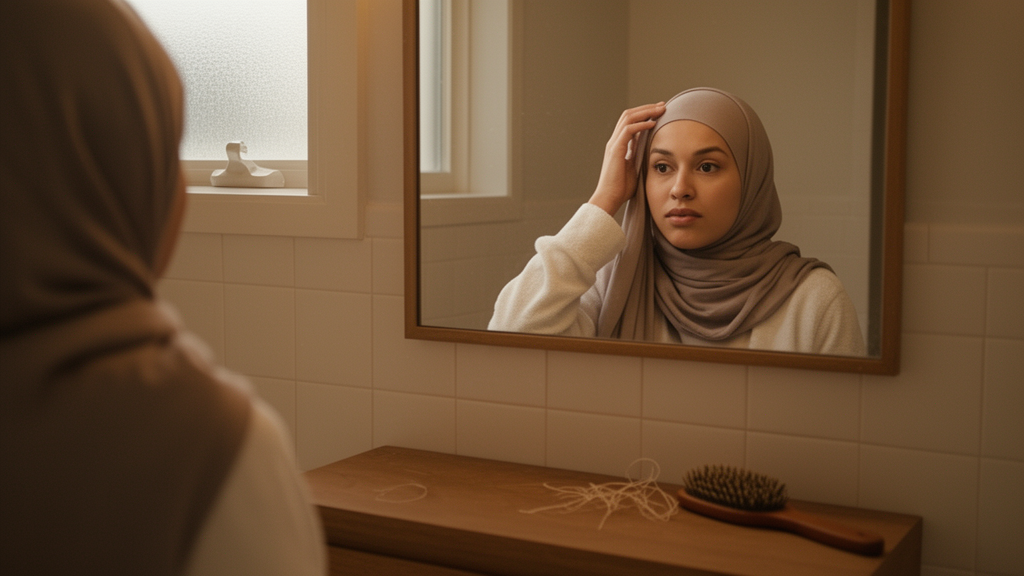
More than half of hijab-wearing women surveyed in Southeast Michigan reported hair loss that they personally attributed to wearing the head covering, yet only a small fraction had ever sought care from a dermatologist, according to a new cross-sectional study published in Archives of Dermatological Research.
Researchers distributed an anonymous 33-item survey to Muslim women aged 18 years or older who currently or previously wore the hijab and lived in Southeast Michigan. A total of 168 participants completed the survey, forming the basis of the study’s findings.
Among respondents, 56 percent, or 94 of 168 participants, reported hair loss that they attributed to hijab use. The psychosocial toll appeared substantial: 32 percent, or 53 of 167 respondents, reported daily anxiety, and 36 percent, or 61 of 168, reported effects on their self-esteem related to hair loss.
Despite these concerns, engagement with medical care was low. Only 11 percent, or 19 of 168 participants, had seen a dermatologist for hair loss, suggesting a considerable gap between the prevalence of perceived hair loss and the use of specialist care in this community.
The survey also probed how openly the topic is discussed. Nearly half of participants, 46 percent or 78 of 168, disagreed that hair loss was openly discussed within their communities. A larger majority, 72 percent or 120 of 167 respondents, agreed that hijab-associated hair loss was viewed as less important than other health concerns.
Hair loss concerns also appeared to influence everyday behavior. More than half of participants, 55 percent or 92 of 168, had considered changing how they styled their hair or their hijab because of worries about hair loss, indicating that the issue extends beyond cosmetic irritation into decisions about daily practice and appearance.
The authors noted that prior research has examined clinical associations between hijab use and hair loss, but that less has been known about the perceptions, psychosocial effects, and care-seeking experiences of women who wear the hijab. This study addresses that gap by documenting self-reported experiences rather than clinically diagnosed outcomes, since the data reflect participants’ own attributions of their hair loss to hijab use.
As a cross-sectional survey of a single geographic community, the study captures a snapshot in time and cannot establish causal relationships between hijab use and hair loss, nor can its findings be generalized to Muslim women in other regions. The sample was limited to women aged 18 or older living in Southeast Michigan who currently or previously wore the hijab.
The researchers concluded that perceived hijab-associated hair loss was common in this sample and was accompanied by psychosocial concerns, limited community discussion, and low use of dermatologic care. They highlighted the need for culturally responsive counseling and acceptable hair-styling strategies as a direction for future clinical practice, emphasizing that the findings point to unmet needs rather than prescribing specific treatments.
Subject of Research: Perceptions and psychosocial effects of hijab-associated hair loss among Muslim women in Southeast Michigan
Article Title: Perceptions of hijab-wearing women on hair loss
Article References: Khreizat, M., Chouaib, R., Dabaja, E., & Helfrich, Y. (2026). Perceptions of hijab-wearing women on hair loss. Archives of Dermatological Research, 318(1), Article 538. https://doi.org/10.1007/s00403-026-04980-2
Image Credits: AI Generated
DOI: 10.1007/s00403-026-04980-2
Keywords: hijab, hair loss, dermatology, Muslim women, cross-sectional survey, psychosocial impact, self-esteem, care-seeking, Southeast Michigan, culturally responsive counseling, Perceptions, hijab-wearing
News Source: Ophelia Keating. (October 27, 2026). Hair Loss Attributed to Hijab Use Common but Rarely Discussed, Michigan Survey Finds. Scienmag.