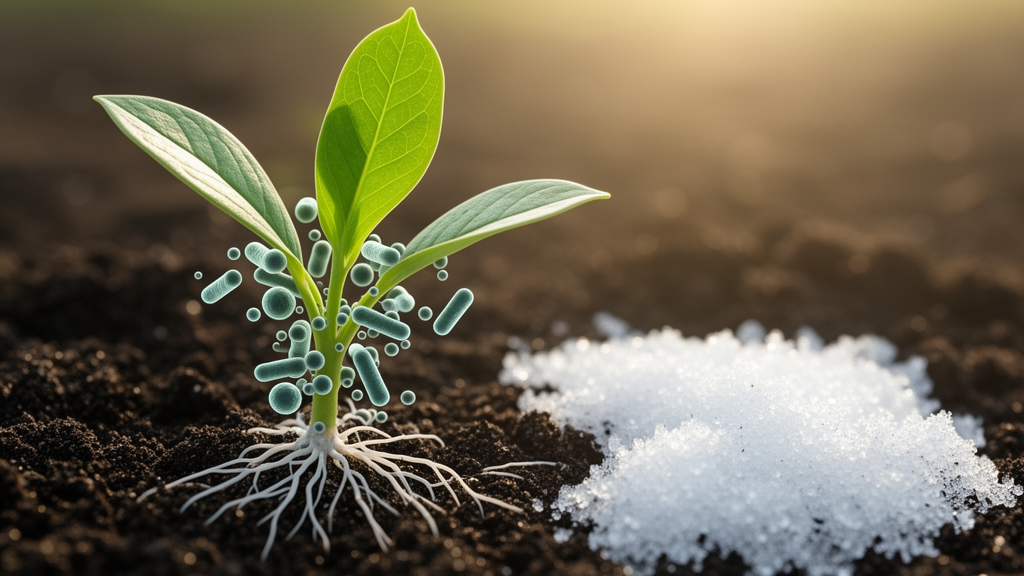
Salt accumulation in soils poses a persistent threat to crop productivity, disrupting cellular homeostasis and triggering osmotic and ionic imbalance in plants. A new review synthesizes evidence that beneficial microorganisms, including plant growth-promoting rhizobacteria, arbuscular mycorrhizal fungi, endophytic fungi, and rhizosphere-associated microbes, can enhance plant resilience against salinity stress, offering sustainable alternatives for salt-affected agricultural systems.
According to the review, salinity stimulates elevated production of reactive oxygen species in plant cells, leading to oxidative stress damage and eventual cellular dysfunction. Microbial interventions appear to counter these effects through several proposed mechanisms: osmotic adjustment, ion sequestration, mitigation of oxidative stress, phytohormone regulation, and rhizosphere-mediated stress buffering. The authors also point to improved nutrient acquisition, assistance in osmotic regulation, modulation of phytohormone signaling, and maintenance of cellular ion homeostasis as pathways by which microbes impart tolerance benefits.
A central focus of the analysis is the role of antioxidant defenses. Beneficial microorganisms can trigger both enzymatic and non-enzymatic antioxidant mechanisms in their plant hosts, and inoculation studies have reported changes in the activity of key antioxidant enzymes such as superoxide dismutase, ascorbate peroxidase, catalase, and glutathione reductase. The review stresses, however, that the magnitude and direction of these enzymatic responses are context dependent, and their interpretation requires careful consideration of the fine balance between oxidative damage and plant responses.
The authors also highlight how multi-omics approaches have expanded understanding of plant–microbe interactions under salinity. Techniques including amplicon and shotgun metagenomics, metatranscriptomics, host transcriptomics, proteomics, and metabolomics have revealed the taxa, genes, transcripts, proteins, and metabolites associated with these interactions, providing a more complete picture of how microbial communities and their hosts respond to salt stress at the molecular level.
Looking forward, the review discusses frontier integrative mechanisms for cultivating climate-resilient crops in salt-affected environments, including microbiome engineering, synthetic microbial consortia, and systems biology frameworks. By consolidating the evidential support for reported microbial effects and their proposed mechanisms of salt tolerance, with particular attention to enzymatic and non-enzymatic defense systems and multi-omics learnings, the work aims to guide the development of sustainable agricultural strategies for soils increasingly affected by salinity.
Subject of Research: Mechanisms by which beneficial microbes enhance plant tolerance to salinity stress
Article Title: Beneficial microbes in plant salt stress tolerance: mechanisms, antioxidant defense, and multi-omics insights
Article References: Shree, S., Chaudhary, A., Kumar, S., Singh, K., & Dubey, N. (2026). Beneficial microbes in plant salt stress tolerance: mechanisms, antioxidant defense, and multi-omics insights. Frontiers in Microbiology, 17, Article 1965097. https://doi.org/10.3389/fmicb.2026.1965097
Image Credits: AI Generated
DOI: 10.3389/fmicb.2026.1965097
Keywords: salinity stress, plant microbiome, plant growth-promoting rhizobacteria, arbuscular mycorrhizal fungi, antioxidant enzymes, reactive oxygen species, multi-omics, metagenomics, phytohormones, microbiome engineering, synthetic microbial consortia, sustainable agriculture
News Source: Drew Townsend. (October 27, 2026). Beneficial Microbes Help Plants Cope With Salt Stress, Review Finds. Scienmag.