A new deep learning approach for medical image segmentation replaces the familiar combination of convolutions and self-attention with a mixer architecture built around multi-layer perceptrons, reporting its strongest results on breast ultrasound images. The method, described in Multimedia Tools and Applications, integrates the mixer layer of the MLP-Mixer with a channel attention mechanism to form a novel block that refines encoder feature maps during segmentation. Accurate segmentation of medical images is central to diagnosing and treating many diseases, but the complexity of these images has long challenged traditional methods.
Most recent advances have leaned on two architectural pillars: convolutional neural networks, which excel at extracting local features, and Transformers, which model global context through self-attention mechanisms. The new study draws motivation from the MLP-Mixer, an image classification architecture that achieved competitive performance without using convolutions or attention mechanisms at all. That result suggested that purely perceptron-based processing could compete with the dominant paradigms, and the authors translated the idea from classification into the more demanding task of segmentation, where every pixel must be assigned to the correct structure.
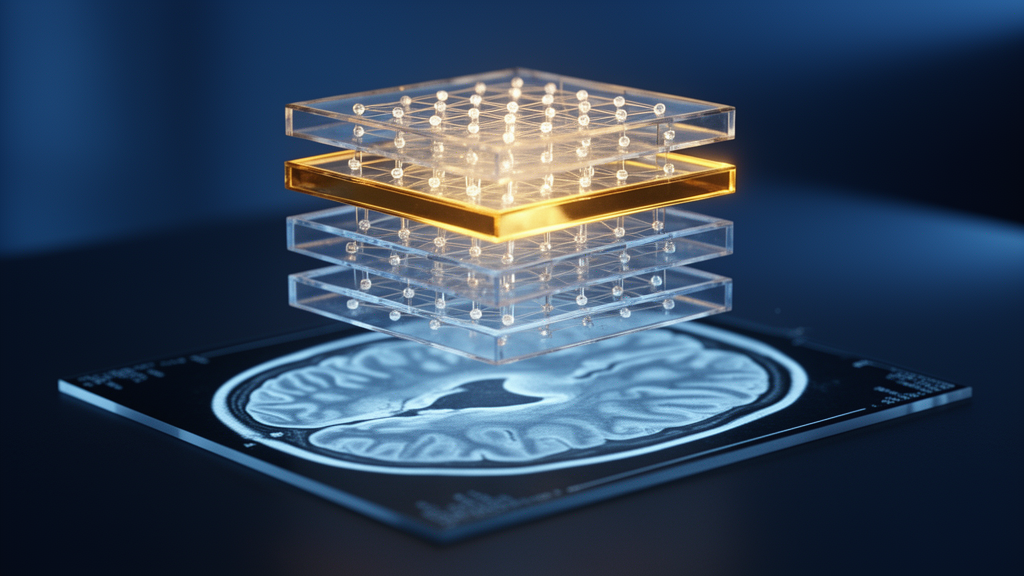
At the heart of the proposed method is the mixer-block itself. By combining the mixer layer with channel attention, the block captures global dependencies across the feature maps while simultaneously enhancing the extraction of important features. The mixer-block maintains a consistent structure across the different layers of the encoder, giving the architecture a uniform backbone.
It also functions as a set of skip-connections that bridge the semantic gap between the encoder and the decoder, a well-known challenge in segmentation networks where the coarse, high-level features of the encoder must be reconciled with the fine, spatially detailed representations needed for precise pixel-level output. Evaluation was carried out on four medical image datasets, providing a broader test than single-dataset studies often allow. On the BUSI breast ultrasound dataset, the method achieved a Dice coefficient of 81.45 percent and an IoU of 69.58 percent, the highest values reported in the study.
The comparisons placed the proposed approach against CNN-based segmentation methods, and it improved over the majority of those competitors on the BUSI dataset. As with any reported benchmark, the figures come from the datasets and comparison methods used in the study, and the authors' claims are tied to those evaluation conditions. The reported performance on BUSI, with improvements over most compared CNN-based methods, marks the concrete contribution: a practical MLP-based segmentation pipeline whose mixer-blocks refine encoder features, strengthen skip-connections, and deliver competitive Dice and IoU scores on breast ultrasound data.
Subject of Research: MLP-mixer and channel attention architecture for medical image segmentation
Article Title: Enhanced medical image segmentation using mixer-block integration with channel attention mechanism
Article References: Tagnamas, J., Ramadan, H., Yahyaouy, A., & Tairi, H. (2026). Enhanced medical image segmentation using mixer-block integration with channel attention mechanism. Multimedia Tools and Applications, 85(11), 822. https://doi.org/10.1007/s11042-026-21988-y
Image Credits: AI Generated
DOI: 10.1007/s11042-026-21988-y
Keywords: medical image segmentation, MLP-Mixer, channel attention, breast ultrasound, Dice coefficient, IoU, encoder-decoder, skip-connections, deep learning, BUSI dataset, multi-layer perceptrons, Enhanced
News Source: Ophelia Keating. (October 27, 2026). MLP mixer blocks with channel attention sharpen medical image segmentation. Scienmag.