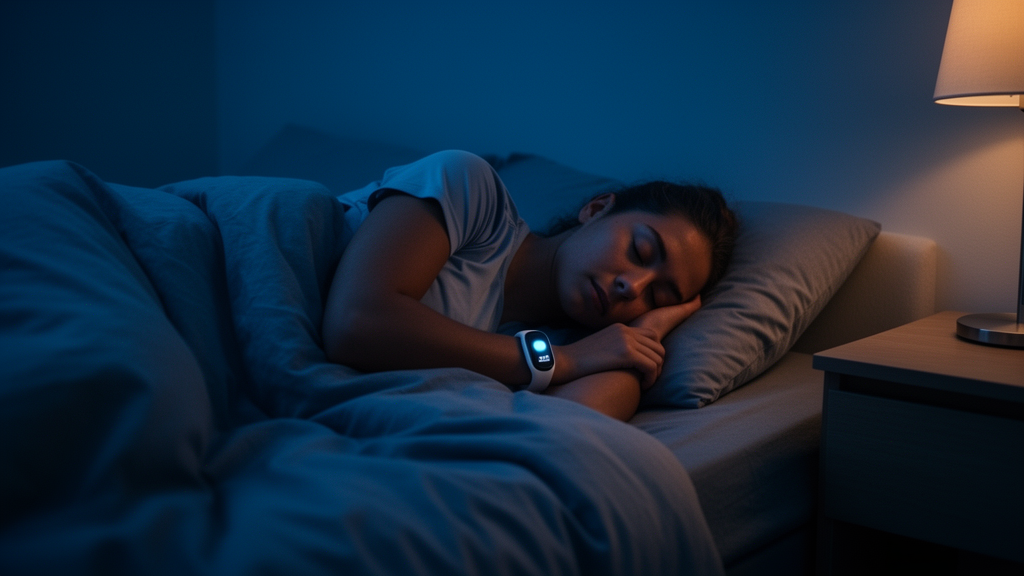
Fourteen weeks of daily monitoring in an Italian Serie A women’s football squad have revealed a subtle but important split in how sleep relates to recovery: how continuously players slept predicted their autonomic recovery, while how long they slept shaped only how recovered they felt. The study, published in Scientific Reports, followed fifteen elite players across a competitive season using wrist-worn actigraphy, morning heart rate variability recordings and brief daily questionnaires, offering an ecologically grounded picture of the sleep–recovery relationship in elite female athletes. The autonomic marker at the centre of the analysis was the natural logarithm of the root mean square of successive differences in heart beat intervals, abbreviated LnRMSSD, measured each morning from a one-minute seated recording.
Because the researchers collected these measures in the players’ everyday environment during a competitive season rather than in a laboratory, the dataset reflects real-world conditions. When the team analysed the data with linear mixed-effects models, a statistical approach that accounts for the many repeated observations nested within each player, sleep efficiency emerged as a significant positive predictor of LnRMSSD, with an estimated coefficient of 0.008 and a p-value of 0.014. Total sleep time, by contrast, showed no significant independent association with LnRMSSD in the simultaneous model, with an estimated coefficient of −0.051 and a p-value of 0.158.
Duration was not irrelevant, however. When players slept longer than their own usual amount, they reported higher subjective sleep quality, with an estimated coefficient of 0.199 and a p-value below 0.001, and greater perceived recovery, with an estimated coefficient of 0.305 and a p-value of 0.003. In other words, the perceptual layer of recovery responded to sleep extension even though the physiological marker did not.
The authors interpret this divergence as a caution against reading any single metric as a proxy for recovery as a whole, since objective autonomic state and an athlete’s own sense of readiness can move along different tracks. Match days left a distinct imprint on both subjective measures. Compared with training and rest days, players reported lower sleep quality on match days, with an estimated coefficient of −0.314 and a p-value of 0.007, and substantially lower perceived recovery, with an estimated coefficient of −1.583 and a p-value below 0.001.
The study’s design carries clear strengths and boundaries. Monitoring fifteen players from a single Serie A club over fourteen weeks provides dense, repeated, real-world data, and the mixed-effects modelling respects the structure of that data. At the same time, the sample comes from one team in one league, the associations are observational rather than causal, and the one-minute morning HRV recording is a brief snapshot of a dynamic physiological system.
The findings should therefore be read as evidence about how sleep and recovery markers co-vary in this setting, not as prescriptions for interventions. For practitioners, the practical message is that recovery monitoring in elite female football should not rest on one number. A player whose sleep efficiency is dipping may be accumulating autonomic strain even if her total sleep time looks adequate, while another who sleeps longer than usual may feel refreshed without any measurable change in her HRV. The authors argue that monitoring systems should encompass multifaceted and integrated strategies that account for different dimensions of fitness and performance, combining objective actigraphy, autonomic markers and the athlete’s own perception of sleep and recovery.
Subject of Research: Sleep and recovery monitoring in elite female football players
Article Title: Multidimensional recovery monitoring in elite female football: an ecological understanding of sleep–recovery relationship
Article References: Di Pinto, G., Marcelli, L., Colombo, A., Bertollo, M., Sartor, F., di Fronso, S., & Curzi, D. (2026). Multidimensional recovery monitoring in elite female football: an ecological understanding of sleep–recovery relationship. Scientific Reports. https://doi.org/10.1038/s41598-026-76175-8
Image Credits: AI Generated
DOI: 10.1038/s41598-026-76175-8
Keywords: sleep efficiency, heart rate variability, LnRMSSD, elite female football, recovery monitoring, actigraphy, Serie A, autonomic recovery, match days, mixed-effects models, sports science, Multidimensional
News Source: Denise Maddox. (October 27, 2026). Sleep efficiency, not sleep length, tracks autonomic recovery in elite female footballers. Scienmag.