A comprehensive review published in the journal Ionics examines how oxide dispersion strengthened (ODS) ferritic stainless steels are emerging as candidate interconnect materials for intermediate-temperature solid oxide cells, covering both solid oxide fuel cells and solid oxide electrolysis cells. The review, led by Asad Ullah Khan and Muhammad Zubair Khan with colleagues, was published on 26 October 2026 and consolidates existing knowledge on how nanoscale oxide particles influence material behavior, microstructural development and long-term performance under operating conditions relevant to these devices. According to the review, metallic interconnect systems face major durability challenges, and ODS ferritic stainless steels are being investigated as a way to address them.
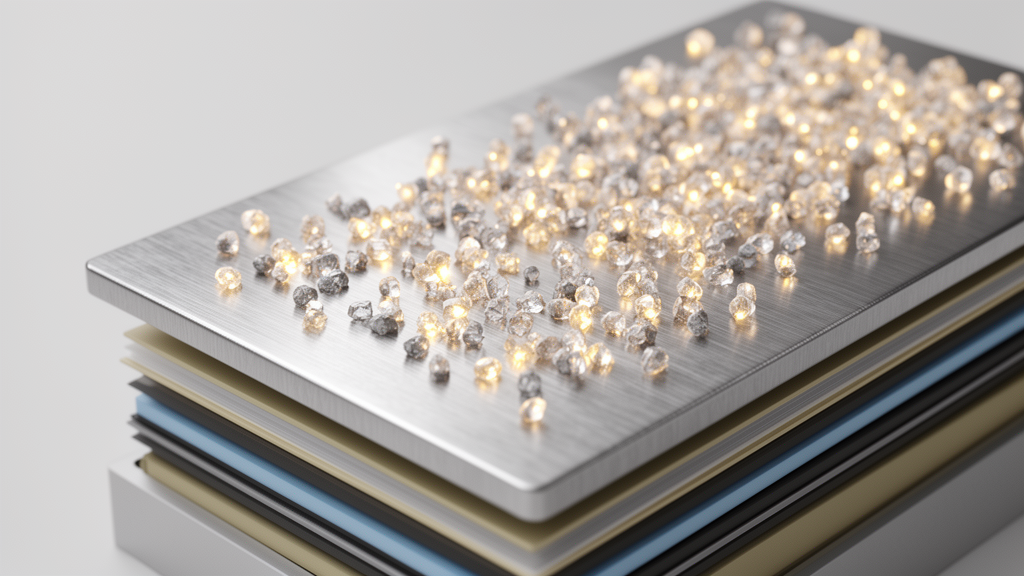
The central idea is that finely dispersed nanoscale oxide particles act as pinning centers within the steel microstructure, suppressing grain coarsening and cation diffusion during high-temperature service. The review reports that these dispersoids also promote the formation of stable, adherent oxide scales on the steel surface. This microstructural effect is described as reducing oxidation kinetics, suppressing chromium volatilization, and preserving electrical conductivity during prolonged operation, which are the degradation pathways that limit interconnect lifetime in solid oxide cell stacks.
To organize the field, the authors develop a structured framework linking materials design, processing strategies and degradation mechanisms through a rigorous structure-processing-performance relationship. Three main processing routes are critically discussed: mechanical alloying, powder metallurgy and in-situ synthesis. The review identifies trade-offs among these routes with respect to microstructural uniformity, manufacturability and scalability, noting that the choice of processing pathway shapes whether the intended nanoscale dispersion can be achieved reliably and at industrial scale.
The authors caution that the benefits are not universal. Although selected ODS systems demonstrate improved oxidation behavior and stability of area-specific resistance, these improvements depend on composition and processing conditions. The review also stresses that long-term evidence under realistic dual-atmosphere conditions remains limited, particularly for solid oxide electrolysis cell operation, meaning that performance data collected in fuel-cell-relevant settings cannot simply be assumed to carry over to electrolysis modes.
Beyond the laboratory scale, the review highlights major unresolved issues of scalability, cost optimization and stack-level validation. The authors identify future research directions needed to close these gaps, positioning ODS ferritic stainless steels as promising but not yet commercially proven interconnect materials for next-generation solid oxide cells. As a review article, the work synthesizes and evaluates existing literature rather than presenting new experimental results, and its conclusions reflect the current state of published evidence on these materials.
Subject of Research: Oxide dispersion strengthened ferritic stainless-steel interconnects for solid oxide fuel cells and electrolysis cells
Article Title: Advanced oxide dispersion strengthened ferritic stainless-steel interconnects for next-generation solid oxide cells: A comprehensive review
Article References: Khan, A. U., Raza, M. A., Shams, S. S. A., Ishfaq, H. A., Hassan, M. H., Ullah, A., Koh, J.-H., Saleem, M., Song, R.-H., & Khan, M. Z. (2026). Advanced oxide dispersion strengthened ferritic stainless-steel interconnects for next-generation solid oxide cells: A comprehensive review. Ionics. https://doi.org/10.1007/s11581-026-07604-x
Image Credits: AI Generated
DOI: 10.1007/s11581-026-07604-x
Keywords: solid oxide cells, interconnects, ODS steels, ferritic stainless steel, chromium volatilization, mechanical alloying, powder metallurgy, SOFC, SOEC, materials review, degradation mechanisms, scalability
News Source: Victoria Harrison. (October 27, 2026). Nanoscale Oxide Particles Could Make Steel Interconnects Last Longer in Fuel Cells. Scienmag.