• HOME
  • NEWS
  • EXPLORE
    • CAREER
      • Companies
      • Jobs
    • EVENTS
    • iGEM
      • News
      • Team
    • PHOTOS
    • VIDEO
    • WIKI
  • BLOG
  • COMMUNITY
    • FACEBOOK
    • INSTAGRAM
    • TWITTER
Monday, October 26, 2026
BIOENGINEER.ORG
No Result
View All Result
  • Login
  • HOME
  • NEWS
  • EXPLORE
    • CAREER
      • Companies
      • Jobs
        • Lecturer
        • PhD Studentship
        • Postdoc
        • Research Assistant
    • EVENTS
    • iGEM
      • News
      • Team
    • PHOTOS
    • VIDEO
    • WIKI
  • BLOG
  • COMMUNITY
    • FACEBOOK
    • INSTAGRAM
    • TWITTER
No Result
View All Result
Bioengineer.org
No Result
View All Result
Home NEWS Science News Technology

Adaptive Sliding Reduces Press Power for Metal Deformation

by
October 26, 2026
in Technology
Reading Time: 2 mins read
0
Adaptive Sliding Reduces Press Power for Metal Deformation

Adaptive Sliding Reduces Press Power for Metal Deformation

Share on FacebookShare on TwitterShare on LinkedinShare on RedditShare on Telegram

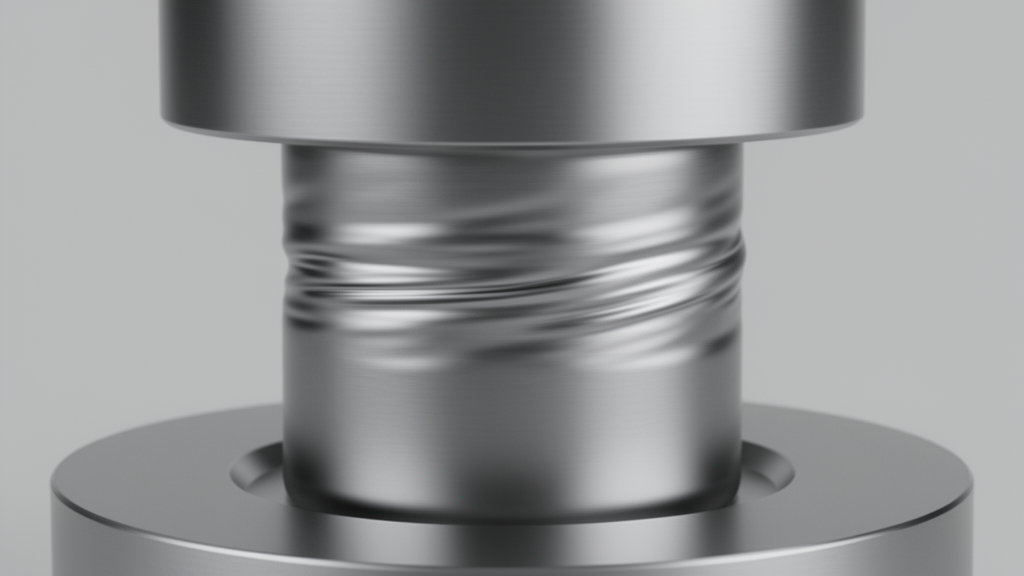
Researchers have proposed a new principle for severe plastic deformation (SPD) that renders such processes adaptive. Published in the Journal of Materials Science, the study introduces a mechanism where contact pressure is not produced by external loading of the workpiece. Instead, the pressure develops as a reaction from the tool itself, governed by its wedge-type geometry.

This shift in mechanical design aims to simplify the equipment required for high-intensity metal processing while maintaining the necessary conditions for plastic deformation. The core innovation lies in the automatic self-regulation of the deformation mode. The new adaptive approach eliminates the need for complex bidirectional loading systems.

By relying on the tool's geometry to dictate the pressure response, the process substantially reduces the power requirements of the equipment. This self-regulating nature makes the technology more energy-efficient and simplifies machine design, enabling straightforward scaling of the process. To validate this concept, the research team examined high pressure sliding as a practical example of the adaptive principle.

The study combined theoretical analysis, finite-element modeling, and experimental validation to assess the feasibility of the method. Theoretical models predicted that the pressure would automatically maintain the level required for plastic deformation. Experimental tests were conducted using copper samples to verify the theoretical and simulated outcomes.

The researchers subjected the copper to the adaptive high pressure sliding process and analyzed the resulting microstructure using electron backscatter diffraction (EBSD). The EBSD analysis confirmed the formation of an ultrafine-grained microstructure. Specifically, the copper exhibited equiaxed submicron grains, a hallmark of successful severe plastic deformation.

The reduction in equipment power requirements is a significant advantage of this adaptive approach. This efficiency opens the door to more straightforward scaling of the process, allowing for the production of larger volumes of ultrafine-grained materials without a proportional increase in energy consumption or equipment complexity. The study highlights the potential of adaptive SPD for the efficient deformation of thin-walled metallic materials.

Furthermore, the adaptive process serves as a promising preliminary processing stage prior to forming. The findings suggest that adaptive severe plastic deformation offers new possibilities for materials engineering. The successful validation on copper samples demonstrates the practical viability of the approach.

This research represents a step forward in the development of energy-efficient and scalable methods for creating high-performance materials.

Subject of Research: Adaptive high pressure sliding for scalable severe plastic deformation

Article Title: Adaptive high pressure sliding: toward scalable severe plastic deformation with reduced press capacity

Article References: Beygelzimer, Y., Davydenko, O., Bagliuk, G., Kyryliuk, S., Maj, M., Musial, S., & Estrin, Y. (2026). Adaptive high pressure sliding: toward scalable severe plastic deformation with reduced press capacity. Journal of Materials Science. https://doi.org/10.1007/s10853-026-13975-3

Image Credits: AI Generated

DOI: 10.1007/s10853-026-13975-3

Keywords: severe plastic deformation, adaptive processing, high pressure sliding, ultrafine-grained microstructure, copper, materials science, metal processing, finite-element modeling, EBSD analysis, wedge-type geometry, Adaptive, high

News Source: Denise Maddox. (October 26, 2026). Adaptive Sliding Reduces Press Power for Metal Deformation. Scienmag.


Tags: adaptiveadaptive processingcopperEBSD analysisFinite Element Modelinghighhigh pressure slidingmaterials sciencemetal processingsevere plastic deformationultrafine-grained microstructurewedge-type geometry
Share12Tweet7Share2ShareShareShare1

Related Posts

Research report: Clinical validation of a vial wall-based dielectric barrier discharge plasma activation device for plasma-activated platelet-rich plasma preparation in osteoarthritis pain management

Research report: Clinical validation of a vial wall-based dielectric barrier discharge plasma activation device for plasma-activated platelet-rich plasma preparation in osteoarthritis pain management

October 26, 2026
Drop Tests in Liquid Oxygen Reveal Which Ship Materials Could Ignite on Hydrogen Vessels

Drop Tests in Liquid Oxygen Reveal Which Ship Materials Could Ignite on Hydrogen Vessels

October 26, 2026

Porous adhesive layer roughly doubles bonding strength between dissimilar materials

October 26, 2026

Al2O3 Buffer Layer Separates Strain from Interface Effects in Crystallized Ge Films

October 26, 2026

POPULAR NEWS

  • Gene Network Study Reveals How Treadmill Training May Aid Spinal Cord Recovery

    Gene Network Study Reveals How Treadmill Training May Aid Spinal Cord Recovery

    29 shares
    Share 12 Tweet 7
  • Research report: Clinical validation of a vial wall-based dielectric barrier discharge plasma activation device for plasma-activated platelet-rich plasma preparation in osteoarthritis pain management

    29 shares
    Share 12 Tweet 7
  • Wearable Sensors Flag Autism Classroom Escalations Minutes Before They Begin

    29 shares
    Share 12 Tweet 7
  • Less Can Be More in Breast Cancer Treatment, Precision Oncology Editors Argue

    29 shares
    Share 12 Tweet 7

About

We bring you the latest biotechnology news from best research centers and universities around the world. Check our website.

Follow us

Recent News

Gene Network Study Reveals How Treadmill Training May Aid Spinal Cord Recovery

Research report: Clinical validation of a vial wall-based dielectric barrier discharge plasma activation device for plasma-activated platelet-rich plasma preparation in osteoarthritis pain management

Wearable Sensors Flag Autism Classroom Escalations Minutes Before They Begin

Subscribe to Blog via Email

Enter your email address to subscribe to this blog and receive notifications of new posts by email.

Join 85 other subscribers
  • Contact Us

Bioengineer.org © Copyright 2023 All Rights Reserved.

Welcome Back!

Login to your account below

Forgotten Password?

Retrieve your password

Please enter your username or email address to reset your password.

Log In
No Result
View All Result
  • Homepages
    • Home Page 1
    • Home Page 2
  • News
  • National
  • Business
  • Health
  • Lifestyle
  • Science

Bioengineer.org © Copyright 2023 All Rights Reserved.