• HOME
  • NEWS
  • EXPLORE
    • CAREER
      • Companies
      • Jobs
    • EVENTS
    • iGEM
      • News
      • Team
    • PHOTOS
    • VIDEO
    • WIKI
  • BLOG
  • COMMUNITY
    • FACEBOOK
    • INSTAGRAM
    • TWITTER
Monday, October 26, 2026
BIOENGINEER.ORG
No Result
View All Result
  • Login
  • HOME
  • NEWS
  • EXPLORE
    • CAREER
      • Companies
      • Jobs
        • Lecturer
        • PhD Studentship
        • Postdoc
        • Research Assistant
    • EVENTS
    • iGEM
      • News
      • Team
    • PHOTOS
    • VIDEO
    • WIKI
  • BLOG
  • COMMUNITY
    • FACEBOOK
    • INSTAGRAM
    • TWITTER
No Result
View All Result
Bioengineer.org
No Result
View All Result
Home NEWS Science News Cancer

Research report: Differential MMR protein stability and heterogeneity in bladder versus non-bladder urothelial carcinomas

by
October 26, 2026
in Cancer
Reading Time: 2 mins read
0
Research report: Differential MMR protein stability and heterogeneity in bladder versus non-bladder urothelial carcinomas

Research report: Differential MMR protein stability and heterogeneity in bladder versus non-bladder urothelial carcinomas

Share on FacebookShare on TwitterShare on LinkedinShare on RedditShare on Telegram

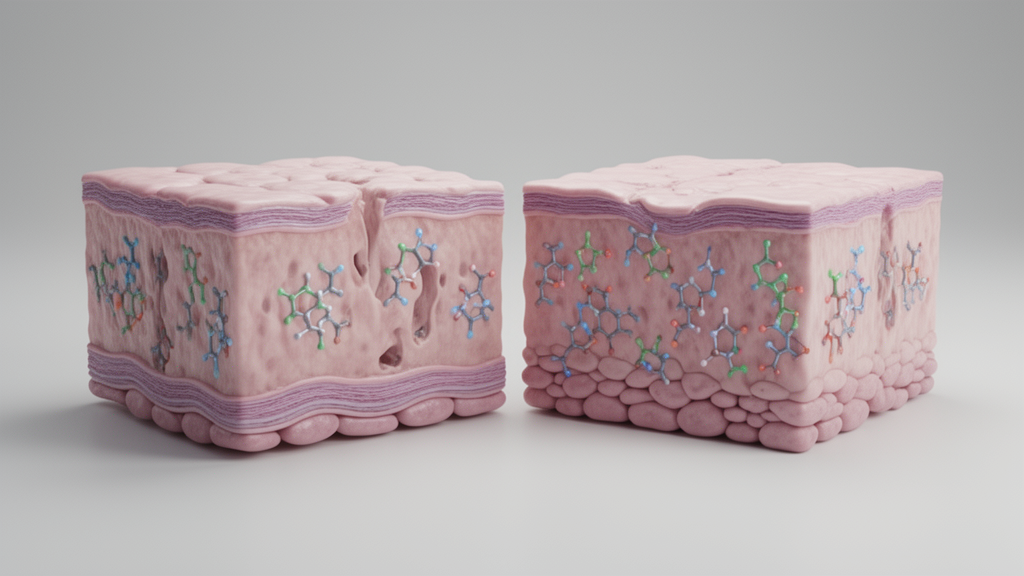
Mismatch repair deficiency was absent in all 72 bladder urothelial carcinoma cases analyzed in a cohort of 108 patients, and its status remained consistent across multiple specimens from every bladder patient who contributed more than one sample. In contrast, deficiency occurred in two of 35 upper-tract urothelial carcinomas and the single prostatic urothelial carcinoma included in the study. Among the few deficient non-bladder cases, some primary and metastatic lesions showed divergent mismatch repair status, indicating that biomarker results could differ between sampled tumors in the same patient.

For a subset of patients, investigators obtained multiple samples spanning primary tumors, locally invasive disease, metastases and recurrent tumors. This spatiotemporal collection permitted comparison of mismatch repair status not only between anatomic sites but also across stages and recurrences within individual patients. Investigators assessed expression of four mismatch repair proteins—MLH1, MSH2, MSH6 and PMS2—by immunohistochemistry.

All 72 bladder urothelial carcinoma cases were classified as proficient, and results were 100% concordant across the paired primary, locally invasive, metastatic or recurrent specimens examined from bladder patients. The non-bladder group produced a different but numerically limited pattern: two of 35 upper-tract cases were deficient, as was the one prostatic case. Within the small set of deficient non-bladder tumors, the researchers observed examples in which primary and metastatic lesions had divergent statuses.

The findings suggest a potential site-specific dichotomy in the stability of mismatch repair deficiency in urothelial carcinoma. Bladder tumors in this cohort combined a very low observed frequency of deficiency with stable classification across available longitudinal and metastatic samples, while the limited deficient non-bladder cases included discordant results between lesions. Because only three non-bladder cases were deficient, however, the authors describe the pattern as hypothesis-generating rather than conclusive.

The study does not establish how often mismatch repair status changes in non-bladder disease, why discordance occurred, or whether sampling additional lesions would affect clinical decisions. Validation in larger, independent cohorts would be required to assess the reproducibility and scope of the observed contrast. The results also do not directly demonstrate differences in immunotherapy response; they concern the detection and stability of a biomarker used to predict response in various cancers.

Subject of Research: Mismatch repair protein stability in bladder and non-bladder urothelial carcinoma

Article Title: Differential MMR protein stability and heterogeneity in bladder versus non-bladder urothelial carcinomas

Article References: Chen, H., Zhong, M., Zhang, T., Wen, Z., Zheng, Z., Chen, J., Feng, Y., & Zhu, J. (2026). Differential MMR protein stability and heterogeneity in bladder versus non-bladder urothelial carcinomas. BMC Cancer. https://doi.org/10.1186/s12885-026-16867-6

Image Credits: AI Generated

DOI: 10.1186/s12885-026-16867-6

Keywords: urothelial carcinoma, bladder cancer, mismatch repair, dMMR, MLH1, MSH2, MSH6, PMS2, immunohistochemistry, biomarker stability, Differential, protein

News Source: Nathaniel Bowman. (October 26, 2026). Research report: Differential MMR protein stability and heterogeneity in bladder versus non-bladder urothelial carcinomas. Scienmag.


Tags: biomarker stabilitybladder cancerDifferentialdMMRImmunohistochemistrymismatch repairMLH1MSH2MSH6PMS2proteinurothelial carcinoma
Share12Tweet7Share2ShareShareShare1

Related Posts

ENT meeting highlights GLP-1 research and gene therapy for hearing loss

ENT meeting highlights GLP-1 research and gene therapy for hearing loss

October 26, 2026
Retrospective study of colorectal cancer at a Sudanese regional center

Retrospective study of colorectal cancer at a Sudanese regional center

October 26, 2026

AI model improves recurrence prediction in early breast cancer trial

October 26, 2026

Handheld infrared imager matches laboratory chemical mapping performance

October 26, 2026

POPULAR NEWS

  • ENT meeting highlights GLP-1 research and gene therapy for hearing loss

    ENT meeting highlights GLP-1 research and gene therapy for hearing loss

    29 shares
    Share 12 Tweet 7
  • ATLAS detects quantum entanglement between particle pairs from Higgs decays

    29 shares
    Share 12 Tweet 7
  • Chickpea sulfate transporters vary in response to sulfur starvation

    29 shares
    Share 12 Tweet 7
  • RNA-scaffolded condensates help neurons read exceptionally long genes

    29 shares
    Share 12 Tweet 7

About

We bring you the latest biotechnology news from best research centers and universities around the world. Check our website.

Follow us

Recent News

Chickpea sulfate transporters vary in response to sulfur starvation

ENT meeting highlights GLP-1 research and gene therapy for hearing loss

ATLAS detects quantum entanglement between particle pairs from Higgs decays

Subscribe to Blog via Email

Enter your email address to subscribe to this blog and receive notifications of new posts by email.

Join 85 other subscribers
  • Contact Us

Bioengineer.org © Copyright 2023 All Rights Reserved.

Welcome Back!

Login to your account below

Forgotten Password?

Retrieve your password

Please enter your username or email address to reset your password.

Log In
No Result
View All Result
  • Homepages
    • Home Page 1
    • Home Page 2
  • News
  • National
  • Business
  • Health
  • Lifestyle
  • Science

Bioengineer.org © Copyright 2023 All Rights Reserved.