Nanopore amplicon sequencing identified infectious pathogens in eight culture-negative cases, finding fungi in three patients and bacteria in five, according to a small case series involving brain abscess, osteoarticular infection, pneumonia and skin infection. All eight patients had at least one underlying disease. Targeted antimicrobial therapy selected after sequencing was followed by clinical improvement in every case, supporting the approach’s potential utility in selected infections while leaving its comparative accuracy unestablished.
The study enrolled patients between July 2024 and October 2025. Investigators collected specimens from infection sites for both conventional culture and nanopore amplicon sequencing. Depending on the case, the materials included abscess material, ligament and intervertebral disc tissue, joint fluid, sputum and skin specimens.
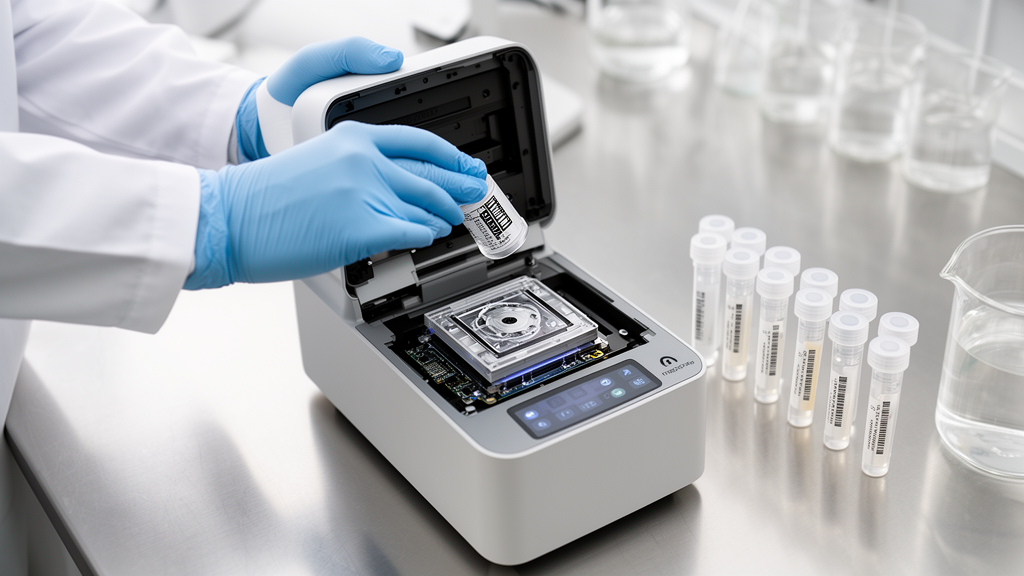
Conventional cultures yielded no organisms in any of the clinical specimens, so the infections were not resolved by culture. The series was intended to document cases in which sequencing was used alongside routine culture to provide pathogen information that could inform clinical decisions. For sequencing, the researchers used a MinION device and analyzed the generated reads through the EPI2ME platform.
Nanopore amplicon sequencing detected fungal pathogens in three patients and bacterial pathogens in five, producing a pathogen identification in each of the eight culture-negative cases. The report presents these observations as evidence of potential diagnostic utility, but the small and selected case population does not establish the method’s sensitivity, specificity, false-positive rate or performance relative to other molecular tests. All participants had an underlying medical condition, making the group clinically complex rather than representative of people with infectious disease generally.
Their conditions also covered diverse anatomical sites and pathogen classes, including the central nervous system, bones and joints, respiratory system and skin. This heterogeneity demonstrates how the method was used across several specimen types, but it prevents the cases from functioning as a controlled diagnostic-accuracy study. The series also cannot establish how frequently sequencing would identify a pathogen in routine practice or how often its results would be ambiguous or misleading.
The treatment experience is the clearest evidence of possible clinical utility. In each case, antimicrobial therapy was targeted to the pathogen identified by nanopore sequencing, and all patients subsequently improved clinically. The observations therefore connect sequencing-derived identifications with treatment selection and subsequent improvement, rather than showing that sequencing alone caused the favorable outcomes.
Its contribution is instead a clinically documented series of pathogen detections after culture was negative, followed by targeted treatment and observed improvement in all eight patients.
Subject of Research: Clinical utility of nanopore amplicon sequencing for detecting pathogens in culture-negative infections
Article Title: Clinical utility of nanopore amplicon sequencing in various culture-negative infectious diseases: a case series report
Article References: Lee, C. M., Kim, N., Jo, H. J., Kang, C. K., Choe, P. G., Kim, J. M., Lee, S., Moon, J., Park, W. B., & Kim, N. J. (2026). Clinical utility of nanopore amplicon sequencing in various culture-negative infectious diseases: a case series report. BMC Infectious Diseases. https://doi.org/10.1186/s12879-026-14284-5
Image Credits: AI Generated
DOI: 10.1186/s12879-026-14284-5
Keywords: nanopore sequencing, amplicon sequencing, culture-negative infection, pathogen detection, infectious diseases, antimicrobial therapy, case series, clinical diagnostics, fungal infection, bacterial infection, Clinical, utility
News Source: Ophelia Keating. (October 26, 2026). Nanopore sequencing identified pathogens in eight culture-negative infections. Scienmag.