Medical tourism could help selected public hospitals in Türkiye use available capacity and generate additional revenue, but a qualitative study of 13 institutional stakeholders found that modern infrastructure alone does not make a hospital operationally ready. Participants said expansion would require hospital-specific investment in international outreach, pre-arrival assessment, coordination, trained personnel, translation, travel and accommodation support, and post-treatment follow-up. They also emphasized possible risks involving workforce pressure, longer waiting times, preferential access, financial uncertainty, and diversion of resources from local healthcare needs.
The research, published in BMC Health Services Research, examined the tension between the proposed economic benefits of serving international patients in public institutions and the obligations of those institutions to local residents. Researchers conducted semi-structured interviews with 13 stakeholders, including Ministry of Health officials, academics, hospital administrators, and medical tourism coordinators. The interviews were analyzed using inductive qualitative content analysis. Six interrelated codes emerged: healthcare service quality, access to care, the balance between international and local patients, organizational capacity, financial implications, and equity in service delivery. This approach captured institutional perspectives rather than measuring patient flows, revenues, treatment outcomes, waiting times, or changes in resource use.
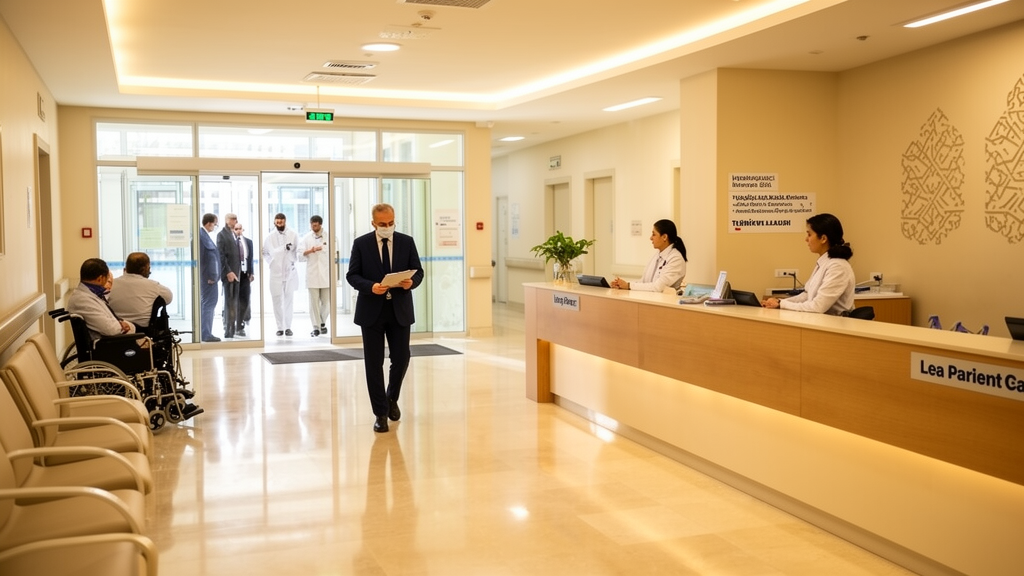
Participants identified selected public hospitals, particularly large city hospitals, as institutions with relevant infrastructural and clinical assets. They nevertheless described readiness as heterogeneous and conditional. Serving international patients requires more than access to physicians and treatment rooms: hospitals must be able to review cases before arrival, communicate across language and professional boundaries, organize complex patient journeys, and maintain contact with patients after treatment. Even a hospital with advanced physical infrastructure may lack international outreach, dedicated coordination, trained staff, translation services, logistical support, or reliable follow-up. The study therefore treats readiness as an organizational condition rather than a simple property of modern buildings, and its conclusions apply specifically to the institutional stakeholders interviewed rather than establishing the readiness of Türkiye’s public-hospital system as a whole.
Stakeholders raised several concerns about the balance between international and local patients. Additional international caseloads could place pressure on clinical and administrative staff and potentially contribute to longer waiting times for local patients. Preferential access was another concern, as were possible effects on equity in service delivery. Participants also identified the possibility that resources devoted to international patients could be diverted from domestic healthcare needs. These were perceived risks, not measured effects: the study did not compare waiting lists, staff workloads, or resource allocation before and after a medical-tourism program. Its findings show that participants anticipated these pressures and how they might affect public hospitals, but they do not quantify their occurrence or establish that medical tourism caused them.
The financial case was similarly uncertain. Medical tourism was described as a possible means of using otherwise idle capacity, generating income, and supporting healthcare investment. Yet hospitals expecting international patients would also face costs associated with pre-arrival assessment, language support, travel and accommodation coordination, staff training, and follow-up care. The study did not establish whether expected revenues would exceed these full financial and opportunity costs, including the value of capacity that might otherwise be available to local residents. Funding sources, net public benefit, and public acceptability therefore remain unresolved in the research rather than demonstrated benefits.
Overall, stakeholders viewed medical tourism as a conditional possibility for selected public hospitals, not a model that every institution should adopt. The researchers concluded that physical infrastructure should not be treated as evidence of operational readiness. Before expansion, individual hospitals would need assessment of workforce capacity, financing, governance, local patient access, and equity implications. The study further supports conducting feasibility, budget-impact, and equity assessments and considering initial participation only in institutions with demonstrable excess capacity. Because the research was a small qualitative interview study, it cannot establish the scale of potential benefits or harms; instead, it identifies the operational requirements and unresolved questions that public hospitals would need to address before treating international-patient revenue as a solution to underused capacity.
Subject of Research: Institutional readiness and equity implications of medical tourism in Türkiye’s public hospitals
Article Title: Between opportunity and equity: navigating medical tourism in Türkiye’s public hospitals
Article References: Al Hajeri, M., Demirci, Ş., Aras, Y., & Avcı, K. (2026). Between opportunity and equity: navigating medical tourism in Türkiye’s public hospitals. BMC Health Services Research, 26(1), Article 1326. https://doi.org/10.1186/s12913-026-15636-2
Image Credits: AI Generated
DOI: 10.1186/s12913-026-15636-2
Keywords: medical tourism, public hospitals, Türkiye, healthcare equity, hospital capacity, organizational readiness, health services research, qualitative interviews, healthcare financing, international patients, Between, opportunity
News Source: Ophelia Keating. (October 26, 2026). Qualitative study maps medical tourism readiness in Türkiye’s public hospitals. Scienmag.