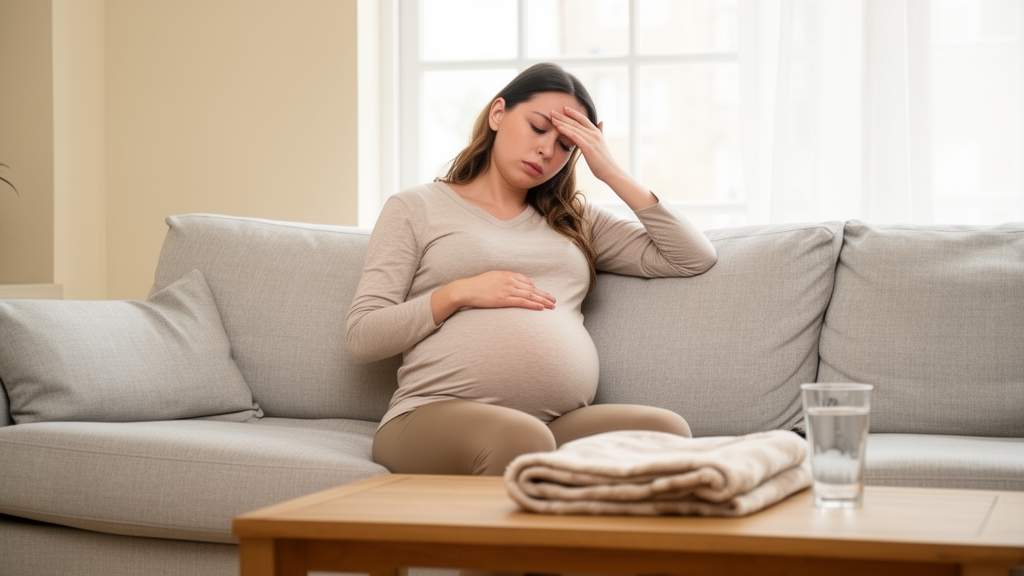
Pregnant women in Taiwan who reported classic symptoms of anemia, such as tiredness and dizziness, were significantly more likely to actually have clinical anemia than symptom-free counterparts, according to a cross-sectional study published in Frontiers in Global Women’s Health. Among 187 pregnant women recruited at Taipei Tzu Chi Hospital between November 2018 and August 2019, self-perceived anemia symptoms were reported by 20.7 percent of those with mild anemia and 10.0 percent of those with moderate anemia, compared with only 5.5 percent of non-anemic participants, a difference that reached statistical significance with a p-value of 0.023. The finding matters because the everyday discomforts of pregnancy can easily mask the warning signs of a condition that affects roughly one in five women in the cohort and carries well-documented risks for both mother and baby.
The research team, led by Yi Cheng Hou of the Department of Nutrition at Taipei Tzu Chi Hospital together with colleagues from pediatrics, obstetrics and gynecology, and public health, set out to explore a deceptively simple question: do the symptoms women commonly experience during pregnancy overlap with, and potentially signal, clinical anemia? Anemia remains one of the world’s most widespread nutritional problems, and iron deficiency anemia is considered the most serious and prevalent deficiency illness globally. Poor nutrition is the leading cause in most regions, and deficiencies of micronutrients including iron, folate and vitamin B12 are well-established culprits, while parasitic infections contribute substantially in developing countries. East Asia shows one of the highest ratios of years lived with disability attributable to anemia among women relative to men, underscoring the regional relevance of the problem.
The Taiwanese context gives the study particular weight. According to the most recent Nutrition and Health Survey in Taiwan, the prevalence of anemia in women over the age of 13 is approximately 4.0 percent, but it peaks at 14.0 percent among women of childbearing age, between 19 and 44 years old, before declining with age. The elevated burden in reproductive-age women is largely attributed to menstrual blood loss, a pattern observed worldwide. In lower-income countries the situation is far graver, with anemia affecting as much as 60 percent of women of childbearing age. Dietary iron intake is a modifiable factor, yet a recent review by O’Toole and colleagues found that despite the high prevalence of anemia, only about half of international guidelines include recommendations related to iron intake. Taiwanese dietary recommendations call for iron intake during the third trimester and lactation to increase by 200 percent, to a total of 45 milligrams per day.
The study enrolled 191 pregnant women aged 15 to 45 with no major comorbidities such as cancer, diabetes or cardiovascular disease, recruited by convenience sampling from the hospital’s outpatient obstetrics and gynecology department. After excluding participants with incomplete data, 187 women remained, of whom 39, or 20.9 percent, were classified as anemic based on serum hemoglobin measured on the day of recruitment. The researchers applied World Health Organization criteria from the Vitamin and Mineral Nutrition Information System: hemoglobin above 10.9 g/dL in any trimester was considered adequate, 10.0 to 10.9 g/dL indicated mild anemia, 7.0 to 9.9 g/dL moderate anemia, and below 7.0 g/dL severe anemia. No participant in the cohort met the threshold for severe anemia. Participants completed a questionnaire identical to that used in the Pregnant Women Nutrition Status Tracking Program, a subsection of the national survey run by Taiwan’s Ministry of Health and Welfare from 2017 to 2019, covering socioeconomic status and closed-ended questions about pregnancy-related symptoms.
The hematological comparison between groups was striking and internally consistent. Women with anemia had a mean hemoglobin of 10.2 plus or minus 0.7 g/dL, versus 12.3 plus or minus 0.8 g/dL in non-anemic women, a difference significant at p below 0.001. Nearly every standard anemia biomarker was significantly lower in the anemic group: ferritin, the most sensitive marker of iron stores in the absence of inflammation, averaged 24.2 versus 30.0 μg/L; red blood cell counts, hematocrit, mean corpuscular volume, mean corpuscular hemoglobin and mean corpuscular hemoglobin concentration were all significantly reduced. Plasma folate was also lower in the anemic group, at 11.7 versus 14.9 ng/mL, though still within the normal range. Conversely, total iron binding capacity and unsaturated iron binding capacity were significantly higher among anemic women, at 487 versus 438 μg/dL and 425 versus 357 μg/dL respectively, reflecting increased transferrin synthesis as the body prepares to capture more iron. Red blood cell folate and vitamin B12 did not differ significantly between groups.
Several baseline characteristics also distinguished the groups. The distribution across pregnancy trimesters differed significantly, with 43.6 percent of anemic participants in their third trimester, compared with 23.6 percent of non-anemic participants, a pattern the authors attribute to the increased iron demands of fetal growth. Intriguingly, 73.9 percent of anemic participants were carrying a female fetus, compared with 50.0 percent of the non-anemic group, a difference that was statistically significant but for which the authors note no established biological explanation exists, flagging it for future investigation. Age, pre-pregnancy body mass index, parity, education, income and iron supplementation showed no significant differences between the groups. The absence of an education gradient contrasts with studies from Nepal and Iran, which the authors suggest may reflect Taiwan’s national health insurance system, which provides healthcare services and pregnancy-related knowledge that could buffer the effects of lower formal education.
On symptom reporting, the picture was more nuanced. The proportion of women reporting self-perceived anemia symptoms, such as tiredness, headache and dizziness, differed significantly across the three severity groups. Bloating showed a trend with severity, reported by 31.0 percent of mildly anemic and 70.0 percent of moderately anemic women versus 50.0 percent of non-anemic women, but this did not reach statistical significance at p equal to 0.063. Heartburn approached significance at p equal to 0.052, reported by 17.2 percent of mildly anemic women, yet it was entirely absent among the moderately anemic, so no clear dose-response pattern emerged. Constipation, nausea, edema and muscle spasms showed no significant differences between groups, consistent with their roots in the hormonal and physiological changes of pregnancy, including the effects of human chorionic gonadotropin, estrogen and progesterone on gastrointestinal motility.
The authors argue that the overlap between pregnancy discomforts and anemia symptoms is precisely why symptoms should not be dismissed. A recent study by Nissen and colleagues found that each pregnancy symptom tends to have a specific trimester of onset, with breathlessness, fatigue and heartburn peaking in the third trimester due to physiological demands and hormonal changes. Anemia, meanwhile, is classically characterized by breathlessness and fatigue, so the two presentations can converge. The authors also point out that anemia at any stage of pregnancy carries documented risks, including intrauterine growth retardation, intrauterine death, preterm birth, low birth weight, increased likelihood of small-for-gestational-age babies and higher neonatal intensive care unit admission, and that first-trimester anemia is associated with a higher prevalence of postpartum anxiety and depression. Multiple studies emphasize that starting pregnancy with sufficient iron stores is more protective than relying on supplementation to treat anemia once it develops, since supplementation may be inadequate when iron reserves are depleted from the outset.
The study’s strengths lie in its comprehensive blood panels, which allowed simultaneous assessment of iron status, folate, vitamin B12 and red cell indices, and in its combination of subjective symptom reports with objective biochemical data, potentially enhancing the utility of non-invasive screening in clinical settings. The limitations, however, are substantial and the authors are candid about them. Convenience sampling may introduce bias and limits generalizability beyond the single hospital population. The cross-sectional design cannot establish causal relationships, and symptom questions relied on participant perception and recall. The relatively mild severity of anemia in the cohort, with no severe cases, may also explain why edema and muscle spasms, which are mechanistically linked to chronic anemia through impaired oxygen delivery and abnormal muscle energy metabolism, did not differ between groups.
The practical takeaway offered by the researchers is measured: when pregnant women report symptoms suggestive of anemia, screening should be performed whenever possible to confirm whether clinical anemia is present, since self-reported symptoms alone cannot distinguish between ordinary pregnancy discomfort and a treatable nutritional deficiency. The authors suggest that this approach could facilitate early detection and intervention to mitigate the negative effects of anemia on the mother and fetus. They also call for larger cohorts to verify the marginal associations observed for bloating and heartburn, and for further study of the gastrointestinal symptoms that anemic individuals may experience but rarely report. For now, the study adds a data point to an ongoing conversation about how best to identify hidden iron deficiency during pregnancy, a condition that remains both extremely common and, with adequate dietary iron and timely screening, largely preventable.
Subject of Research: The association between common pregnancy symptoms and clinically diagnosed anemia in Taiwanese pregnant women
Article Title: Common symptoms in pregnancy and their correlations with anemia
Article References: Hou, Y. C., Zhao, L. L., Zhang, Y. G., Wu, J. H., & Bai, C. H. (2026). Common symptoms in pregnancy and their correlations with anemia. Frontiers in Global Women's Health, 7, Article 1554655. https://doi.org/10.3389/fgwh.2026.1554655
Image Credits: AI Generated
DOI: 10.3389/fgwh.2026.1554655
Keywords: anemia, pregnancy, iron deficiency, hemoglobin, ferritin, pregnancy symptoms, Taiwan, maternal health, cross-sectional study, nutritional deficiency, third trimester, anemia screening
News Source: Harold Sullivan. (October 26, 2026). Tiredness and Dizziness in Pregnancy May Signal Hidden Anemia, Taiwanese Study Finds. Scienmag.