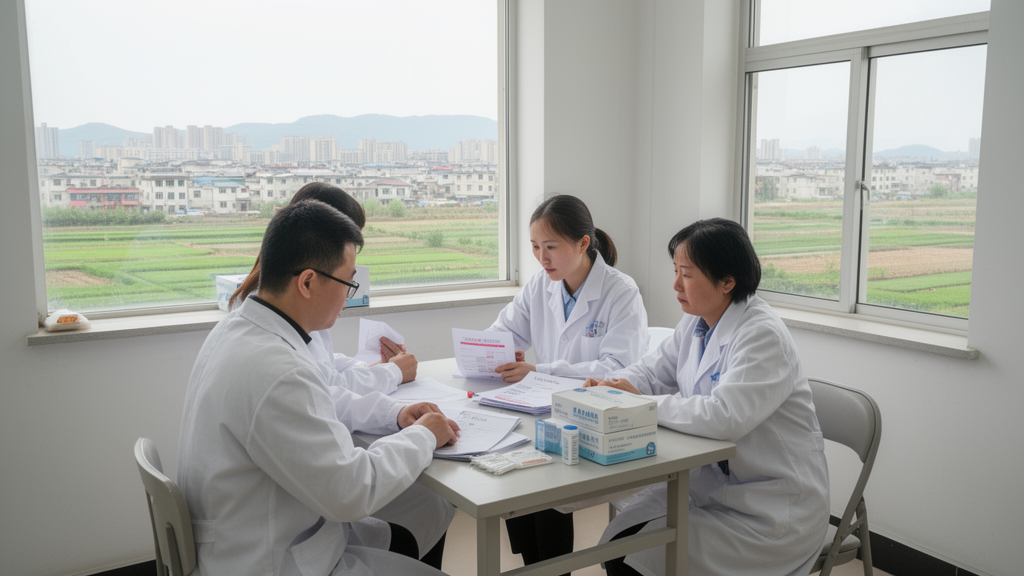
Chinese regions with the highest levels of deprivation experienced faster increases in reported HIV incidence and AIDS mortality from 2010 to 2019, according to an ecological analysis of provincial surveillance data. The most deprived regions also had higher HIV incidence and AIDS mortality rates than the least deprived regions, while the association between deprivation and HIV incidence was not uniformly linear.
The researchers compared four regional groups defined by the General Deprivation Index, using the least deprived group, Q1, as the reference. Eastern coastal regions generally had lower index values, whereas western regions had higher values, indicating greater deprivation. The analysis assessed trends in HIV incidence and AIDS mortality across the groups and estimated incidence and mortality ratios relative to Q1. Joinpoint regression was used to examine temporal trends, while negative binomial regression was used to estimate the ratios.
Between 2010 and 2019, the annual percentage change in HIV incidence in the highest-deprivation regions was 10.94% (95% confidence interval: 9.67%–12.22%). AIDS mortality increased more rapidly in the same regions, with an annual percentage change of 14.19% (95% confidence interval: 12.32%–16.10%). These figures represent modeled average annual trends over the study period. Compared with the least deprived regions, the highest-deprivation regions had a reported HIV incidence rate 1.30 times as high (95% confidence interval: 1.11–1.52) and an AIDS mortality rate 2.19 times as high (95% confidence interval: 1.78–2.70).
The authors identified a non-linear association between deprivation and HIV incidence, with Q4, the highest-deprivation group, bearing the heaviest disease burden. Because the study was ecological and analyzed geographical units using surveillance data, its results describe an association between regional conditions and reported outcomes rather than demonstrating that deprivation directly caused individual infections or deaths. The findings are also limited to the provinces and period covered by the surveillance analysis. The study does not establish individual-level risk or resolve the processes underlying the observed provincial differences, and its scale requires that regional disparities be distinguished from individual experience.
Subject of Research: Ecological analysis of regional deprivation and HIV/AIDS outcomes in Chinese provinces
Article Title: Regional deprivation and HIV/AIDS outcomes in China: an ecological study using provincial surveillance data
Article References: Xu, C., Wang, M., Dai, L., Chen, X., Guo, S., Zhao, X., & Wang, Y. (2026). Regional deprivation and HIV/AIDS outcomes in China: an ecological study using provincial surveillance data. BMC Public Health. https://doi.org/10.1186/s12889-026-29641-x
Image Credits: AI Generated
DOI: 10.1186/s12889-026-29641-x
Keywords: HIV incidence, AIDS mortality, regional deprivation, China, provincial surveillance, health inequalities, ecological study, public health, Regional, deprivation, AIDS, outcomes
News Source: Kristina Jarvis. (October 26, 2026). Ecological study links Chinese provincial deprivation to unequal HIV/AIDS outcomes. Scienmag.