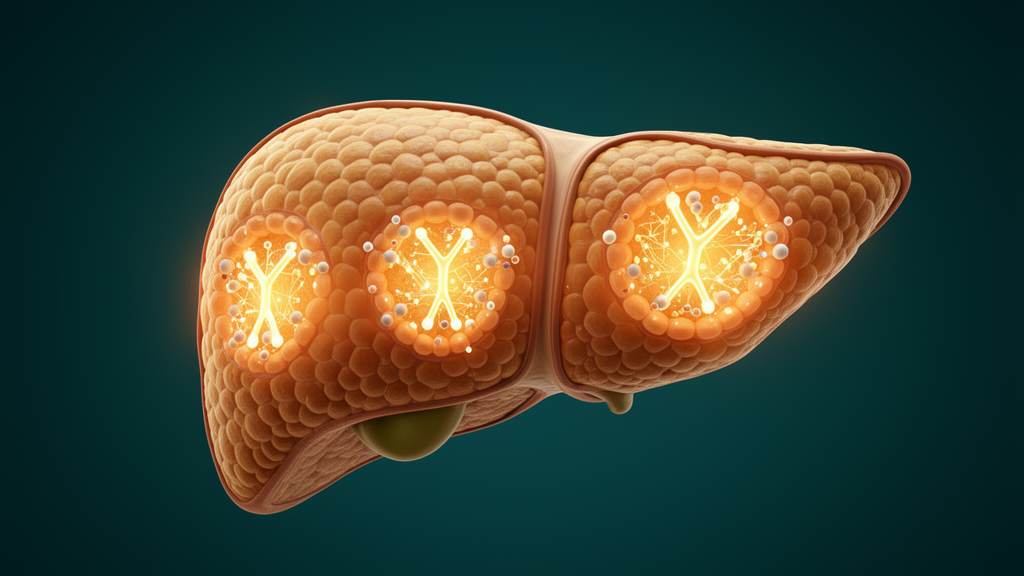
Hepatocellular carcinoma, the most common form of liver cancer, is diagnosed two to four times more often in men than in women. Known behavioral and metabolic differences, including viral hepatitis, alcohol use and adiposity, account for only part of that gap, pointing to sex-specific host biology as an additional driver. A review published in Molecular Biology Reports by Yang Zhou and Yiyu Qin assembles the epidemiologic and experimental evidence implicating one candidate in particular: the androgen receptor, a ligand-activated transcription factor expressed in hepatocytes and in most hepatocellular carcinomas.
The epidemiologic case rests on prospective cohorts that have linked higher circulating testosterone and higher sex hormone-binding globulin to later liver cancer risk. Yet the experimental picture is not straightforward. When sex hormone-binding globulin is raised experimentally, it suppresses rather than promotes hepatocarcinogenesis, a discordance the authors argue must be weighed when interpreting the hormone associations observed in human populations.
The review organizes the underlying biology into several modules. One concerns constitutively active androgen receptor and its splice variants, which can signal without ligand. Another involves kinase-driven phosphorylation of the receptor. Downstream effectors of proliferation, invasion and angiogenesis form a third module, while non-coding RNA circuits, androgen-metabolizing enzymes and the systemic endocrine axis, and the influence of androgen on the tumor immune microenvironment complete the framework. Importantly, the weight of each module differs across disease contexts: the authors distinguish hepatitis B virus-related, hepatitis C virus-related, metabolic dysfunction-associated and anabolic steroid-induced hepatocellular carcinoma, suggesting that androgen receptor signaling does not act through a single uniform pathway but interacts differently with distinct etiologies of liver cancer.
Therapeutic work remains largely preclinical. Reported strategies center on androgen receptor antagonists combined with tyrosine kinase inhibitors or immune checkpoint blockade, on degraders aimed at androgen receptor splice variants, on proteolysis-targeting chimeras and nucleic-acid approaches designed to eliminate ligand-independent receptor states, and on inhibitors of androgen-metabolizing enzymes. Androgen receptor blockade is already an established treatment principle in prostate cancer, which makes its extension to liver cancer an attractive but unproven proposition.
Two problems still limit translation, according to the review. First, androgen receptor signaling appears oncogenic in most experimental settings but tumor-suppressive in some, meaning that blocking the receptor could be harmful in certain tumor contexts. Second, androgens suppress antitumor immunity in certain contexts while enhancing it in others, complicating any strategy that combines androgen receptor targeting with immunotherapy. Clarifying when each behavior holds is what will determine whether androgen receptor-directed therapy can realistically be extended from prostate cancer to liver cancer. The review’s contribution is primarily integrative rather than reporting new experimental data: it draws together cohort findings, mechanistic studies and preclinical therapeutic work into a single framework, and it flags the internal contradictions, such as the sex hormone-binding globulin discordance and the context-dependent effects on immunity, that any future clinical development will need to resolve. The authors present the therapeutic possibilities as directions for further study rather than established options for patients with hepatocellular carcinoma.
Subject of Research: Androgen receptor signaling in hepatocellular carcinoma: mechanisms of male predominance and therapeutic opportunities
Article Title: Androgen receptor signaling in hepatocellular carcinoma: mechanisms of male predominance and therapeutic opportunities
Article References: Zhou, Y., & Qin, Y. (2026). Androgen receptor signaling in hepatocellular carcinoma: mechanisms of male predominance and therapeutic opportunities. Molecular Biology Reports, 53(1), Article 1819. https://doi.org/10.1007/s11033-026-12976-4
Image Credits: AI Generated
DOI: 10.1007/s11033-026-12976-4
Keywords: Androgen, receptor, signaling, hepatocellular, carcinoma, mechanisms, male, predominance, therapeutic, opportunities, scientific research
News Source: Drew Townsend. (October 26, 2026). Androgen Receptor Signaling May Explain Why Liver Cancer Strikes Men Far More Often. Scienmag.