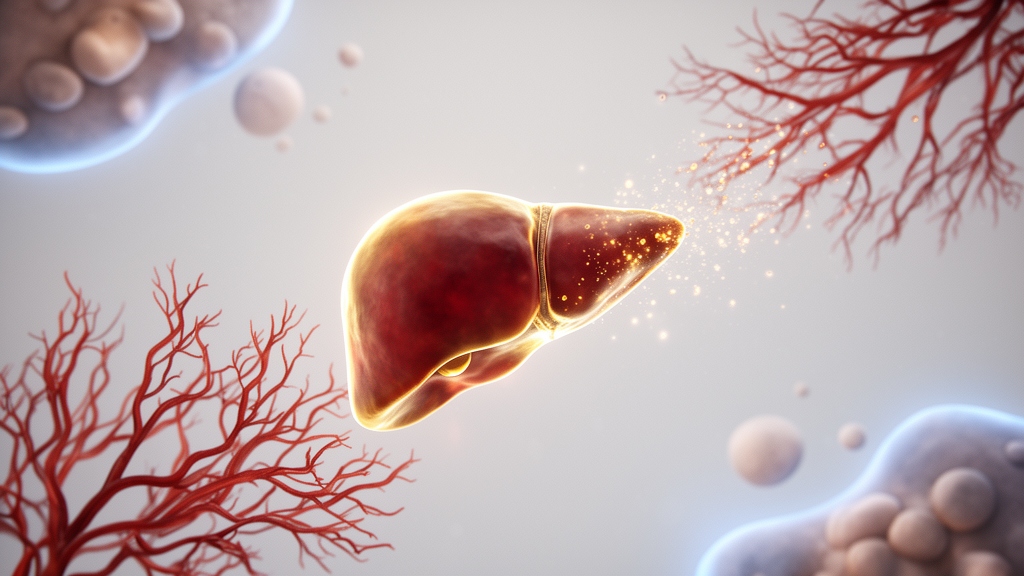
A sulfated polysaccharide extracted from Gracilaria gracilis, a red seaweed harvested off the South African coast, has shown a striking ability to protect the livers of diabetic rats from the metabolic chaos that accompanies type 2 diabetes. In a new study, researchers report that the compound suppressed excessive glucose production in hepatic tissue, restored a battery of antioxidant defenses, normalized amino acid metabolism, and reversed the lipid accumulation that drives a condition known as diabetic hepatopathy. The findings, generated through a combination of enzyme assays and gas chromatography–mass spectrometry metabolite profiling, position this seaweed-derived molecule as a multi-targeted candidate for treating one of the most underappreciated complications of diabetes.
Diabetic hepatopathy is a form of non-alcoholic fatty liver disease that arises when impaired glucose homeostasis in hepatic tissues spirals into a broader clinical spectrum, spanning abnormal liver enzyme profiles, glycogenic hepatopathy, cirrhosis, and even acute liver failure. Because type 2 diabetes accounts for over 90 percent of all diabetes-related morbidity and mortality, the burden of liver involvement is enormous. In type 2 diabetes, insulin resistance alters hepatic glucose uptake and utilization, ultimately exacerbating hepatic glucose output and fueling blood glucose spikes. Perturbed lipid pathways add to the damage: heightened hepatic fatty acid uptake, increased de novo lipogenesis, and reduced secretion of very low-density lipoprotein conspire to produce hypertriglyceridemia and hypercholesterolemia. Disordered amino acid metabolism further exacerbates hepatic glucose production, deepening the tissues’ insensitivity to insulin and culminating in glucotoxicity.
The interplay of these pathophysiological activities generates reactive oxygen species and free radicals, creating an imbalance between oxidant and antioxidant systems termed oxidative stress. Excess intracellular glucose is diverted into alternative pathways that generate toxic byproducts; non-enzymatic enolization of glucose can produce superoxide anion and reactive ketoaldehyde species that disrupt the liver’s redox balance. When catalase and glutathione peroxidase activity falter, hydroxyl radicals attack membrane lipids, triggering peroxidation that yields malondialdehyde and 4-hydroxy-2-nonenal. Lipid peroxidation is central to the pathology of diabetic hepatopathy, making it a valuable treatment target. Against this backdrop, the research team, working at the University of KwaZulu-Natal in Durban, South Africa, set out to test whether sulfated polysaccharides from Gracilaria gracilis could intervene across glucose, lipid, and amino acid metabolism while simultaneously ameliorating oxidative stress in hepatic tissue.
The experimental design was rigorous. Fifty-one male Sprague Dawley rats were acclimatized for seven days and then assigned to six groups: a normal control, an untreated diabetic control, diabetic rats given the standard drug metformin at 200 milligrams per kilogram of body weight, diabetic rats given the seaweed compound at a low dose of 150 milligrams per kilogram, diabetic rats given a high dose of 300 milligrams per kilogram, and a normal toxicological control of non-diabetic rats receiving the high dose. Type 2 diabetes was induced using the fructose-streptozotocin method, in which rats received 10 percent fructose solution ad libitum for two weeks followed by a single intraperitoneal injection of streptozotocin at 40 milligrams per kilogram. Animals with non-fasting blood glucose readings above 200 milligrams per deciliter were classified as diabetic. Treatments were administered orally five days per week across a four-week intervention period, with body weight and blood glucose monitored weekly. All procedures received prior approval from the university’s Animal Ethics Committee.
The results on hepatic glucose metabolism were unambiguous. Activities of fructose-1,6-bisphosphatase, glucose-6-phosphatase, and glycogen phosphorylase were significantly increased in the diabetic control group, pointing to active gluconeogenesis and glycogenolysis following diabetes induction. The first two enzymes govern key steps of gluconeogenesis—the conversion of fructose-1,6-bisphosphate to fructose-6-phosphate and the terminal dephosphorylation of glucose-6-phosphate to free glucose—while glycogen phosphorylase initiates glycogen breakdown into glucose-1-phosphate, which is subsequently funneled toward glucose-6-phosphate. Together, the elevated activity of these three enzymes signals a shift away from glycolysis and toward disordered glucose metabolism, with downstream consequences for the citric acid cycle, the malate–aspartate shuttle, and the Warburg effect, ultimately curtailing hepatic ATP availability. Treatment with the polysaccharide reversed this pattern at both doses, suppressing the enzyme activities and upregulating glucose metabolic pathways, thereby inhibiting gluconeogenesis and glycogenolysis and improving ATP production in the liver.
The antioxidant findings were equally compelling. The diabetic control rats showed significant depletion in hepatic activities of superoxide dismutase and catalase, along with reduced levels of glutathione and decreased activities of glutathione reductase, glutathione peroxidase, and glutathione S-transferase. These reductions portray perturbed glutathione homeostasis and indicate hepatic oxidative stress; the decreased glutathione S-transferase activity further signals elevated reactive oxygen species. Superoxide dismutase converts superoxide anion to hydrogen peroxide, which degrades into hydroxyl radicals when the peroxide is not reduced by glutathione peroxidase and catalase to water and oxygen. Following treatment with the seaweed compound, glutathione levels and the activities of all these enzymes were significantly elevated, comparing favorably with the normal control group. The compound also significantly reduced hepatic malondialdehyde levels, a marker of lipid peroxidation, indicating an ameliorative effect on the oxidative damage that corrodes liver membranes in diabetes.
Metabolite profiling by gas chromatography–mass spectrometry revealed the molecular fingerprints of the disease and the treatment. The livers of normal control rats contained urea, alpha-ketoglutaric acid, palmitoleic acid, pentadecanoic acid, linoleic acid, cis-vaccenic acid, arachidonic acid, eicosapentaenoic acid, cholesterol, and dihydrobrassicasterol, among other metabolites. In the untreated diabetic group, levels of arachidonic acid, dihydrobrassicasterol, eicosapentaenoic acid, and cis-vaccenic acid were depleted, while diabetes generated nicotinamide, cholestadiene, 2-hexyloctanoic acid, linolenic acid, 24-dehydrocholesterol, heptadecanoic acid, squalene, and docosahexanoic acid. At the low dose, the polysaccharide restored eicosapentaenoic acid levels while depleting the diabetes-generated nicotinamide, heptadecanoic acid, linolenic acid, docosahexanoic acid, and 24-dehydrocholesterol. At the high dose, it depleted pentadecanoic acid, linoleic acid, cis-vaccenic acid, and cholesteryl nonanoate, while generating glycerin, 3-methyldecanoic acid, tetradecanoic acid, eicosanoic acid, and 4,5-diamino-6-hydroxypyrimidine. Heatmap and principal component analysis confirmed distinct changes in hepatic metabolite distribution between the treated groups and the untreated diabetic group.
Pathway enrichment analysis using the MetaboAnalyst 6.0 server translated these metabolite shifts into functional terms. Diabetes induction downregulated pathways for the citric acid cycle, the malate–aspartate shuttle, and the Warburg effect, all of which were upregulated following treatment with both doses of the compound; at the high dose, treatment also triggered the activation of galactose metabolism. Lipid metabolism was similarly dysregulated, with downregulation of linoleic and alpha-linolenic acid metabolism, oxidation of branched-chain fatty acids, phytanic acid peroxisomal oxidation, plasmalogen synthesis, mitochondrial beta-oxidation of long-chain saturated fatty acids, steroidogenesis, carnitine synthesis, and bile acid biosynthesis, while propanoate metabolism was activated. Treatment upregulated these lipid pathways while concomitantly inactivating propanoate metabolism, and fatty acid biosynthesis and glycerolipid metabolism were activated at the high dose. Amino acid metabolism was also dysregulated in diabetes, and treatment restored the urea cycle, ammonia recycling, aspartate and glutamate metabolism, and related pathways, with the low dose inactivating d-arginine and d-ornithine metabolism, the glucose–alanine cycle, tryptophan metabolism, and tyrosine metabolism.
The clinical relevance of these molecular changes is anchored in serum transaminase levels. Aspartate transaminase and alanine transaminase were significantly elevated in the serum of untreated diabetic rats, reflecting depleted hepatic availability of these enzymes for transamination activity. Alanine transaminase converts alanine to pyruvate and glutamate by transferring an amino group to alpha-ketoglutarate, a crucial step in amino acid metabolism whose reversal constitutes the glucose–alanine cycle that drives gluconeogenesis. Aspartate transaminase performs an analogous transfer from aspartate, and the glutamate generated from both reactions is converted to ammonia, which feeds into the urea cycle. The reduced hepatic level of alpha-ketoglutarate observed in the diabetic rats and the dysregulated glucose–alanine cycle, alanine metabolism, beta-alanine metabolism, and glutamate metabolism pathways all corroborate this picture. Treatment with the polysaccharide upregulated these pathways, restored alpha-ketoglutarate concentration, and significantly suppressed serum levels of the hepatic markers, corresponding directly to clinically measurable endpoints that could serve as valuable biomarkers for monitoring therapeutic responses in future studies.
The study’s authors are careful to note the limitations. While animal models of type 2 diabetes share many features with human disease, significant differences in genetics, physiology, and environmental factors can influence the development and progression of diabetic hepatopathy. The doses and duration used in this rodent trial may not directly translate to human clinical settings due to bioavailability, safety, and tolerability considerations. Further preclinical studies optimizing dosing regimens, assessing long-term safety and efficacy, and elucidating the molecular mechanisms underlying the observed metabolic and antioxidant effects are required, as are clinical trials to establish translational relevance. Nevertheless, the multi-targeted action of the Gracilaria gracilis sulfated polysaccharide—spanning glucose, amino acid, and lipid metabolism alongside potent antioxidant activity—marks it as a promising candidate for managing diabetic hepatopathy, a condition whose rising prevalence continues to challenge conventional therapy and drive the search for affordable, naturally derived bioactive ingredients.
Subject of Research: Protective effects of sulfated polysaccharides from Gracilaria gracilis on hepatic metabolism and oxidative stress in type 2 diabetic rats
Article Title: Metabolite Profiling, Modulation of Glucose Metabolism and Antioxidant Activity Reveals the Protective Effect of Sulfated Polysaccharides From Gracilaria gracilis in Hepatic Tissues of Type 2 Diabetic Rats
Article References: Mpungose, L., Olasehinde, T. A., Erukainure, O. L., Kumar, A., Islam, M. S., & Olaniran, A. O. (2026). Metabolite Profiling, Modulation of Glucose Metabolism and Antioxidant Activity Reveals the Protective Effect of Sulfated Polysaccharides From Gracilaria gracilis in Hepatic Tissues of Type 2 Diabetic Rats. Food Science & Nutrition, 14(10), Article e72425. https://doi.org/10.1002/fsn3.72425
Image Credits: AI Generated
DOI: 10.1002/fsn3.72425
Keywords: Gracilaria gracilis, sulfated polysaccharides, type 2 diabetes, diabetic hepatopathy, oxidative stress, gluconeogenesis, metabolomics, lipid peroxidation, red seaweed, rat model, antioxidant enzymes, liver metabolism
News Source: Alan Morgan. (October 26, 2026). Red Seaweed Compound Shields Diabetic Livers From Metabolic Damage in Rats. Scienmag.