Human cells can only make functional transfer RNAs from a subset of genes if a two-part cutting-and-sealing reaction removes short intervening sequences from the nascent RNA. A study published open access in Genome Biology on 26 October 2026 reports that this splicing step is not a free-floating editing job but is physically tied to the machinery that transcribes the tRNA genes in the first place, and that its timing is governed by crosstalk between the nucleus and the mitochondria. The work, led by Dhivakar Mani, Suresh Perumal, Aravind Ramanathan, Alexander Rouvenski and Nayef Jarrous, addresses a long-standing gap: how and where the human tRNA splicing complex actually operates inside cells.
The human genome carries hundreds of tRNA genes, and a subset of them is interrupted by short introns. RNA polymerase III transcribes these genes into precursor tRNAs, which must shed their flanking sequences through the action of RNase P and RNase Z before maturation. The intron itself is removed by the tRNA splicing complex, which consists of a tRNA splicing endoribonuclease complex that cuts out the intron and a tRNA ligase complex that joins the resulting exon halves. Until now, the cellular setting in which this ligase performs exon ligation had not been defined.
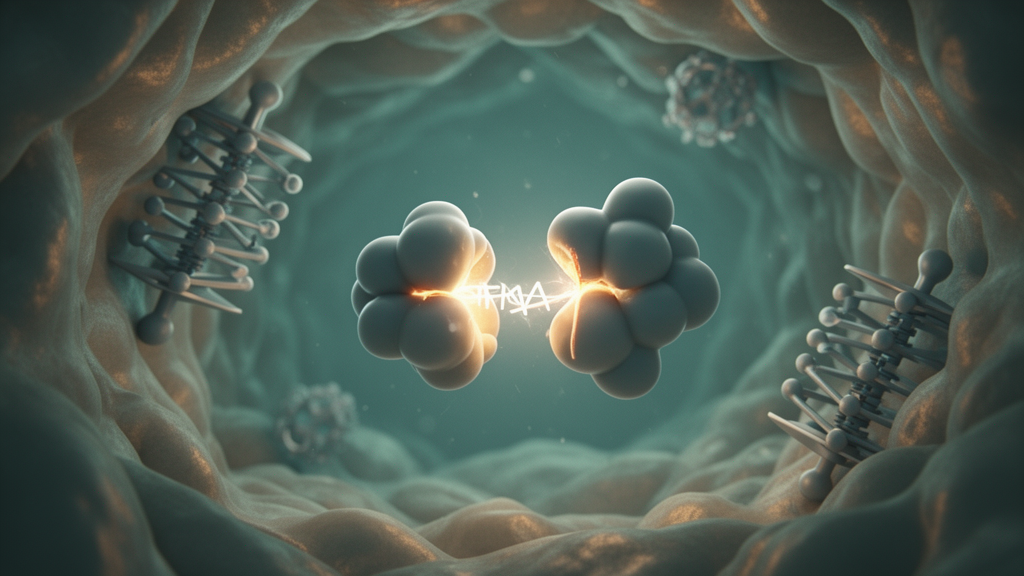
Using human cell systems, the researchers found that transcription complexes assembled on intron-containing tRNA genes possess the tRNA ligase complex as an integral component. The catalytic subunit of this ligase, HSPC117, is an RTCB-type enzyme that normally resides in the cytoplasm in association with mitochondria. The study shows that HSPC117 transiently relocates to the nucleoplasm during the S phase of the cell cycle, and there promotes the second step of splicing, exon ligation, for a select set of intron-containing tRNAs. This coupling means the ligase acts directly on transcripts as they are being produced by polymerase III.
The functional importance of this recruitment became clear when the team disrupted HSPC117. Knockout of the gene, or expression of an inactive mutant of the enzyme, led to severe inhibition of both transcription and exon ligation. The authors attribute this to the assembly of deficient transcription complexes, implying that HSPC117 is not merely a downstream editor of tRNA precursors but a structural and functional part of the transcription machinery itself. In other words, removing the ligase compromises the very complexes that are supposed to read the tRNA genes.
The disruption extended beyond tRNA maturation. Cells lacking functional HSPC117 showed a deficiency of the perinucleolar compartments, and this defect arose from reduced expression of H1 RNA, which the study identifies as essential for RNA polymerase III transcription. This links the ligase to a broader regulatory circuit: HSPC117 supports the expression of H1 RNA, which in turn supports polymerase III transcription, which produces the very tRNA precursors that HSPC117 helps to splice.
The authors conclude that transcription complexes execute the splicing of select intron-containing tRNAs and that this two-stage reaction is time-based on a mitonuclear communication mechanism controlling the tRNA ligase HSPC117 in human cells. The findings are drawn from cell-based experiments, and the study identifies a regulatory architecture rather than any therapeutic application. Even so, the work reframes tRNA intron splicing as a transcription-coupled, cell-cycle-timed process whose key enzyme shuttles between cytoplasmic, mitochondrial and nuclear compartments, and it positions mitonuclear signaling as a direct controller of gene expression at the level of RNA polymerase III transcription complexes.
Subject of Research: Mitonuclear control of transcription complexes regulates tRNA splicing
Article Title: Mitonuclear control of transcription complexes regulates tRNA splicing
Article References: Mani, D., Perumal, S., Ramanathan, A., Rouvenski, A., & Jarrous, N. (2026). Mitonuclear control of transcription complexes regulates tRNA splicing. Genome Biology. https://doi.org/10.1186/s13059-026-04320-7
Image Credits: AI Generated
DOI: 10.1186/s13059-026-04320-7
Keywords: Mitonuclear, control, transcription, complexes, regulates, tRNA, splicing, scientific research
News Source: Drew Townsend. (October 26, 2026). Mitochondria-associated ligase HSPC117 joins transcription complexes to splice tRNA exons. Scienmag.