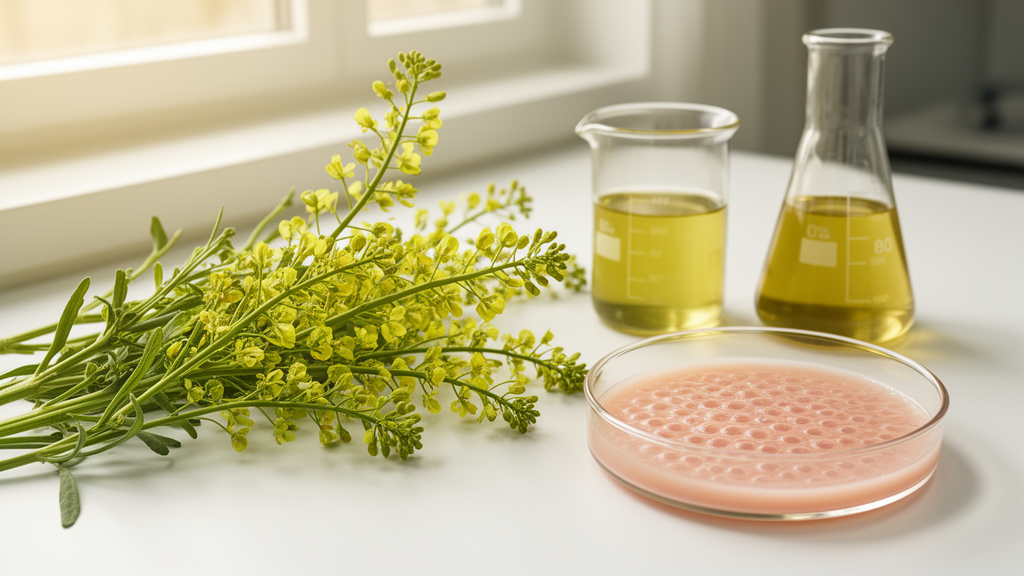
Researchers have completed a comprehensive comparative evaluation of eight species within the genus Reseda, a group of plants belonging to the family Resedaceae. The study, published in Plant Biosystems, focuses on the biological potential of these plants, which are native to Türkiye and include several endemic species. While Reseda lutea is known for its use in folk medicine and Reseda luteola for its traditional role as a dye plant, the scientific community has had limited data regarding the broader biological activities of the other species in the genus.
This new investigation aims to fill that gap by systematically analyzing the chemical composition and bioactivity of eight distinct species, including R. alba, R. aucheri subsp. rotundifolia, R. lutea, R. luteola, R. orientalis, and the endemic R. balansae, R. coodei, and R. tomentosa. The research team employed methanol extracts from the aerial parts of these plants to conduct a series of rigorous laboratory assays. The primary objective was to quantify the total phenolic content (TPC) and total flavonoid content (TFC).
To assess antioxidant capacity, the study utilized five different chemical methods: DPPH, ABTS, CUPRAC, FRAP, and nitric oxide (NO) scavenging assays. In addition to antioxidant properties, the researchers investigated the inhibitory effects of the extracts on specific enzymes, namely α-amylase and elastase. The study also measured the Sun Protection Factor (SPF) of the extracts.
These tests provide a multi-faceted view of the plants' utility in potential dermo-cosmetic and pharmaceutical applications, as outlined in the study's purpose and conclusion. The results revealed that Reseda lutea, R. luteola, and the endemic R. tomentosa exhibited the strongest antioxidant activities among the eight species tested. Reseda luteola stood out with the highest total phenolic content, measured at 104.31 mg GAE/g, and the highest total flavonoid content, recorded at 262.88 mg QE/g.
Furthermore, R. luteola demonstrated the greatest elastase inhibitory activity. However, the study noted that none of the extracts showed significant inhibitory activity against α-amylase. Regarding sun protection, the endemic species R. tomentosa recorded the highest SPF value.
Safety is a critical consideration for any plant-derived compound intended for human use, and the study included cytotoxicity and genotoxicity assessments to evaluate this. Cytotoxicity was measured using the MTT assay on human dermal fibroblasts. The results indicated that most of the Reseda extracts showed low cytotoxicity.
Notably, extracts from R. aucheri subsp. rotundifolia and R. tomentosa actually enhanced fibroblast viability above the control level. To assess the risk of genetic damage, the researchers conducted genotoxicity and antigenotoxicity tests using the SMART assay in Drosophila melanogaster. The results confirmed that none of the eight Reseda extracts were genotoxic.
More positively, Reseda lutea and R. luteola displayed antigenotoxic activity at both tested concentrations. The study concludes that Turkish Reseda species, particularly R. luteola and R. tomentosa, represent promising and non-toxic sources of antioxidant and skin-protective compounds. The combination of high phenolic content, strong antioxidant capacity, elastase inhibition, and high SPF makes these plants valuable candidates for dermo-cosmetic and pharmaceutical applications.
Subject of Research: Comparative bioactivity and chemical composition of eight Reseda species
Article Title: Comparative evaluation of antioxidant capacity, enzyme inhibition, cytotoxicity, and (anti) genotoxic effects of eight species of the genus Reseda (Resedaceae)
Article References: Zare, G., Diker, N. Y., Emecen, G., Arıtuluk Aydın, Z. C., Çilden, E., Altıntaş, Ö. E., Erdoğmuş, S. F., & Tatlı Çankaya, İ. İ. (2026). Comparative evaluation of antioxidant capacity, enzyme inhibition, cytotoxicity, and (anti) genotoxic effects of eight species of the genus Reseda (Resedaceae). Plant Biosystems, 160(6), 300. https://doi.org/10.1007/s44473-026-00306-2
Image Credits: AI Generated
DOI: 10.1007/s44473-026-00306-2
Keywords: Reseda, Antioxidant, Phenolic compounds, Cytotoxicity, Genotoxicity, Dermo-cosmetic, Enzyme inhibition, Sun protection factor, Plant bioactivity, Türkiye endemics, Comparative, evaluation
News Source: Alan Morgan. (October 26, 2026). Eight Reseda Species Show Strong Antioxidant and Skin Protection Potential. Scienmag.