• HOME
  • NEWS
  • EXPLORE
    • CAREER
      • Companies
      • Jobs
    • EVENTS
    • iGEM
      • News
      • Team
    • PHOTOS
    • VIDEO
    • WIKI
  • BLOG
  • COMMUNITY
    • FACEBOOK
    • INSTAGRAM
    • TWITTER
Monday, October 26, 2026
BIOENGINEER.ORG
No Result
View All Result
  • Login
  • HOME
  • NEWS
  • EXPLORE
    • CAREER
      • Companies
      • Jobs
        • Lecturer
        • PhD Studentship
        • Postdoc
        • Research Assistant
    • EVENTS
    • iGEM
      • News
      • Team
    • PHOTOS
    • VIDEO
    • WIKI
  • BLOG
  • COMMUNITY
    • FACEBOOK
    • INSTAGRAM
    • TWITTER
No Result
View All Result
Bioengineer.org
No Result
View All Result
Home NEWS Science News Biology

Sea ice supplies carbon equal to 14.7% of ice-edge phytoplankton production

by
October 26, 2026
in Biology
Reading Time: 2 mins read
0
Sea ice supplies carbon equal to 14.7% of ice-edge phytoplankton production

Sea ice supplies carbon equal to 14.7% of ice-edge phytoplankton production

Share on FacebookShare on TwitterShare on LinkedinShare on RedditShare on Telegram

Sea ice in the Southern Ocean delivers a substantial share of the organic carbon that supports Antarctic marine ecosystems, according to a study published in Biogeosciences. A research team led by Keigo D. Takahashi collected sea ice samples and examined the factors controlling the amounts of particulate organic carbon and nitrogen they contain, together with the stable isotope ratios of those materials.

The analysis showed that nutrients and organic matter influence the isotope compositions recorded in sea ice. By combining hydrographic measurements with sea-ice data, the team estimated how much particulate organic carbon the ice supplies to surrounding waters.

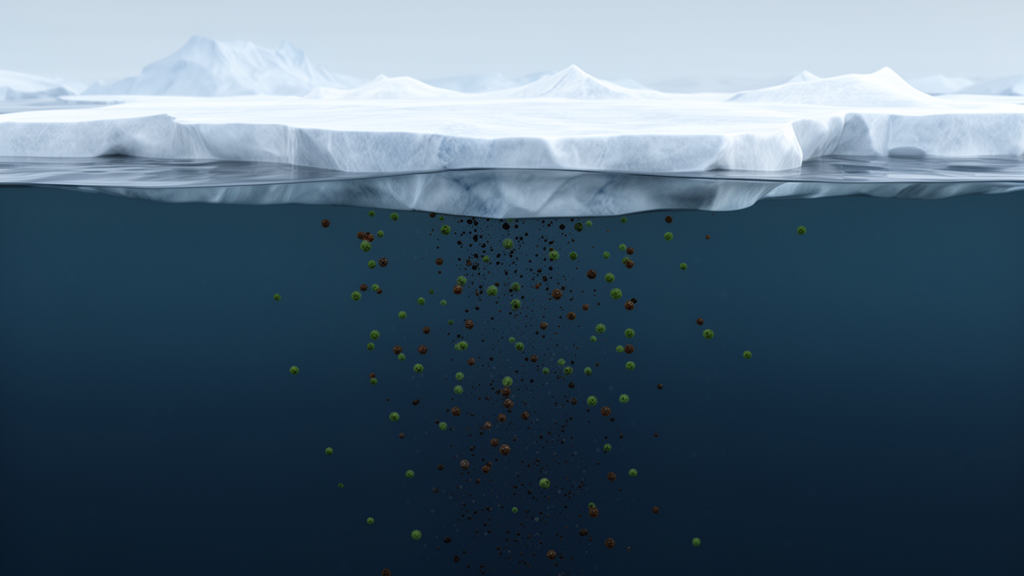
The estimate is notable: the carbon supplied from sea ice was equivalent to 14.7 percent of phytoplankton production near the ice edge. That figure points to sea-ice derived material as a meaningful contributor to the base of the Antarctic food web, complementing open-water plankton growth.

Because the findings rest on field collections and isotope measurements from the Southern Ocean, they provide a quantitative basis for assessing the role of sea-ice derived materials in Antarctic ecosystems. The study highlights the importance of ice-associated organic matter for carbon cycling in polar waters.

Subject of Research: Biogeochemical controls on particulate organic matter in Southern Ocean sea ice and its carbon supply to Antarctic ecosystems

Article Title: Biogeochemical controls on the concentrations and stable isotope compositions of sea-ice particulate organic matters in the Southern Ocean

Article References: Takahashi, K. D., Makabe, R., Sano, M., Nakata, K., Kimura, N., Nomura, D., Yamamoto-Kawai, M., Matsuda, R., Nojiro, N., Ito, M., Takao, S., Horimoto-Miyazaki, N., Tachibana, A., Kurosawa, N., Tamura, T., Komatsu, M., Ohshima, K. I., Mizobata, K., Aoki, S., & Moteki, M. (2026). Biogeochemical controls on the concentrations and stable isotope compositions of sea-ice particulate organic matters in the Southern Ocean. Biogeosciences, 23(20), 7505-7522. https://doi.org/10.5194/bg-23-7505-2026

Image Credits: AI Generated

DOI: 10.5194/bg-23-7505-2026

Keywords: Southern Ocean, sea ice, particulate organic carbon, stable isotopes, phytoplankton production, Antarctic ecosystems, biogeochemistry, ice edge, carbon cycling, nutrients, Biogeochemical, controls

News Source: Violet Maxwell. (October 26, 2026). Sea ice supplies carbon equal to 14.7% of ice-edge phytoplankton production. Scienmag.


Tags: Antarctic ecosystemsBiogeochemicalbiogeochemistrycarbon cyclingcontrolsice edgenutrientsparticulate organic carbonphytoplankton productionsea iceSouthern Oceanstable isotopes
Share12Tweet7Share2ShareShareShare1

Related Posts

Four New Lepiota Mushroom Species Uncovered in Hebei Province, China

Four New Lepiota Mushroom Species Uncovered in Hebei Province, China

October 26, 2026
Ultrasound-Guided PRP Injections Show Early Promise for Damaged Peripheral Nerves

Ultrasound-Guided PRP Injections Show Early Promise for Damaged Peripheral Nerves

October 26, 2026

Virus-like particle vaccine elicits cross-protection against L. donovani in mice

October 26, 2026

Lactic Acid Bacteria Reprogram and Displace Mastitis-Associated Staphylococcus aureus Biofilms

October 26, 2026

POPULAR NEWS

  • Four New Lepiota Mushroom Species Uncovered in Hebei Province, China

    Four New Lepiota Mushroom Species Uncovered in Hebei Province, China

    29 shares
    Share 12 Tweet 7
  • Spermidine and CaSPDS gene sustain salt tolerance in pepper seedlings

    29 shares
    Share 12 Tweet 7
  • Cheaper inertial sensors could match high-end units for onboard railway track inspection

    29 shares
    Share 12 Tweet 7
  • Sea ice supplies carbon equal to 14.7% of ice-edge phytoplankton production

    29 shares
    Share 12 Tweet 7

About

We bring you the latest biotechnology news from best research centers and universities around the world. Check our website.

Follow us

Recent News

Four New Lepiota Mushroom Species Uncovered in Hebei Province, China

Spermidine and CaSPDS gene sustain salt tolerance in pepper seedlings

Cheaper inertial sensors could match high-end units for onboard railway track inspection

Subscribe to Blog via Email

Enter your email address to subscribe to this blog and receive notifications of new posts by email.

Join 85 other subscribers
  • Contact Us

Bioengineer.org © Copyright 2023 All Rights Reserved.

Welcome Back!

Login to your account below

Forgotten Password?

Retrieve your password

Please enter your username or email address to reset your password.

Log In
No Result
View All Result
  • Homepages
    • Home Page 1
    • Home Page 2
  • News
  • National
  • Business
  • Health
  • Lifestyle
  • Science

Bioengineer.org © Copyright 2023 All Rights Reserved.