Platelet-rich plasma, a concentrated serum spun from a patient’s own blood, may be associated with gradual functional improvement in injured peripheral nerves, according to a retrospective exploratory study from the Third Affiliated Hospital of Sun Yat-sen University in Guangzhou, China. Researchers analyzed 37 patients with 48 injured nerves who received ultrasound-guided platelet-rich plasma injections between January 2021 and March 2025. Their findings, published in Experimental Biology and Medicine, suggest that the therapy appears safe and may be linked to sensory and motor gains over six months of follow-up. But the team is careful to frame the results as preliminary: the study was retrospective, uncontrolled, and exploratory, and a headline subgroup finding about treatment timing did not survive statistical correction for multiple comparisons.
The appeal of platelet-rich plasma lies in its biology. Prepared by drawing roughly 30 milliliters of venous blood and subjecting it to double centrifugation, the therapy concentrates platelets to three to five times their normal abundance, delivering platelet-derived growth factor, transforming growth factor beta, and vascular endothelial growth factor directly to the injury site. These factors support the inflammation, proliferation, and remodeling phases of tissue repair. Experimental work has shown that platelet-rich plasma can enhance myelin sheath and axon repair and alleviate neuropathic pain, yet clinical reports on its use for peripheral neuropathy remain scarce, with limited evidence suggesting safety and effectiveness in conditions such as carpal tunnel syndrome and diabetic peripheral neuropathy. Carpal tunnel syndrome, the most prevalent compressive nerve injury, affects between 2.7 and 5.8 percent of the general population, and roughly 2.3 percent of patients sustaining extremity trauma experience peripheral nerve injury.
Crucially, every patient in the cohort had already failed standard conservative treatments, including physiotherapy, exercise rehabilitation, corticosteroid injections, and glucose hydrodissection, for at least three months in most cases. Platelet-rich plasma was therefore deployed as a later-line rescue therapy rather than a first-line intervention. The cohort was dominated by compressive neuropathies such as carpal tunnel syndrome, cubital tunnel syndrome, and common peroneal nerve entrapment, which accounted for 62.5 percent of treated nerves, while traumatic injuries made up 22.9 percent, and smaller numbers of iatrogenic, inflammatory, ischemic, and toxic injuries completed the picture. The median nerve was the most frequently treated structure, representing 41.7 percent of cases, followed by the sciatic nerve and its branches, the brachial plexus and its branches, and the radial and common peroneal nerves.
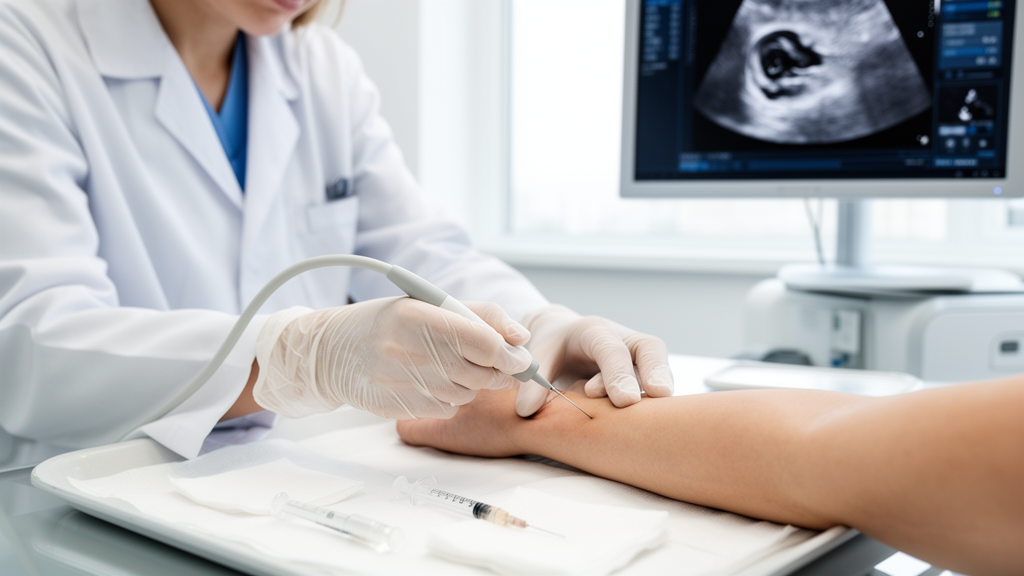
The injection technique relied on real-time ultrasound imaging. An experienced physician first pinpointed the lesion site of the target nerve using ultrasound, chose an appropriate puncture route, disinfected the area, and then advanced the needle under ultrasound guidance until it sat adjacent to the nerve. The platelet-rich plasma was then gently injected to surround the nerve, and patients were observed for at least 10 minutes afterward. The preparation yielded approximately 3.5 milliliters per patient, typically sufficient for one nerve, though a single preparation was sometimes divided for patients with bilateral or multiple nerve involvement. Most patients, roughly 75 percent, received two to four injections at one- to two-week intervals, with the schedule tailored to clinical response. A few patients received only a single injection due to financial constraints or transportation difficulties, while one patient, whose every injection yielded noticeable improvement, received up to eight.
Outcomes were assessed at one, three, and six months using two clinically meaningful thresholds. Sensory improvement was defined as a reduction of at least two points on the 11-point Numerical Rating Scale for each patient’s predominant complaint, whether neuropathic pain, numbness, formication, or burning, a threshold chosen because prior studies indicate a two-point reduction represents a clinically meaningful change. Motor improvement was defined as at least a one-grade gain on the Medical Research Council muscle strength scale, which runs from grade 0 for no contraction to grade 5 for normal strength. This inclusive definition was adopted because some patients started above grade 3, and defining recovery solely as reaching grade 3 would have missed meaningful gains in both mild and severe cases. The team also recorded all procedure-related complications through structured interviews at every follow-up visit.
The results revealed a distinct biphasic pattern of recovery. Sensory improvement peaked early, with 70.8 percent of nerves responding at one month, then held essentially stable at 66.7 percent at three months and 68.8 percent at six months. Motor function, by contrast, improved gradually, climbing from 50.0 percent at one month to 66.7 percent at three months and 69.4 percent at six months among the 36 nerves with baseline muscle strength below grade 5. The researchers hypothesize that platelet-rich plasma rapidly modulates inflammatory processes, alleviating sensory symptoms more quickly, while axonal regeneration and neuromuscular reinnervation, being more demanding processes, progress over a longer timeline. This early-sensory, delayed-motor pattern has been less frequently reported in previous platelet-rich plasma studies, though it aligns with observations in carpal tunnel syndrome patients who experienced rapid pain relief by one month but required six months for full functional recovery.
The most provocative finding emerged from an exploratory subgroup analysis stratified by symptom duration. Patients whose symptoms had lasted less than one year showed numerically higher improvement rates at six months than those with longer-standing injuries: 80.0 percent versus 56.5 percent for sensory improvement, and 85.0 percent versus 50.0 percent for motor improvement. The motor difference reached an uncorrected p-value of 0.034, but after applying a Bonferroni correction for the three comparisons at one, three, and six months, the corrected significance threshold of 0.0167 was not met. The researchers point to the biology of denervation as a plausible explanation: chronic injuries exhibit diminished Schwann cell activity, axonal growth cone collapse, and irreversible muscle atrophy, so platelet-rich plasma may work best by leveraging residual Schwann cell activity and a permissive microenvironment in acute and subacute injuries, while its efficacy in chronic cases may be limited by Schwann cell senescence and a fibrosis-dominated microenvironment.
Safety was a bright spot. Among 37 patients and 48 nerves, only one adverse event occurred, in 2.7 percent of patients and 2.1 percent of nerves: the needle tip inadvertently penetrated the epineurium, resulting in partial intraneural injection and transient dysesthesia in the affected nerve distribution, which resolved completely within two months without intervention. There were no cases of infection, hematoma, persistent pain, permanent neurological worsening, or allergic reactions, and no adverse events occurred in any injection where the needle tip was confirmed outside the epineurium. The team conducted two sensitivity analyses to shore up the findings: a patient-level analysis including only the more severely affected nerve of bilateral cases found responder rates highly consistent with the original nerve-level analysis, with Cohen’s h effect sizes between 0.02 and 0.14, and a stricter motor definition requiring achievement of grade 3 among patients with baseline grades below 3 yielded a 75.0 percent improvement rate at six months versus 68.8 percent under the primary definition, a difference of just 6.2 percent.
The limitations are substantial and the authors acknowledge them candidly. The retrospective, single-arm design without a control group limits causal inference and may overestimate efficacy. The inclusive one-grade motor definition may overstate benefit in patients with mild baseline deficits, patient-reported Numerical Rating Scale scores cannot fully distinguish analgesic effects from true sensory restoration, and pre- and post-treatment electrodiagnostic data were unavailable for most patients, limiting objective assessment of nerve regeneration. The number and intervals of injections varied in real-world practice, so a dose-response relationship cannot be excluded, and follow-up extended only to six months even though peripheral nerve regeneration after proximal or severe injuries may require 12 months or longer. The team is currently extending follow-up and plans to report 12- and 24-month outcomes in future studies.
For now, the study stands as hypothesis-generating evidence that ultrasound-guided perineural platelet-rich plasma injection may be associated with functional improvement in selected patients with peripheral nerve injuries and appears generally safe when performed with careful technique. The observed trend toward better outcomes in patients with shorter symptom duration, though tantalizing, requires validation in prospective randomized controlled trials with pre-specified subgroup hypotheses. As clinical use of platelet-rich plasma for peripheral nerve injuries gains traction, the field still lacks a unified standard for injection frequency and number, and larger prospective studies will be needed to better define the safety profile and confirm whether this autologous serum can truly help damaged nerves regenerate.
Subject of Research: Ultrasound-guided platelet-rich plasma therapy for peripheral nerve injury
Article Title: Ultrasound-guided platelet-rich plasma injection for peripheral nerve injury: a retrospective exploratory study
Article References: He, J., Jiang, L., Tu, A., Li, N., Zhu, H., Lu, Y., & Wei, X. (2026). Ultrasound-guided platelet-rich plasma injection for peripheral nerve injury: a retrospective exploratory study. Experimental Biology and Medicine, 251, Article 11091. https://doi.org/10.3389/ebm.2026.11091
Image Credits: AI Generated
Keywords: platelet-rich plasma, peripheral nerve injury, ultrasound guidance, carpal tunnel syndrome, regenerative medicine, retrospective study, motor function, sensory recovery, neuropathic pain, safety, Schwann cells, rehabilitation
News Source: Drew Townsend. (October 26, 2026). Ultrasound-Guided PRP Injections Show Early Promise for Damaged Peripheral Nerves. Scienmag.