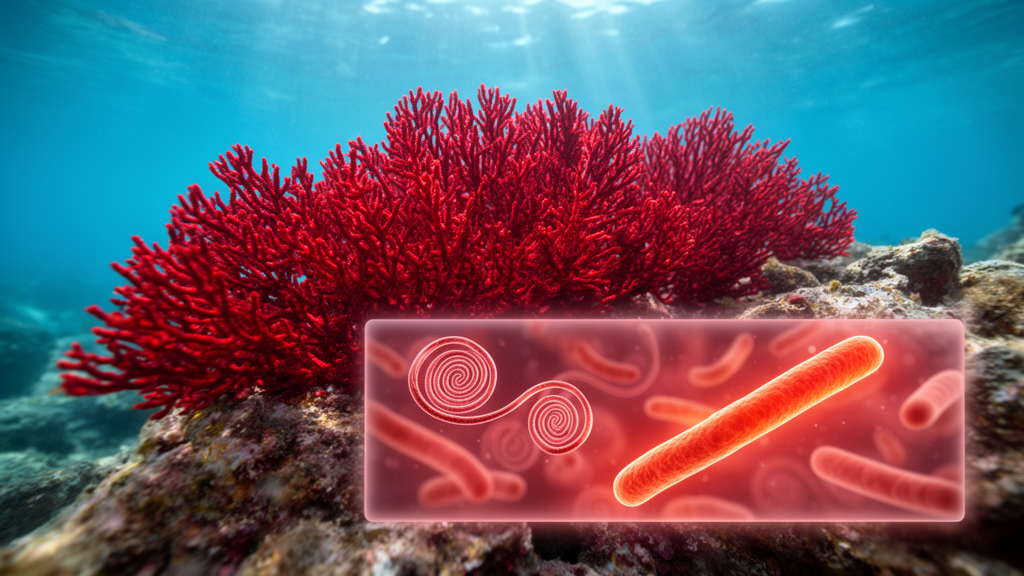
The precious red coral Corallium rubrum, an iconic Mediterranean octocoral prized both ecologically and economically, has long kept its microbiome hidden at the genomic scale. A genome-resolved metagenomic analysis has now lifted that veil, reconstructing 25 high-quality metagenome-assembled genomes (MAGs) from the coral’s microbial communities. Sixteen of these genomes came from wild colonies, while nine additional ones were recovered from a laboratory colony, giving researchers a detailed picture of the functional potential carried by the bacteria living inside this celebrated species.
The most striking finding concerns the two dominant Spirochaetota symbionts. Phylogenomic analysis showed that one of the two represents a potential novel, previously undescribed lineage, one that appears to be exclusively associated with octocoral species. The two spirochete symbionts exhibit different metabolic pathways, and their genomes show adaptations to symbiotic life, leading the authors to suggest they probably act as mutualistic partners for the red coral.
Those adaptations point to a possible nutritional role. The spirochete genomes encode biosynthetic pathways for a wide range of essential amino acids and vitamins, along with the capacity to ferment sugars into acetate. According to the study, these capabilities could potentially supplement dietary deficiencies in the coral host, hinting at a metabolic exchange that may underpin the partnership.
Another symbiont stood out for a very different reason. A bacterium affiliated with the Qipengyuania genus possesses the genomic potential to biosynthesize canthaxanthin, a carotenoid identified as one of the main pigments involved in the red coloration of C. rubrum. If confirmed experimentally, this would link a specific coral-associated microbe to the pigment that gives the species its famous hue, although the current findings are based on genomic potential rather than demonstrated pigment production in the coral.
The remaining reconstructed genomes encode a broad array of metabolic pathways, with a particular emphasis on nitrogen and sulfur transformations. Taken together, the functional profiles suggest potential metabolic interactions between the red coral host and its microbiome, though the study’s conclusions rest on genome inference and will require further investigation to confirm how these exchanges operate in living colonies.
By delivering a detailed taxonomic and functional characterization of newly identified octocoral symbionts, the work establishes a foundation for future investigations into octocoral symbiotic relationships. For a species whose microbiome had been a genomic black box, the reconstruction of 25 high-quality genomes, including a candidate lineage found nowhere else, marks a substantial step toward understanding how Corallium rubrum and its microbial partners sustain one another.
Subject of Research: Genome-resolved metagenomics of the red coral Corallium rubrum microbiome
Article Title: Decoding the metagenome of the precious red coral: discovery of a new spirochete lineage and carotenoid-producing bacteria
Article References: Tignat-Perrier, R., Bacchetta, T., Gervais, O., Tambutté, S., & Ferrier-Pagès, C. (2026). Decoding the metagenome of the precious red coral: discovery of a new spirochete lineage and carotenoid-producing bacteria. Microbiome. https://doi.org/10.1186/s40168-026-02569-5
Image Credits: AI Generated
DOI: 10.1186/s40168-026-02569-5
Keywords: red coral, Corallium rubrum, metagenomics, metagenome-assembled genomes, Spirochaetota, symbiosis, octocoral, microbiome, canthaxanthin, carotenoids, Qipengyuania, Mediterranean Sea
News Source: Morgan Morrow. (October 26, 2026). Red coral metagenomes reveal novel spirochete lineage and pigment-making bacteria. Scienmag.