An editorial published in European Geriatric Medicine argues that dance and music should be treated not as decorative extras in healthcare but as interventions with real potential to improve health in later life. Written by Orfhlaith Ni Bhriain and Hilary Moss, arts and health researchers and practitioners with more than three decades of experience, the piece draws together evidence spanning Cochrane reviews, a seminal World Health Organization report and a recent Lancet paper, alongside the authors’ own studies combining dance, physiotherapy and music therapy for older people. The editorial appears alongside a personal account by Ihle-Hansen, an experienced physician and health service leader, who describes how returning to ballet after a period of exhaustion helped her recover a sense of identity. Together, the two papers signpost the potential health benefits of the arts, with a specific focus on dance and music, for patients, for their care partners and for clinicians themselves.
The personal story at the heart of the editorial illustrates what the authors see as a broader truth about the arts and the life course. Ihle-Hansen describes the health benefits of the arts through her own experience of ballet, portraying the arts as a multidimensional approach to health, one that promotes brain plasticity and builds cognitive resilience, cultivates a sense of community and mental well-being, and fosters what she calls a shared mindset of always moving forward. Her return to the barre, the authors note, signalled not only a recovery from exhaustion but a re-asserting of her identity and a re-discovery of parts of herself that had been forgotten in the struggles and busyness of life. Beyond technique, she writes that the arts afford humanity an opportunity to speak of dreams and hopes. The authors state that their own long experience of arts and health practice bears out this personal observation.
Part of the challenge in evaluating such claims is that arts and health covers a remarkably wide territory. The editorial cites a 2016 definition that describes the field as an umbrella term, encompassing pursuits that bring visual arts, music, performances and art-making opportunities into healthcare environments; the creative arts therapies such as music therapy, dance therapy and art therapy; community arts projects that address health or social problems faced by a group of people; arts-based health research; arts-based health communication; and the use of the arts in the education of healthcare professionals. The range of activities gathered under this single heading is considerable, and the editorial itself stresses that the arts are diverse and their application in health contexts is varied, a point that shapes the authors’ closing argument about matching the right art form to the right setting.
The evidence base underpinning the field has grown substantially. The editorial points to a convincing body of research documenting benefits of the arts for many health conditions, including several Cochrane reviews and the WHO report, as well as arguments for access to arts education in the development of civic society. A recent Lancet paper, highlighted by the authors, confirms the position of arts engagement as a health-enhancing behaviour that can advance equity by modifying structural and intermediary determinants of health across the life course, across the continuum of care from prevention and health promotion to the management and treatment of illness, and across diverse settings. The editorial frames the arts, on this reading, as relevant not only to the treatment of illness but to prevention and health promotion as well.
Music and dance occupy a special place in this landscape because they combine physical, social and emotional elements in a single activity. Evidence cited in the editorial suggests that they can contribute positively to improved health status with regard to general mood and socialisation. As an art form and a form of exercise, dance can incorporate socialisation, enjoyment and aerobic exercise, facilitating what the authors describe as a rich cultural experience. Dance is particularly beneficial, they write, in improving physical strength, flexibility, mobility, balance, endurance and cognitive function. That combination of physical, cognitive and social demands in one activity is central to why the authors give dance and music a specific focus within the wider arts and health field.
For patients facing serious illness, the editorial argues, the arts can offer something that clinical routines often cannot. For vulnerable people with serious health issues, sometimes with very little ability to communicate verbally or in written form, the arts can provide the opportunity to narrate their story, gain a sense of control over circumstances, or find hope and beauty within the sterile and sometimes alarming environment of the healthcare institution. The arts can offer opportunities to feel less alone, to create community and, potentially, to reduce social isolation. Music therapists, the authors note, routinely use music as a language and a form of communication when working with people with brain injury, dementia and other conditions that affect the ability to speak, allowing expression to continue when words fail.
Healthcare settings also confront patients, families and staff with what the authors call the big questions: why did I get this diagnosis, or why is my daughter one of the four per cent to suffer with this illness. Stories, whether within drama, literature, song or dance, are described as human sense-making systems that help us communicate meaning, insight and perspective, and articulate complexities. The editorial illustrates this with an extended passage from the memoir of author and journalist Sinead Gleeson, who writes of illness that it tries to diminish the sufferer, but that we resist it by containing its expansion. She describes the powerlessness of being a patient, lying down or counting backwards under the stark lights of an operating theatre, never in charge, and argues that representing an illness in art, words or photographs is an attempt to explain to ourselves what has happened, to deconstruct the world and rebuild it in our own way.
The benefits, the authors contend, extend to clinicians as well. Numerous studies have explored creativity and the arts as learning activities for trainee doctors, and although the evidence base is relatively scarce, there is some evidence that participants find arts-based approaches effective in supporting the development of listening and visual attention skills. One programme explored by Haidet and colleagues in 2017 used jazz improvisation as a training tool for medical doctors, exposing students to situations that were nonlinear and emergent, requiring listening, inductive thinking and complex adaptive decision-making, characteristics seen as common to both medicine and jazz. Musicians, the authors observe, live in a subjective, interpretative space where there is always room for creative interpretation about how to express and play the notes.
Clinical staff with previous dance training can lean back into the discipline of their original training, which the editorial says can help with focus and attention and provide a dedicated space of release from workplace stress. Dance can also improve mood and provide social connection in a relaxed environment, and as a physical activity it can contribute to the prevention of burnout and fatigue in healthcare workers. The Association of American Medical Colleges published a review of more than 700 works on integrating art into medical education programmes, the 2020 report entitled The Fundamental Role of the Arts and Humanities in Medical Education, which concluded that methods such as art observation and narrative medicine contribute to developing skills including fostering collaboration, driving change and innovation, and supporting the well-being and resilience of learners. The authors call for wider recognition of medical and health humanities in research training, which they describe as heavily weighted towards laboratory and experimental science with little recognition of the humanities’ importance to understanding the human condition in health and disease.
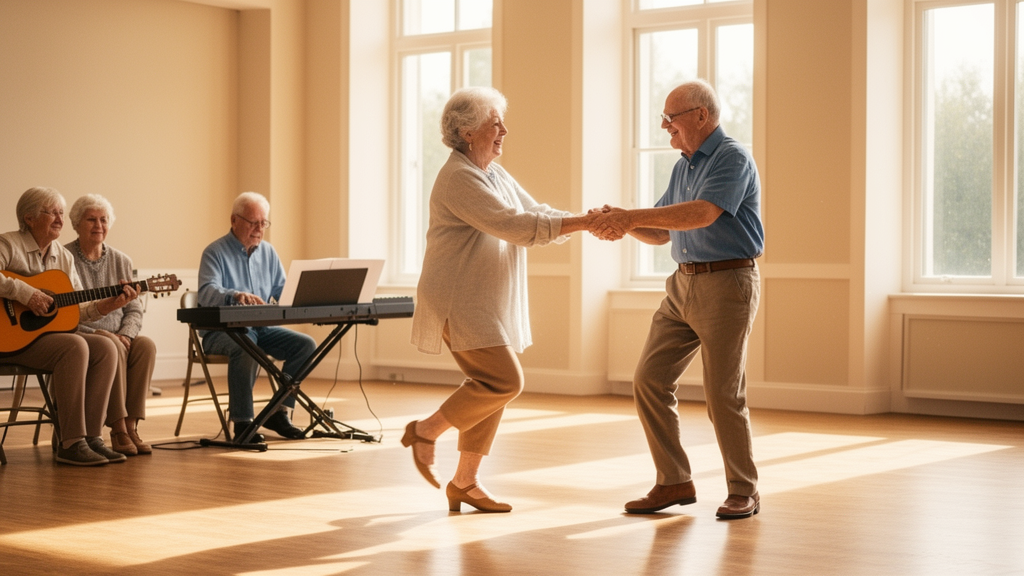
Ageing is where the editorial’s argument comes into sharpest focus. The arts, cultural and leisure pursuits, the authors write, play an important part in the maintenance of health in older age and in quality of life towards the end of life. Their own research combining dance, physiotherapy and music therapy to promote movement and reduce frailty and loneliness has shown exciting results, they report, and a separate study assessing the aesthetic interests of older people in hospital, before, during and after their stay, demonstrated a strong interest in music, film and dance among older people, with a marked drop in engagement in these activities after hospital admission. Geriatricians, they argue, would do well to advocate for older people with health-related access issues to have full engagement with cultural institutions, and the recent rise in loneliness research confirms the need to ensure older people are not culturally isolated because of physical or mental health concerns.
The editorial closes with a warning against one-size-fits-all enthusiasm. The arts are diverse and their application in health contexts is varied: music might be used by a music therapist in an older-age inpatient service to improve gait training in stroke rehabilitation, as distraction during a pain procedure, or as part of COPD management through singing, and it could equally feature in ward-based celebrations, recreational concerts and other leisure activities. The right music or dance, in the right place, at the right time, is critical, the authors stress, and expert curation and provision are essential. A growing body of work details the potential of movement interventions for cohorts ranging from intergenerational groups to participants with various pathologies, including Dance for Parkinson’s, Dance for Cancer and movement interventions for older adults, and the arts form an important part of healthy ageing initiatives such as the provision of community-based choirs for people with dementia. It is critical, they conclude, to consider which art form suits a specific setting, why the arts are being engaged and what the aims of the work are, and above all that experts, whether dancers, dance therapists or dance teachers, deliver the intervention so that high-quality provision is assured. Too many of us, the authors write, consider the arts in healthcare as an afterthought, and Ihle-Hansen’s story reminds us how the arts can be used to optimise their benefits on health and well-being.
Subject of Research: The potential health benefits of dance and music engagement for older people, patients and clinicians
Article Title: Movement, music, medicine and ageing
Article References: Bhriain, O. N., & Moss, H. (2026). Movement, music, medicine and ageing. European Geriatric Medicine. https://doi.org/10.1007/s41999-026-01631-7
Image Credits: AI Generated
DOI: 10.1007/s41999-026-01631-7
Keywords: arts and health, dance, music therapy, ageing, geriatric medicine, healthy ageing, well-being, medical humanities, loneliness, creative arts therapies, older adults, burnout
News Source: Beatrice Stafford. (October 26, 2026). Dance and Music Hold Real Potential for Health in Later Life, Editorial Argues. Scienmag.