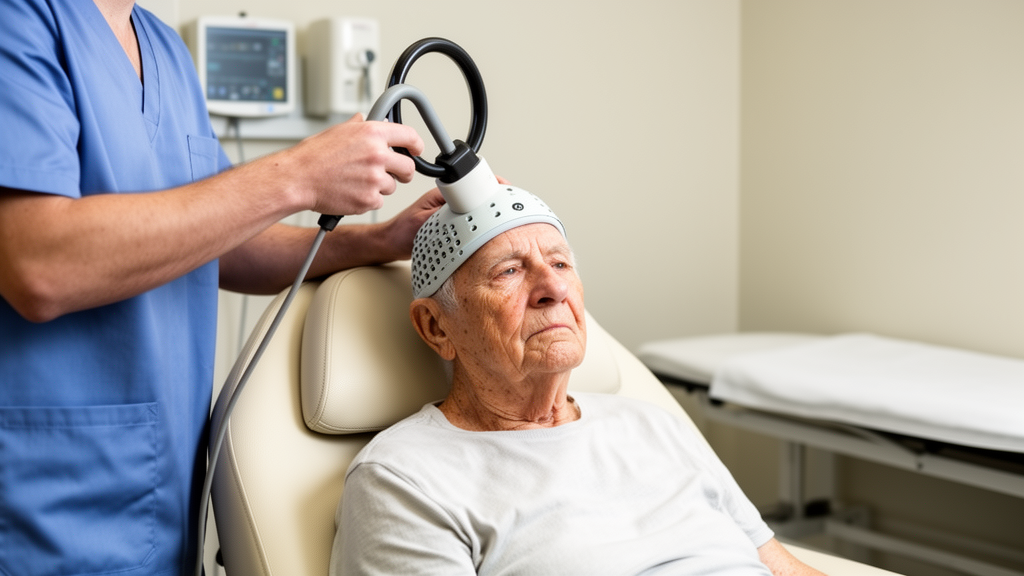
A review published in Frontiers in Neurology proposes a biomarker-based framework to reconcile conflicting neuroscientific models of post-stroke motor recovery and guide the application of repetitive transcranial magnetic stimulation. The study, led by researchers from China Medical University, Queen’s University Belfast, and the National University of Singapore, argues that the clinical heterogeneity of rTMS outcomes stems from the indiscriminate application of two opposing theories: the Interhemispheric Competition model and the Vicariation model. By integrating structural and functional biomarkers, the authors suggest a precision-stratified approach that tailors stimulation direction to the individual patient’s residual motor architecture.
Stroke remains the leading cause of long-term disability in adults, with more than 80% of survivors experiencing varying degrees of motor deficits six months after onset. The loss of upper extremity motor control is particularly intractable, severely compromising patients’ ability to live independently and perform daily activities. While acute reperfusion therapies have reduced mortality, the subsequent process of central nervous system reorganization extends over months or even years, presenting a complex challenge for rehabilitation medicine. Conventional physical and occupational therapies rely on repetitive peripheral sensorimotor input to drive central plasticity, a bottom-up strategy that frequently reaches a therapeutic plateau. In this context, rTMS has emerged as a transformative top-down intervention capable of directly remodeling cortical networks to overcome these rehabilitation bottlenecks.
The classic Interhemispheric Competition model has dominated the field for nearly three decades, rooted in the concept of mutual inhibition mediated by the corpus callosum. In a healthy brain, this mutual suppression ensures precise unimanual control by sharpening motor focus and preventing interference from the quiescent hemisphere. However, a unilateral stroke disrupts this equilibrium, leading to a state of unilateral dominance. The diminished output from the damaged ipsilesional cortex withdraws inhibitory restraint on the contralesional hemisphere, causing it to become hyperactive. This hyperactive side then exerts excessive pathological inhibition back onto the struggling lesioned cortex, creating a recursive cycle where the healthy hemisphere acts as a neural adversary, suppressing the recovery of the injured side.
Challenging this paradigm, the Vicariation model views the contralesional hemisphere as a surrogate to be empowered rather than a competitor to be silenced. Derived from the Latin word for substitute, this concept posits that spatially distinct neural areas can assume the functions of a damaged region. Strong evidence for this supportive role comes from virtual lesion studies, which show that inhibiting the contralesional motor or premotor cortex in patients with severe impairment causes significant functional deterioration. This suggests that the contralesional hemisphere contributes functionally to paretic-limb motor output through latent anatomical pathways, such as the ipsilateral corticospinal fibers or the corticoreticular tract, which provide substantial bilateral innervation to spinal motor pools.
To resolve this conflict, the authors propose a dialectical synthesis wherein structural reserve serves as the critical decision-making fulcrum for patient stratification. Structural reserve is defined as a multidimensional property centered on the integrity of the corticospinal tract, modulated by the preservation of distributed motor regions and alternative descending pathways. By quantifying this reserve through diffusion tensor imaging and motor evoked potentials, clinicians can determine whether a patient’s recovery mechanism is dominated by interhemispheric competition or vicariation. This approach moves beyond a one-size-fits-all protocol, acknowledging that the role of the unaffected hemisphere is state-dependent and shifts along a continuum of structural integrity.
The proposed Stroke Precision in Reservoir-guided Neuromodulation framework integrates these biomarkers to guide the selection of inhibitory, excitatory, or bilateral modulation strategies. For patients with high structural reserve, where the corticospinal tract is largely intact, the framework supports classic inhibitory protocols to release the lesioned cortex from pathological suppression. In contrast, for patients with severe tract disruption, the framework advises caution against standard inhibitory stimulation, as it may suppress the compensatory drive essential for residual movement. This stratification allows for a more mechanistically informed application of rTMS, ensuring that the direction of modulation aligns with the patient’s specific physiological state.
Emerging modalities such as theta-burst stimulation offer a paradigm shift in neurorehabilitation by mimicking the natural firing patterns of hippocampal neurons during memory consolidation. This biomimetic patterning allows for profound changes in cortical excitability with significantly lower stimulation intensities and shorter durations compared to conventional rTMS. However, the increased potency of theta-burst stimulation introduces higher complexity, necessitating rigorous stratification to avoid maladaptive plasticity. For patients with high reserve, sequential bilateral stimulation can amplify facilitatory effects through homeostatic metaplasticity, while for those with low reserve, the strategy must shift toward preserving or facilitating compensatory networks to avoid dismantling the patient’s only remaining functional scaffold.
Furthermore, the frontier of neuromodulation is expanding toward multi-nodal approaches that target secondary motor areas such as the dorsal premotor cortex, supplementary motor area, and cerebellum. These regions possess extensive bilateral connectivity and serve as primary cortical origins for alternative descending pathways, making them pivotal for vicarious recovery in severe stroke. By stimulating these secondary nodes, clinicians can route motor commands through bypass strategies when the primary corticospinal highway is irreversibly blocked. This topological expansion is critically important for patients with severe structural reserve, where standard primary motor cortex-focused strategies may be ineffective due to functional disconnection.
The integration of peripheral and central stimulation represents the ultimate imperative of neurorehabilitation, re-integrating the brain with the peripheral effector system. Paired associative stimulation protocols leverage the principles of spike-timing dependent plasticity to induce potent synaptic remodeling by precisely timing peripheral electrical stimuli with transcranial magnetic pulses. This artificial synchrony creates a neuroprosthetic bridge for patients with dormant pathways, forcing the association between the paretic limb and the dissociated cortex. The transition to closed-loop systems, which utilize real-time electroencephalography to trigger stimulation only when the brain is in a phase of high excitability, promises to maximize the efficiency of neural reorganization by adapting millisecond-by-millisecond to the patient’s unique neural dynamics.
In conclusion, the clinical efficacy of rTMS is not limited by the technology itself but by the precision of its application. By adopting a dialectical approach that reconciles competing models through objective biomarkers, the field can reduce reliance on empirical trial-and-error selection. The era of generic brain stimulation is ending, replaced by an era of individualized, anatomically-informed, and network-targeted neurorehabilitation. Future research must focus on validating these stratified algorithms in large-scale, multi-center trials and developing accessible point-of-care biomarkers to democratize precision neuromodulation, ensuring that therapeutic strategies are tailored to the specific residual motor architecture of each patient.
Subject of Research: Precision-stratified repetitive transcranial magnetic stimulation for post-stroke motor recovery based on structural reserve assessment
Article Title: Beyond IHC-Vicariation duality: precision-stratified rTMS for post-stroke motor recovery
Article References: Zhang, D., Zhao, C., & Ma, Y. (2026). Beyond IHC-Vicariation duality: precision-stratified rTMS for post-stroke motor recovery. Frontiers in Neurology, 17, 1856547. https://doi.org/10.3389/fneur.2026.1856547
Image Credits: AI Generated
DOI: 10.3389/fneur.2026.1856547
Keywords: stroke rehabilitation, repetitive transcranial magnetic stimulation, neuroplasticity, corticospinal tract, precision medicine, interhemispheric competition, vicariation model, theta-burst stimulation, motor recovery, biomarkers, Beyond, IHC-Vicariation
News Source: Cassandra Pierce. (October 26, 2026). Review Proposes Biomarker-Based rTMS Strategy for Stroke. Scienmag.