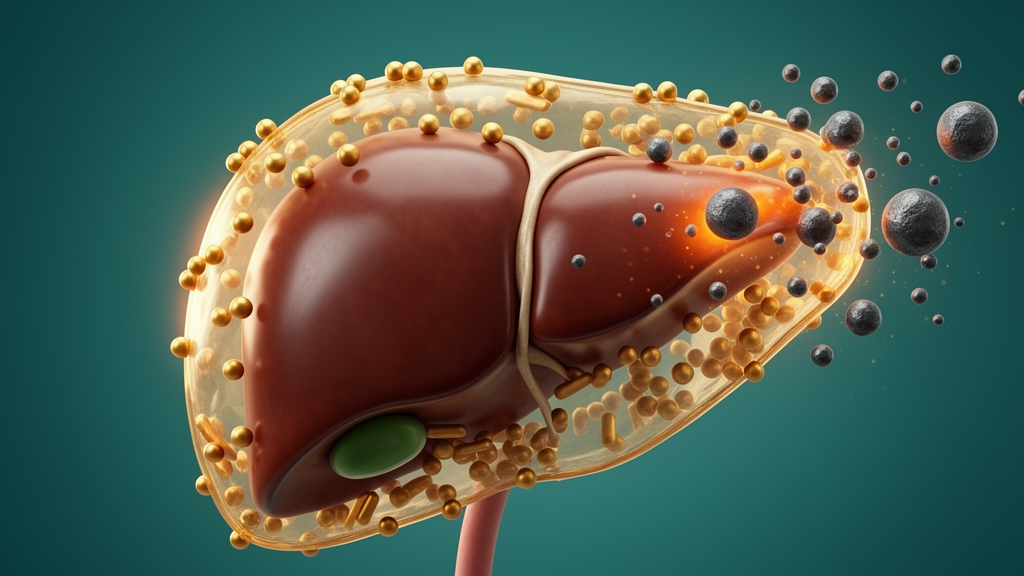
A naturally occurring plant compound called isorhoifolin has shown a striking ability to protect rat livers from cadmium, one of the most widespread toxic metals in the environment. In a biochemical and histological study published in Molecular Biology Reports, researchers report that rats given isorhoifolin alongside cadmium suffered far less liver damage than animals exposed to the metal alone. The compound appeared to work by calming two key signaling systems: the inflammatory TLR4/MyD88/TRAF6/NF-κB cascade and the antioxidant Nrf2/Keap1 pathway.
Cadmium is a ubiquitous environmental contaminant that readily accumulates in the liver, where it disrupts cellular machinery and drives injury. Isorhoifolin, a flavonoid glycoside found in nature, has attracted attention for a range of pharmacological properties. To test whether it could counteract cadmium's hepatic toll, the team divided rats into four groups: a control group, a cadmium group receiving 5 mg/kg, a combined group receiving cadmium plus 10 mg/kg isorhoifolin, and an isorhoifolin-only group.
All treatments were administered for 30 days, after which the animals were sacrificed and their liver tissue analyzed in detail. Cadmium intoxication suppressed the expression of Nrf2 and HO-1, two central components of the cell's antioxidant defense program, while raising Keap1, the protein that normally holds Nrf2 in check. With this defense weakened, the expression and activities of antioxidant enzymes including glutathione peroxidase, glutathione reductase, catalase, and superoxide dismutase all dropped.
At the same time, levels of reactive oxygen species and malondialdehyde, a marker of lipid damage, climbed, confirming that the metal had pushed liver cells into severe oxidative stress. Cadmium also ignited a powerful inflammatory response. Exposure activated the expression of TLR4, MYD88, and TRAF6, proteins that form a signaling chain leading to IKKβ and the transcription factor NF-κB.
As NF-κB expression rose, IκB-α, its natural brake, fell. The consequence was a surge in inflammatory markers: interleukin-6, interleukin-1β, cyclooxygenase-2, and tumor necrosis factor-alpha all increased, signaling that the liver had become an inflamed battleground. The damage extended to liver function and cell survival.
Cadmium elevated the levels of AST, ALT, and ALP, standard enzymes that spill into the bloodstream when hepatocytes are injured. At the genetic level, cadmium exposure substantially downregulated BCL-2 mRNA, an anti-apoptotic safeguard, while upregulating the apoptotic proteins BAX and caspase-3, which execute programmed cell death. Histopathological examination revealed severe structural damage to liver tissue, consistent with the biochemical chaos measured in the samples.
Isorhoifolin reversed nearly all of it. In the combined treatment group, the flavonoid restored the expression and activity of the antioxidant enzymes, brought reactive oxygen species and malondialdehyde back down, and reined in the TLR4/MyD88/TRAF6/NF-κB signaling axis. Inflammatory cytokine levels fell, liver function markers improved, apoptotic protein expression shifted back toward cell survival, and hepatic tissue architecture was preserved.
The compound's antiapoptotic, anti-inflammatory, and antioxidant nature appeared to account for its protective effect across every measure the team examined. The findings underscore a potential pharmacotherapeutic role for isorhoifolin in counteracting cadmium-induced liver injury. The study's dual focus on the NF-κB inflammatory axis and the Nrf2/Keap1 antioxidant system offers a mechanistic explanation for how a single flavonoid glycoside could blunt damage triggered through multiple routes.
Important limitations remain. The evidence comes entirely from a rat experiment with fixed doses administered over 30 days. No human data were involved, so the results cannot be taken as proof of clinical benefit in people.
Whether isorhoifolin reaches protective concentrations in human livers, what doses would be appropriate, and whether long-term supplementation is safe are questions that future studies must address. Still, as a window into how flavonoid glycosides interact with heavy-metal toxicity at the pathway level, the research adds isorhoifolin to a growing list of plant-derived molecules with documented hepatoprotective credentials in animal models.
Subject of Research: Protective effects of the flavonoid glycoside isorhoifolin against cadmium-induced liver injury in rats
Article Title: Isorhoifolin attenuates cadmium-induced hepatotoxicity by modulating TLR4/MyD88/TRAF6/NF-κB and Nrf2/Keap1 pathways: a biochemical and histological study
Article References: Ghafoor, N., Munir, A., Batool, M., Ashraf, A., Salar, M. Z., & Hamidi, H. (2026). Isorhoifolin attenuates cadmium-induced hepatotoxicity by modulating TLR4/MyD88/TRAF6/NF-κB and Nrf2/Keap1 pathways: a biochemical and histological study. Molecular Biology Reports, 53(1), Article 1828. https://doi.org/10.1007/s11033-026-13031-y
Image Credits: AI Generated
DOI: 10.1007/s11033-026-13031-y
Keywords: isorhoifolin, cadmium, hepatotoxicity, NF-κB, Nrf2, oxidative stress, rat study, flavonoid, inflammation, apoptosis, liver injury, antioxidant enzymes
News Source: Drew Townsend. (October 25, 2026). Isorhoifolin Shields Rat Livers from Cadmium Toxicity by Taming Inflammation. Scienmag.