Relapsed small-cell lung cancer has long been one of the most difficult malignancies to treat once platinum-based chemotherapy fails, with topotecan serving as a standard but modestly effective second-line option. New randomized Phase III data presented at the IASLC 2026 World Conference on Lung Cancer in Seoul now indicate that risvutatug rezetecan, a B7-H3-directed antibody-drug conjugate known as Ris-Rez, significantly extended overall survival in this setting. In the ARTEMIS-008 trial, the agent reduced the risk of death by 54 percent compared with topotecan among patients whose disease progressed on or after platinum-based chemotherapy, a magnitude of benefit that investigators described as both statistically significant and clinically meaningful for a cancer with limited second-line alternatives.
ARTEMIS-008 (NCT06498479) was a multicenter, open-label, randomized Phase III study conducted in China, enrolling 461 patients who were assigned 1:1 to receive either Ris-Rez at 8.0 mg/kg every three weeks or topotecan at 1.2 mg/m² on days 1 through 5 of each three-week cycle. More than 80 percent of participants had previously received PD-(L)1 inhibitors, reflecting the contemporary treatment sequence in small-cell lung cancer. Overall survival served as the primary endpoint, while progression-free survival, objective response rate, disease control rate and safety were assessed as key secondary endpoints. At the June 6, 2026 data cutoff, following a median follow-up of 12.2 months, median overall survival reached 18.5 months with Ris-Rez compared with 10.3 months with topotecan (hazard ratio 0.46; 95 percent CI, 0.35–0.62; P<0.0001), with consistent overall survival benefits observed across relevant subgroups.
Blinded independent central review likewise favored the antibody-drug conjugate across all key secondary efficacy measures. Median progression-free survival was 7.2 months with Ris-Rez versus 3.0 months with topotecan (hazard ratio 0.33; 95 percent CI, 0.25–0.42). The objective response rate was 58.3 percent with Ris-Rez compared with 12.6 percent with topotecan, and the disease control rate was 90.4 percent versus 60.2 percent. Investigator-assessed outcomes were consistent with the central review findings, reinforcing the robustness of the efficacy signal across independent and site-based evaluations.
The safety profile also differentiated the two treatments. Grade 3 or higher treatment-related adverse events occurred less frequently with Ris-Rez than with topotecan, at 60.9 percent versus 78.2 percent. The most common grade 3 or higher treatment-related toxicities with the antibody-drug conjugate were hematologic, including decreased neutrophil count, decreased white blood cell count, anemia, decreased lymphocyte count and decreased platelet count. Professor Jie Wang of the National Cancer Center/National Clinical Research Center for Cancer/Cancer Hospital, Chinese Academy of Medical Sciences Peking Union Medical College, Beijing, China, said that Ris-Rez demonstrated a statistically significant and clinically meaningful overall survival benefit over topotecan in patients with small-cell lung cancer that progressed after platinum-based therapy, with a favorable safety profile, and that these results suggest the potential of Ris-Rez to define a new standard of care in relapsed small-cell lung cancer.
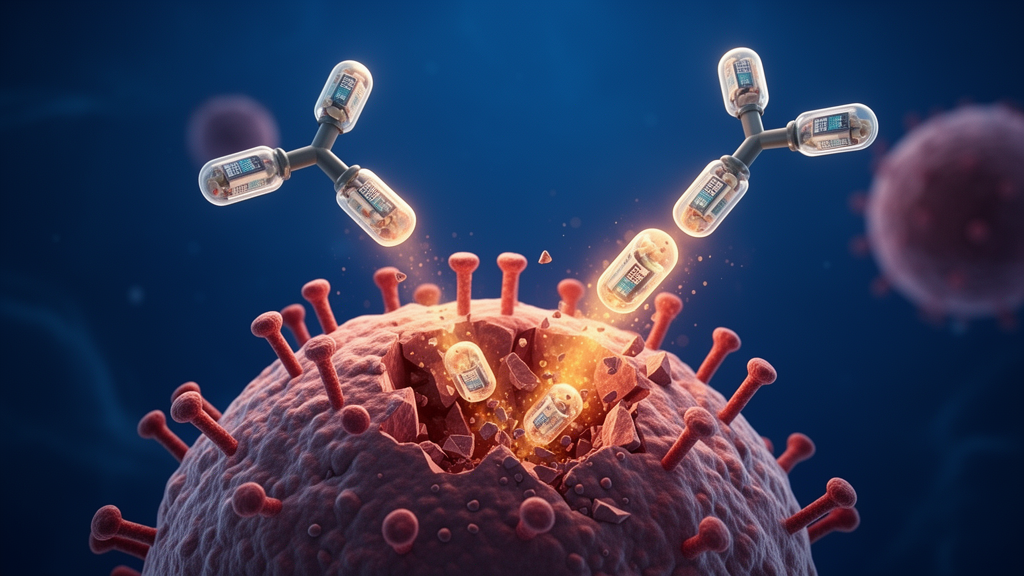
The trial results position B7-H3 as a therapeutically exploitable target in small-cell lung cancer, a tumor type in which antibody-drug conjugate technology directs cytotoxic payload delivery to cells expressing the surface protein while limiting exposure to healthy tissue. Because the ARTEMIS-008 data were presented at a conference rather than published in a peer-reviewed journal at the time of presentation, the findings should be interpreted in that context, and full publication will be needed for detailed methodological review. Within the trial, the consistent survival, response and safety advantages across central and investigator assessments provide a substantial evidence base for the reported benefit in this patient population.
Subject of Research: Phase III ARTEMIS-008 trial of risvutatug rezetecan in relapsed small-cell lung cancer
Article Title: Phase III ARTEMIS-008 trial shows risvutatug rezetecan significantly improves overall survival in relapsed small-cell lung cancer
Article References: Phase III ARTEMIS-008 trial shows risvutatug rezetecan significantly improves overall survival in relapsed small-cell lung cancer. Original publication (Bibliographic details unavailable.)
Image Credits: AI Generated
DOI: Not provided
Keywords: Phase, ARTEMIS-008, trial, shows, risvutatug, rezetecan, significantly, improves, overall, survival, relapsed, small-cell
News Source: Nathaniel Bowman. (October 25, 2026). B7-H3 antibody-drug conjugate cuts death risk 54% in relapsed small-cell lung cancer. Scienmag.