The Advanced Research Projects Agency for Health (ARPA-H) has awarded up to $36.5 million to a University of California, Davis-led project testing whether therapeutic cells protected by intracellular polymer gels can withstand room-temperature storage. The four-year initiative, called CYBORGEL, builds on earlier laboratory work in which researchers formed water-rich polymer networks inside living cells. Those intracellular gels halted cell division while maintaining cellular health. The project will now examine whether the process can help preserve cellular therapies during storage, transportation and delivery, with a long-term goal of keeping some therapies usable for more than three months at room temperature. The award supports research and development; it does not establish that such shelf life or transport capability has already been achieved.
Cheemeng Tan, a UC Davis professor of biomedical engineering who focuses on cell engineering, leads the interdisciplinary team with collaborators from Mayo Clinic, the University of Georgia and Case Western Reserve University. The project is intended to reduce dependence on specialized and expensive cold-storage and transportation infrastructure, which ARPA-H says can contribute to high prices for cell-based drugs and make delivery more difficult for people who lack access to that infrastructure. Tan said the technology, if successful, could reduce the cost and complexity of distribution and improve access to cell therapies in remote American communities and overseas. Those are prospective benefits rather than demonstrated outcomes of the new award.
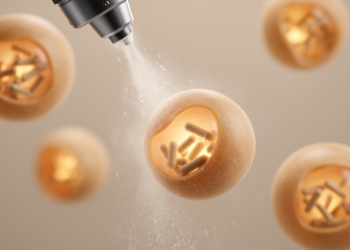
“A cell therapy can only help a patient if the cells arrive ready to do their job,” Tan said. “If successful, our technology could reduce the cost and complexity of distribution and help make cell therapies more accessible to people in remote American communities and to patients abroad, strengthening the United States as a biomanufacturing hub.” The award gives the team an opportunity to build on years of synthetic-biology research involving a method called intracellular gelation, in which water-rich polymer networks are created inside living cells. The resulting cell-material hybrids have been called “cyborg” cells because they combine living cells with synthetic materials.
In the earlier laboratory work, the gel formed inside a cell was capable of halting cell division while preserving cellular function. CYBORGEL will investigate whether that process can be extended to reduce the cost and simplify the storage, transportation and delivery of cellular therapies. The researchers also plan to test whether cells remain therapeutically useful after being returned to their original state. Tan described the goal as protecting living therapeutic cells from within so that they can withstand room-temperature storage and shipping. No results from the newly funded work were reported in the announcement, which is a grant and award announcement describing planned research.
Researchers at UC Davis and Mayo Clinic will evaluate cellular therapies stored with the CYBORGEL process. One planned study will test the effectiveness of “reanimated” CAR T cells associated with existing clinical trials on cancer immunotherapies. Another planned study will examine placental mesenchymal stem cells used in a spina bifida intervention being developed by UC Davis researchers through the CuRe Trial. These experiments are designed to determine how the cells behave after stabilization, storage and recovery. The announcement does not provide outcomes, denominators or evidence that either cell type will retain therapeutic usefulness after CYBORGEL treatment, so the project cannot yet be regarded as a clinical advance.
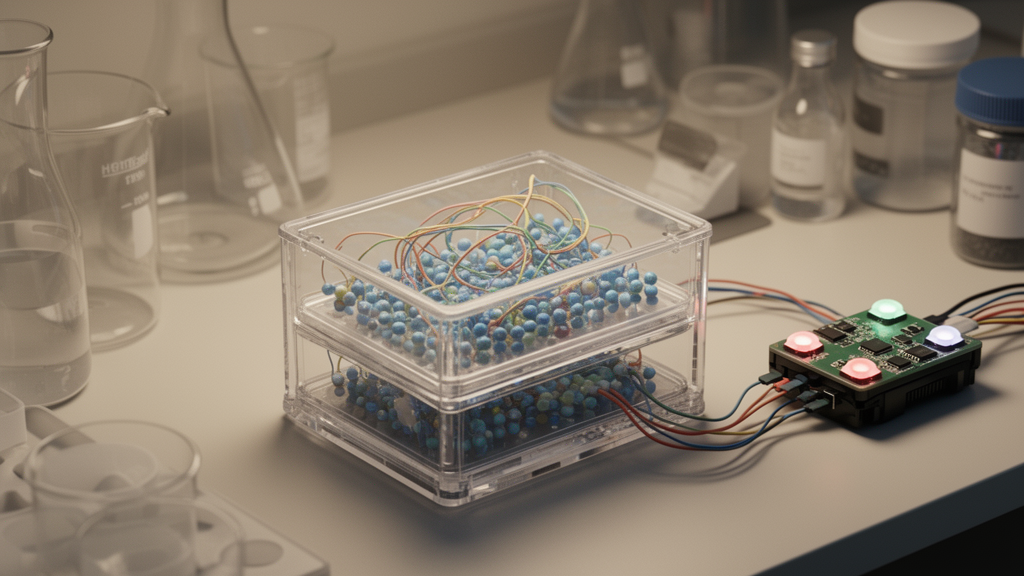
Alongside the cell studies, the team will develop an automated processing system to prepare, preserve and reanimate cells in a closed environment. Alexander Revzin, a professor of biomedical engineering at Mayo Clinic, will lead development of that system. Mayo Clinic collaborators Joao Passos and Diana Jurk will study cellular aging, stress and damage during CYBORGEL storage and recovery. Their work will examine what happens to cells while they are held in the stabilized state and after they are restored, complementing the planned evaluations of specific cellular therapies.
At the University of Georgia, Sergiy Minko and Vladimir Popik will develop reversible polymer materials. At Case Western Reserve University, Harihara Baskaran, a professor of chemical and biomolecular engineering, will lead modeling of cell loading and transport to guide device design and development. UC Davis investigators Aijun Wang, a professor of biomedical engineering and surgery, and Gant Luxton, an adjunct associate professor of molecular and cellular biology, will contribute expertise in regenerative medicine and cell biology. Tan will oversee the cell-stabilization research and the overall scientific integration of the project. The allocation of responsibilities places the biological work, processing hardware, polymer development and transport modeling within a single coordinated program.
Accelerator programs at UC Davis and Mayo Clinic will provide support and guidance intended to accelerate commercialization of the CYBORGEL platform. Industry partners Tetramer and Sersense will provide polymer-production and device-development support. The announcement also connects the program’s storage objective with public-health preparedness: ARPA-H says technologies that reduce reliance on deep-freezing infrastructure could reduce the risk of losing therapeutic and pharmaceutical products and could support domestic reserves. The announcement does not report commercial, regulatory or clinical validation, and the participation of accelerators and industry partners does not by itself establish readiness for patient use.
The funding comes through ARPA-H’s BioStabilization Systems, or BoSS, program, launched in 2025 to support research into approaches that reduce dependence on specialized and expensive cold storage and transportation infrastructure. ARPA-H says the program could enable lower costs for cell-based drugs, reduce losses of therapeutic and pharmaceutical products and support domestic reserves for public-health preparedness. “Many of the newest therapeutics on the market rely on very cold storage temperatures, which contribute to unacceptably ballooning price tags,” said BoSS Program Manager Gloria Elliott. “If we can eliminate the need for deep freezing, it will unlock the full, life-changing potential of cell-based therapies for patients who currently do not have access to them.”
CYBORGEL’s initial round of funding is up to $6 million, with a total funding pool of up to $36.5 million possible over the next four years. “Our project aims to address a long-standing barrier to keeping therapeutic cells stable and functional during storage and shipping,” Tan said. “I think of it as a challenge we share with space exploration: The farther we want to send living systems, the better we must protect them along the way. If successful, our technology could reduce the cost and complexity of distribution and help make cell therapies more accessible.” The award creates a research program around several linked questions: whether intracellular gelation can be reversed, whether recovered cells retain useful functions, how storage and recovery affect cellular aging, stress and damage, and whether a closed automated system can perform the required processing. Until those studies report results, the three-month room-temperature objective and its potential logistical and economic benefits remain goals of the program rather than established capabilities.
Subject of Research: Research into intracellular gelation for preserving therapeutic cells during room-temperature storage and shipping.
Article Title: Up to $36.5M funds ‘cyborg’ cell project to help life-saving cell therapies travel farther
Article References: Up to $36.5M funds ‘cyborg’ cell project to help life-saving cell therapies travel farther. Original publication (Bibliographic details unavailable.)
Image Credits: AI Generated
DOI: Not provided
Keywords: ARPA-H, cell therapies, intracellular gelation, cyborg cells, room-temperature storage, CAR T cells, mesenchymal stem cells, biomanufacturing, cold-chain logistics, UC Davis, funds, cyborg
News Source: Denise Maddox. (October 25, 2026). ARPA-H funds cyborg cells for room-temperature therapy storage. Scienmag.