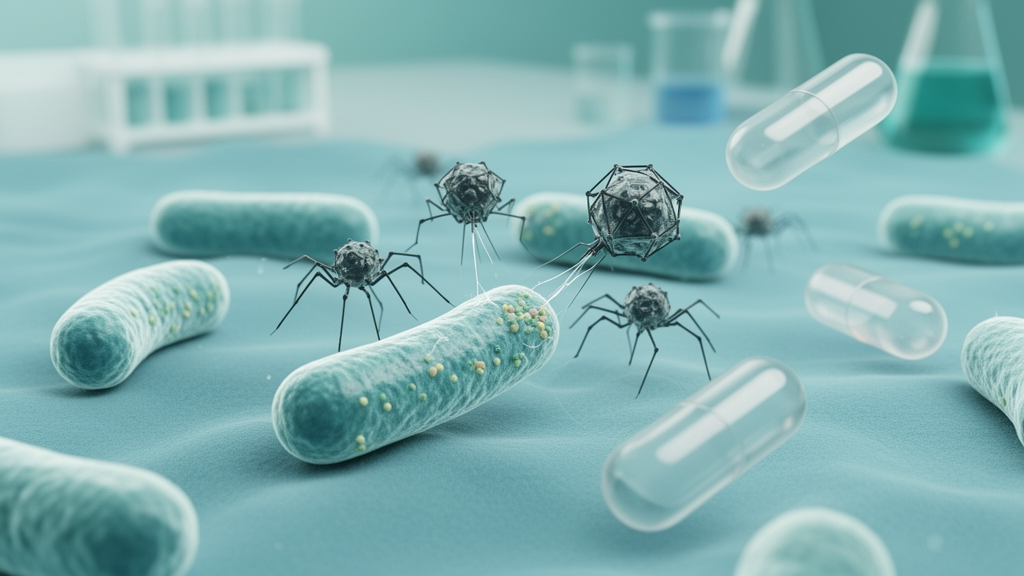
Combining bacteriophages with antibiotics may offer a way to attack drug-resistant Acinetobacter baumannii, one of the world's most stubborn hospital pathogens, according to a scoping review published in BMC Infectious Diseases. The review, led by Bayan A. Ibrahim, Rafeef Aqel and Waleed M. Sweileh, mapped the published evidence on phage-antibiotic interactions against drug-resistant strains of the bacterium and found that synergistic effects were reported most consistently with carbapenems, polymyxins and cephalosporins, the three antibiotic classes tested most extensively in the literature. The review set out to organize what is known about pairing viruses that infect bacteria, called bacteriophages, with antibiotics, including synergistic effects, the re-sensitization of resistant bacteria to drugs they once defeated, and activity against biofilms, the protective bacterial communities that form on surfaces and medical devices.
The researchers followed the Arksey and O'Malley scoping review framework and the PRISMA-ScR reporting guidelines, searching PubMed, Scopus and EMBASE for research articles published between January 1, 2000 and July 23, 2026. Studies were eligible if they evaluated bacteriophages combined with antibiotics against A. baumannii and reported interaction outcomes. The team extracted data on study characteristics, experimental models, the antibiotics tested, the metrics used to judge interactions, the mechanisms associated with reported synergy, and the limitations the original authors reported.
Because the included studies differed so widely in methodology, the findings were synthesized descriptively rather than pooled statistically. Thirty-nine studies met the inclusion criteria, spanning in vitro laboratory experiments, ex vivo models and in vivo animal studies. The pattern across antibiotic classes was not uniform.
Fluoroquinolones, tetracyclines and glycylcyclines, and penicillin combined with a beta-lactamase inhibitor also predominantly showed synergy with phages. Aminoglycosides stood out as the most heterogeneous class: outcomes ranged from synergy to antagonism, indifference and mixed, strain-specific results, depending on the particular phage-antibiotic pair being tested. Across the body of evidence, phage-antibiotic combinations generally outperformed either phages or antibiotics alone at reducing bacterial burden, disrupting biofilms and improving survival in in vivo models.
Preclinical validation in in vivo or ex vivo systems was reported in 19 of the 39 studies, and those studies showed markedly enhanced survival and bacterial clearance when the combination was used, relative to phage monotherapy or antibiotic monotherapy. The review also catalogued how differently laboratories measure the same phenomenon. Several recurring limitations emerged from the included studies.
The review's authors note that significant variability in experimental designs and in the methods used to assess interactions currently limits clinical translation. The authors argue that future work should focus on standardizing how interaction and synergy are assessed, systematically screening phage-antibiotic combinations, elucidating the molecular mechanisms underlying these interactions, and conducting robust pharmacokinetic and pharmacodynamic studies to support the development of clinically applicable therapies. The review's conclusion is deliberately measured.
Phage-antibiotic interactions represent a promising investigational strategy against multidrug-resistant and extensively drug-resistant A. baumannii, but the evidence base remains preclinical and methodologically fragmented. The published record, built over more than two decades of laboratory and animal research, suggests that the pairing of phages with antibiotics can restore antibacterial activity in controlled settings, yet the path from those findings to validated clinical therapies depends on the standardization, mechanistic and pharmacological work the authors identify as the field's next priorities.
Subject of Research: Phage-antibiotic synergy against drug-resistant Acinetobacter baumannii
Article Title: Phage-antibiotic synergy against Acinetobacter baumannii: a scoping review
Article References: Ibrahim, B. A., Aqel, R., & Sweileh, W. M. (2026). Phage-antibiotic synergy against Acinetobacter baumannii: a scoping review. BMC Infectious Diseases. https://doi.org/10.1186/s12879-026-14319-x
Image Credits: AI Generated
DOI: 10.1186/s12879-026-14319-x
Keywords: Acinetobacter baumannii, bacteriophages, phage-antibiotic synergy, antimicrobial resistance, ESKAPE pathogens, scoping review, biofilms, carbapenems, polymyxins, preclinical models, drug re-sensitization, BMC Infectious Diseases
News Source: Kristina Jarvis. (October 25, 2026). Phage-antibiotic combinations show promise against drug-resistant Acinetobacter baumannii, review finds. Scienmag.