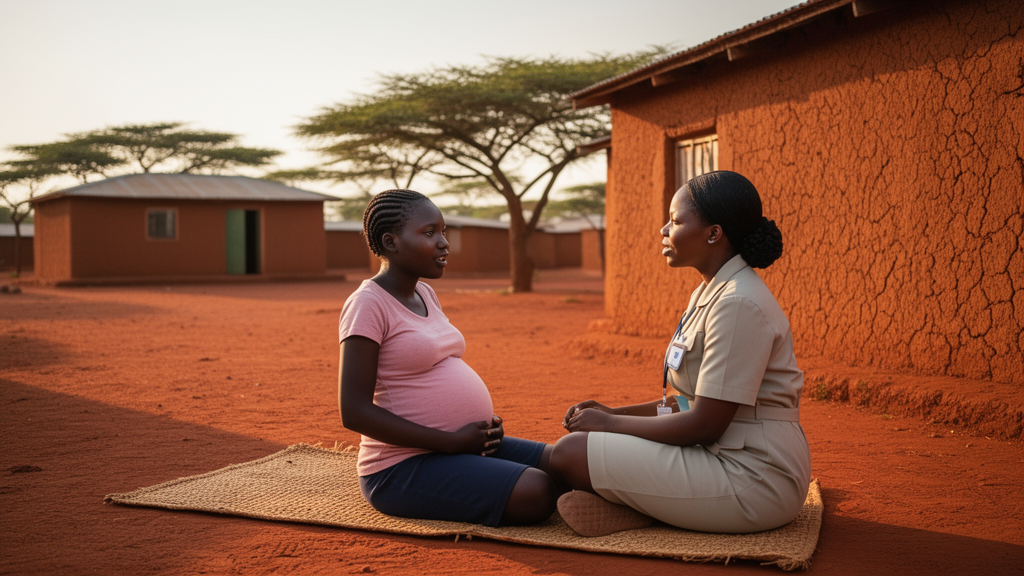
Pregnant adolescent refugees living with HIV in Uganda’s Nakivale Refugee Settlement manage disclosure of their diagnosis as a selective, gradual process shaped by age, emotional readiness and social support, according to a qualitative study published in BMC Public Health. Researchers conducted in-depth, semi-structured interviews with 40 pregnant adolescents aged 15 to 19 years who were living with HIV and receiving care at Rwekubo Health Center IV. Participants were purposively sampled to capture diverse experiences of disclosure, coping and resilience, and the interviews, conducted in local languages, were transcribed and analyzed thematically using descriptive phenomenology.
The analysis identified five major themes. First, HIV disclosure emerged not as a single event but as a staged process that participants timed and targeted carefully, weighing whom to tell and when. Second, the adolescents described emotional resilience that developed after an initial phase of shock, fear and shame upon learning or revealing their status. Third, coping drew on social support, spirituality and personal resilience. Fourth, stigma, discrimination and social isolation shaped both disclosure decisions and emotional well-being. Fifth, aspirations for motherhood and for a stigma-free future served as powerful motivators for treatment adherence and emotional strength.
Age emerged as a clear dividing line in disclosure behavior. Older adolescents in the study disclosed their HIV status earlier and more confidently, often relying on their partners in the process. Younger adolescents, by contrast, delayed disclosure and depended more heavily on parents or healthcare providers for support. The authors note that pregnant adolescent refugees living with HIV face intersecting vulnerabilities, including stigma, displacement, poverty and gender-based violence, which complicate both disclosure and adherence to HIV treatment.
The study’s conclusions emphasize that these young women employ varied resilience and coping strategies shaped by their age, social environment and personal motivations. Social support, maternal aspirations and spiritual faith stood out as key enablers of coping and treatment adherence. On that basis, the researchers argue that interventions addressing stigma and strengthening multi-layered support systems are critical to improving HIV outcomes in this population.
As a qualitative, phenomenological study of 40 participants at a single health facility in one refugee settlement, the findings describe the lived experiences of this specific group rather than measuring prevalence or testing an intervention. The authors frame the work as addressing a gap, noting that limited research has previously examined coping strategies and resilience mechanisms among pregnant adolescent refugees in settlement settings. Within that scope, the results offer a detailed account of how disclosure unfolds in a context where displacement, poverty and stigma intersect, and they point to social support, faith and maternal motivation as the levers most consistently associated with emotional strength and treatment adherence among the adolescents interviewed.
Subject of Research: Resilience and coping strategies after HIV disclosure among pregnant adolescent refugees in Uganda
Article Title: Resilience and coping strategies after HIV disclosure among pregnant adolescent refugees in Uganda
Article References: Kabunga, A., Udho, S., Anyolitho, M. K., Musinguzi, M., Auma, A. G., Nalwoga, V., & Kigongo, E. (2026). Resilience and coping strategies after HIV disclosure among pregnant adolescent refugees in Uganda. BMC Public Health. https://doi.org/10.1186/s12889-026-30101-9
Image Credits: AI Generated
DOI: 10.1186/s12889-026-30101-9
Keywords: HIV disclosure, adolescent health, refugees, Uganda, Nakivale Refugee Settlement, qualitative research, resilience, coping strategies, stigma, pregnancy, coping, strategies
News Source: Harold Sullivan. (October 24, 2026). Pregnant adolescent refugees in Uganda reveal how they cope after HIV disclosure. Scienmag.