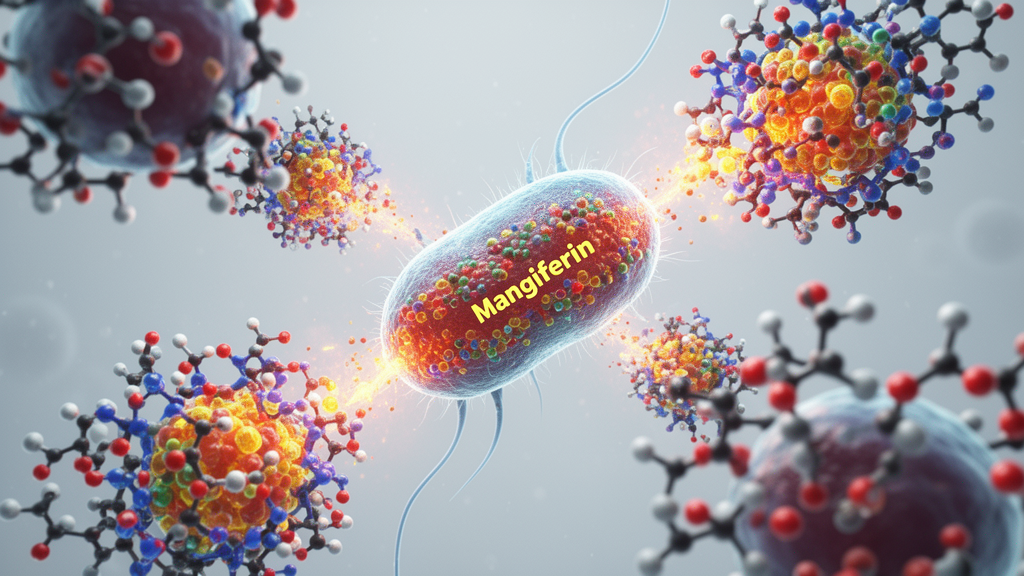
A naturally occurring compound extracted from the mango tree has shown the ability to interfere with several distinct stages of the life cycle of Toxoplasma gondii, the single-celled parasite responsible for one of the world’s most widespread zoonotic infections. In a new study published in Frontiers in Microbiology, researchers at Henan Medical University in Xinxiang, China, report that mangiferin, a C-glucosylxanthone derived from Mangifera indica, suppressed parasite growth in cultured human cells, altered the shape of free-swimming parasites within minutes, and prolonged the survival of mice infected with a highly virulent laboratory strain of the parasite. The work is presented as initial experimental evidence rather than a therapeutic breakthrough, but its breadth of activity has drawn attention because it spans processes that current frontline drugs largely do not touch.
Toxoplasma gondii is an obligate intracellular protozoan of the phylum Apicomplexa, capable of infecting nearly all warm-blooded animals, including humans. Most immunocompetent people who acquire the parasite experience asymptomatic or mild infections, but the picture changes dramatically for immunocompromised patients and for pregnant women, in whom severe and potentially fatal disease can develop. The established cornerstone of treatment for clinically significant toxoplasmosis remains pyrimethamine combined with sulfadiazine, a regimen whose usefulness is constrained by substantial toxicity. Bone marrow suppression is among the major treatment-related adverse effects, and a systematic review of 31 studies involving 2,975 patients found that more than half of the studies reported treatment discontinuation or modification because of adverse events, with hematological, gastrointestinal, and dermatological toxicities most frequently implicated. In pregnancy, therapeutic choices are further complicated by gestational age and evidence of fetal infection, leaving vulnerable populations with limited options.
It is against this backdrop that the Henan team turned to mangiferin, a compound with a long history of medicinal use through mango extracts and a documented spectrum of antibacterial, antiviral, anti-inflammatory, and antiparasitic activities. Previous work had shown inhibitory activity against Plasmodium species, including reported inhibition of serine hydroxymethyltransferase in Plasmodium falciparum, providing direct evidence of antiprotozoal potential. What remained unclear was whether the compound had any effect against T. gondii. The new study set out to answer that question with complementary approaches: cytotoxicity testing, plaque assays, morphological analysis, stage-specific infection assays in vitro, and a murine model of acute infection with the virulent RH strain. All animal work was approved by the Animal Ethics Committee of Henan Medical University under protocol number XYLL-20220223.
The first hurdle for any candidate compound is whether it harms host cells at concentrations where it might act against the parasite. Using a CCK-8 assay on human foreskin fibroblast (HFF) cells, the standard host cell for T. gondii work in vitro, the researchers treated cells with mangiferin concentrations ranging from 10 to 2,560 micromolar for 48 hours and measured viability by absorbance at 450 nanometers. Cell viability remained above 90 percent at concentrations up to 320 micromolar, while higher concentrations pushed viability below that threshold. On this basis, the team selected 160 and 320 micromolar for subsequent in vitro experiments, a range in which marked antiparasitic effects could be observed without substantial loss of host-cell viability, indicating that the antiparasitic phenotype was not simply a consequence of overt host-cell toxicity.
The clearest integrated readout of parasite fitness came from the plaque assay, in which 200 freshly egressed tachyzoites per well are allowed to infect confluent fibroblast monolayers and successive rounds of invasion, intracellular replication, egress, and reinvasion produce visible zones of destruction over six to seven days. Cultures treated with 320 micromolar mangiferin showed no detectable plaques at all, while 160 micromolar reduced plaque numbers and relative plaque area compared with the vehicle control, though those reductions at the lower concentration did not reach statistical significance in pairwise testing. The overall differences among groups were significant for both plaque count (Kruskal-Wallis test, p = 0.0006) and plaque area (p = 0.0013), with Dunn’s multiple-comparison test identifying significant differences only between the vehicle control and the 320 micromolar group. Sulfadiazine at 100 micrograms per milliliter served as the positive control, and plaque analysis was standardized using ImageJ-based measurement applied identically to all groups.
Beyond growth inhibition, the compound produced rapid and visible changes in parasite morphology. When extracellular tachyzoites were exposed to mangiferin, the proportion of parasites losing their characteristic crescent shape and becoming rounded increased within 30 minutes of treatment and became more pronounced with longer exposure and higher concentration, an assessment performed in a blinded manner with at least 100 tachyzoites counted per well. Scanning electron microscopy of parasites treated with 320 micromolar mangiferin for two hours confirmed the rounding and revealed localized, spherical surface protrusions and irregularities in some treated parasites. Similar rounding and deformation phenotypes have been reported with other anti-Toxoplasma compounds and are often accompanied by impaired growth or invasion, but the authors caution that the structural nature and biological significance of the surface protrusions remain unclear and require further investigation.
The in vivo arm of the study used female BALB/c mice aged six to eight weeks infected intraperitoneally with 100 RH strain tachyzoites, a model of acute toxoplasmosis that is uniformly lethal without treatment. Four hours after infection, mice began receiving mangiferin intragastrically once daily for seven days at doses of 50, 100, or 200 milligrams per kilogram, alongside a vehicle control group, with 14 mice per group. All vehicle-treated mice died by day 7 post infection. Mice given 50 or 100 milligrams per kilogram survived until day 8, without a statistically significant survival difference from controls. In contrast, mice receiving 200 milligrams per kilogram remained alive until day 15, a significant delay relative to controls (p < 0.01). The authors note that the relatively small sample size of the survival experiment may limit the precision and robustness of these results.
Parasite burden measurements told a somewhat different story from survival. Quantitative PCR targeting the SAG1 gene on day 7 post infection revealed significantly lower relative parasite levels in the blood, spleen, and brain of all three mangiferin-treated groups compared with vehicle controls, with all adjusted p values below 0.0001; the one-way ANOVA statistics were F(3, 12) = 30.47 for blood, 71.86 for spleen, and 53.85 for brain. Splenic pathology also differed: infected vehicle-treated mice showed extensive lymphocytic infiltration, poorly defined boundaries between white and red pulp, and red pulp congestion, while mangiferin treatment alleviated these alterations, with splenic architecture relatively well preserved at 200 milligrams per kilogram. The spleen index was significantly lower in the 200 milligrams per kilogram group than in controls (mean difference = 2.868 percentage points, 95% CI: 1.224–4.511, p = 0.0014). Interestingly, the dose-dependent effects on survival did not fully correspond to the reductions in parasite burden, a discrepancy the authors attribute to the established influence of host immune responses and inflammation-associated tissue damage on disease outcome, and they call for future studies that pair parasite burden measurements with immune and inflammatory assessments, as well as experiments in uninfected mice to distinguish effects on the host from responses to infection.
Perhaps the most mechanistically intriguing findings came from stage-specific assays dissecting the parasite’s lytic cycle. In adhesion assays on fixed HFF monolayers, in which attached parasites were counted in 10 randomly selected fields per coverslip after 30 minutes, both 160 and 320 micromolar mangiferin significantly reduced the number of tachyzoites attached to host cells (p < 0.0001), while sulfadiazine had no significant effect. The invasion assay, using CFDA-SE-labeled parasites and flow cytometry, showed the same pattern: mangiferin at both concentrations significantly reduced the proportion of infected host cells, whereas sulfadiazine did not. Intracellular proliferation, quantified by qPCR at 12, 24, and 48 hours after treatment, was significantly suppressed by mangiferin at all time points, and at 12 and 24 hours the inhibition by 320 micromolar mangiferin was significantly stronger than that of sulfadiazine (p < 0.0001), though the two were comparable at 48 hours. Because sulfadiazine acts primarily by inhibiting dihydropteroate synthase in the folate biosynthesis pathway and mainly impairs proliferation, the contrast suggests that mangiferin affects a broader range of parasite-associated processes under the conditions tested, raising the possibility of complementary effects if used in combination with existing drugs.
Significant caveats temper these results. The molecular target of mangiferin in T. gondii is unknown; evidence from Plasmodium falciparum points to metabolic enzymes such as serine hydroxymethyltransferase, but whether this or any other parasite protein mediates the observed effects remains to be determined, and indirect antiparasitic effects acting through host-cell physiology, including modulation of NF-κB, NLRP3, MAPK, JAK/STAT, and Nrf2 signaling, cannot be excluded. The in vivo efficacy may also have been blunted by mangiferin’s reportedly low oral bioavailability, which could influence absorption, metabolism, and tissue distribution, although its actual impact in the present model remains to be determined. The study tested only the RH strain, and the distinct biological characteristics of different T. gondii strains mean that broader applicability remains an open question. The authors position the work as initial experimental evidence supporting further investigation of mangiferin as a potential natural compound for novel strategies against toxoplasmosis, with mechanistic studies, pharmacological characterization, and multi-strain testing as the necessary next steps before any clinical relevance could be considered.
Subject of Research: Anti-Toxoplasma activity of the mango-derived compound mangiferin in vitro and in mice
Article Title: Mangiferin inhibits multiple stages of the Toxoplasma gondii lytic cycle in vitro and protects against acute RH strain infection in vivo
Article References: Gao, S., Dou, Y., Li, M., Wu, J., Ying, T., Zhang, Z., Yang, Z., Mei, X., Wang, S., & Tian, X. (2026). Mangiferin inhibits multiple stages of the Toxoplasma gondii lytic cycle in vitro and protects against acute RH strain infection in vivo. Frontiers in Microbiology, 17, Article 1983878. https://doi.org/10.3389/fmicb.2026.1983878
Image Credits: AI Generated
DOI: 10.3389/fmicb.2026.1983878
Keywords: Toxoplasma gondii, mangiferin, antiparasitic activity, natural products, toxoplasmosis, RH strain, tachyzoites, sulfadiazine, Mangifera indica, drug discovery, inhibits, multiple
News Source: Drew Townsend. (October 24, 2026). Mango Compound Mangiferin Shows Multi-Stage Activity Against Toxoplasma gondii. Scienmag.