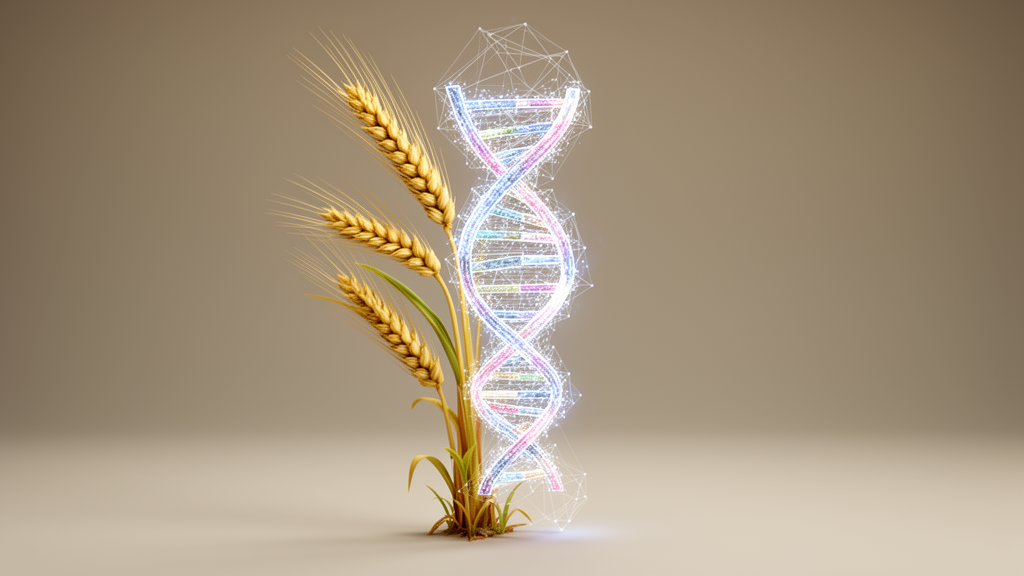
Wheat breeders have become extraordinarily good at finding genetic variation, but far less successful at explaining how that variation actually produces the traits they care about. A new review published in Discover Plants argues that this growing disconnect has become the central bottleneck in modern wheat improvement, and it proposes a way out: a conceptual framework called Pan-Genome to Pan-Phenome, or PG2P, which traces hidden genomic diversity through layers of biological regulation until it emerges as measurable phenotypic diversity. The authors, led by Ayesha Tabassum and colleagues, present the framework as a synthesis of current knowledge rather than a validated computational pipeline, but its ambition is clear: to move wheat breeding from statistical marker-trait associations toward mechanistic, predictive precision breeding.
The core problem the review identifies is that wheat genetics has been built overwhelmingly on single nucleotide polymorphisms, or SNPs. These single-letter changes in DNA have powered genome-wide association studies, genomic selection, and marker-assisted breeding for years, and they have successfully flagged genomic regions controlling important agronomic traits. Yet SNPs capture only a fraction of the functional variation in the wheat genome. Complex traits such as grain yield, stress tolerance, grain quality, and developmental plasticity are governed by many interacting genetic and regulatory factors, and most trait-associated loci explain only a limited share of phenotypic variance. This shortfall feeds directly into the persistent problem of missing heritability, in which known genetic variants fail to account for the full heritable variation of complex traits.
The review defines hidden genomic variation operationally: it is not variation that is technically invisible, but variation whose contribution to gene regulation, gene dosage, chromatin organization, or complex traits is poorly captured or not explicitly modelled by SNP-centric analyses. The catalogue is broad. Presence-absence variation changes the actual gene repertoire of a genotype, since some wheat lines carry genes that others completely lack. Structural variants such as inversions, translocations, duplications, and deletions reorganize chromosome architecture, disrupt coding sequences, reposition regulatory elements, and alter recombination patterns. Copy number variation changes gene dosage, shifting transcript abundance and protein production in ways that generate quantitative differences in metabolism, nutrient use, stress responses, and yield. Transposable element insertions can create or destroy cis-regulatory elements and induce local epigenetic changes, while sequence variation in promoters and enhancers modifies transcription factor binding without touching protein-coding sequence at all.
Importantly, the authors caution against treating hidden variation as the sole explanation for missing heritability. That gap can also arise from small-effect variants, rare variants, incomplete linkage disequilibrium, epistatic interactions, genotype-by-environment interactions, phenotyping limitations, and statistical modelling constraints. Within the PG2P framework, hidden genomic variation is positioned as one component of a broader genetic architecture, a framing that keeps the review honest about what its proposal can and cannot resolve.
The mechanistic heart of the framework is the claim that functional variants rarely determine complex traits directly. Instead, their effects propagate through a hierarchy of biological processes. A regulatory variant can alter transcription factor binding sites, and because individual transcription factors often control many target genes, a single change can rewire entire transcriptional circuits. Epigenetic regulation acts as a dynamic modulatory layer within this hierarchy: genomic variation can influence DNA methylation and chromatin accessibility, while epigenetic states in turn modify whether transcription factor binding sites remain reachable, and environmental signals can reshape epigenetic states in a reciprocal fashion. Altered transcription then remodels protein interaction networks, changing protein abundance, interaction strength, and signalling efficiency, which amplifies the consequences of the original variant across multiple pathways.
Network remodeling ultimately drives metabolic reprogramming. Coordinated changes in enzyme activity redistribute carbon, nitrogen, and energy among competing physiological processes, influencing the balance between growth, maintenance, defense, and reproduction. These metabolic adjustments shape developmental trajectories, resource allocation, and tissue differentiation, and thereby determine biomass accumulation, grain formation, nutrient-use efficiency, and stress adaptation. Development, in this view, is the cumulative expression of upstream regulatory, molecular, and metabolic processes rather than a direct consequence of genomic variation alone. It is this interacting chain, from regulatory architecture through networks and metabolism to development, that the authors say bridges the long-standing genotype-phenotype gap.
The endpoint of this chain is what the review calls the wheat pan-phenome: a multidimensional representation of phenotypic diversity across genetically diverse populations, developmental stages, environmental conditions, and interacting trait domains. Unlike the conventional phenome, the pan-phenome is a framework-specific construct that asks not only which phenotypes are expressed but how their expression varies among genotypes, across developmental time from germination through grain filling and maturity, and under contrasting environments. Because biological networks are extensively interconnected, individual traits rarely vary independently; shared regulatory circuits create coordinated relationships and trade-offs, so modifying one developmental process can influence several characteristics simultaneously. Phenotypic plasticity and genotype-by-environment interaction further expand this space, meaning identical genotypes can look markedly different across environments while different genotypes respond differently to the same conditions.
On the practical side, the review sketches how PG2P could support causal variant prioritization. Genome-wide association signals could be combined with statistical fine-mapping to narrow regions to credible candidate sets, then integrated with expression QTLs, splicing QTLs, and chromatin QTLs to test whether candidates are associated with altered gene expression, transcript processing, or chromatin accessibility. Colocalization analysis and transcriptome-wide association studies could add convergent evidence, and high-priority candidates could then be validated experimentally using CRISPR/Cas-mediated genome editing or allele replacement, comparing edited and non-edited plants at molecular, physiological, and phenotypic levels. The authors are explicit that computational evidence alone does not establish causality.
They also outline implementation scenarios for predictive breeding. In one, a breeding population genotyped with conventional SNPs is additionally characterized for presence-absence and structural variation using pan-genome or long-read sequencing resources; trait-associated variants are evaluated for effects on gene dosage or regulatory activity and added as predictors alongside SNPs in genomic prediction models, with accuracy compared between SNP-only and combined models through cross-validation and independent validation populations. Artificial intelligence enters as an integrative platform rather than a standalone tool: tree-based models such as Random Forest and XGBoost suit heterogeneous high-dimensional data, deep learning captures nonlinear multi-omics relationships, and graph neural networks can represent variants, genes, proteins, pathways, and traits as interconnected nodes. The review is equally candid about the limits: small populations relative to huge numbers of variables raise overfitting risks, missing or batch-affected data reduce generalizability, and greater model complexity trades off against transparency and explainability.
Substantial challenges remain before any of this becomes routine. Current wheat pan-genomes incompletely represent landraces, wild relatives, and regionally adapted germplasm, leaving many dispensable genes and rare alleles undiscovered. Functional validation of candidate variants lags far behind discovery, structural variants are still poorly handled in breeding pipelines, a standardized pan-phenome framework does not yet exist, and multi-environment validation is essential because prediction models built in one environment may not transfer elsewhere. Looking forward, the authors point to graph pan-genomes, single-cell and spatial omics, pangenome-aware prediction, digital phenotyping, genome foundation models, and, more speculatively, digital twins of individual genotypes, while noting that fully dynamic virtual breeding systems will require real-time data assimilation, uncertainty quantification, and extensive validation across genetic backgrounds and environments. The PG2P framework, as a conceptual roadmap rather than a finished tool, sets out the direction of travel: from cataloguing wheat’s hidden genomic diversity to predicting its phenotypic consequences before a single seed is sown.
Subject of Research: A conceptual framework linking hidden wheat genomic variation to phenotypic diversity for predictive precision breeding
Article Title: Pan Genome to Pan Phenome provides a mechanistic framework for translating hidden genetic diversity into predictive wheat breeding
Article References: Tabassum, A., Akhtar, S., Kiran, U., Arif, K., Sharif, A., & Younas, M. (2026). Pan Genome to Pan Phenome provides a mechanistic framework for translating hidden genetic diversity into predictive wheat breeding. Discover Plants, 3(1), Article 476. https://doi.org/10.1007/s44372-026-00978-2
Image Credits: AI Generated
DOI: 10.1007/s44372-026-00978-2
Keywords: wheat breeding, pan-genome, pan-phenome, structural variation, genomic selection, missing heritability, gene regulation, copy number variation, genotype-by-environment interaction, artificial intelligence, CRISPR validation, precision breeding
News Source: Juliet Wilcox. (October 23, 2026). Wheat’s Hidden Genome: New Framework Aims to Turn Untapped DNA Diversity into Predictive Breeding. Scienmag.