• HOME
  • NEWS
  • EXPLORE
    • CAREER
      • Companies
      • Jobs
    • EVENTS
    • iGEM
      • News
      • Team
    • PHOTOS
    • VIDEO
    • WIKI
  • BLOG
  • COMMUNITY
    • FACEBOOK
    • INSTAGRAM
    • TWITTER
Thursday, October 22, 2026
BIOENGINEER.ORG
No Result
View All Result
  • Login
  • HOME
  • NEWS
  • EXPLORE
    • CAREER
      • Companies
      • Jobs
        • Lecturer
        • PhD Studentship
        • Postdoc
        • Research Assistant
    • EVENTS
    • iGEM
      • News
      • Team
    • PHOTOS
    • VIDEO
    • WIKI
  • BLOG
  • COMMUNITY
    • FACEBOOK
    • INSTAGRAM
    • TWITTER
No Result
View All Result
Bioengineer.org
No Result
View All Result
Home NEWS Science News Health

Bubble CPAP Used During Two Amazon Neonatal Transports

by
October 22, 2026
in Health
Reading Time: 2 mins read
0
Bubble CPAP Used During Two Amazon Neonatal Transports

Bubble CPAP Used During Two Amazon Neonatal Transports

Share on FacebookShare on TwitterShare on LinkedinShare on RedditShare on Telegram

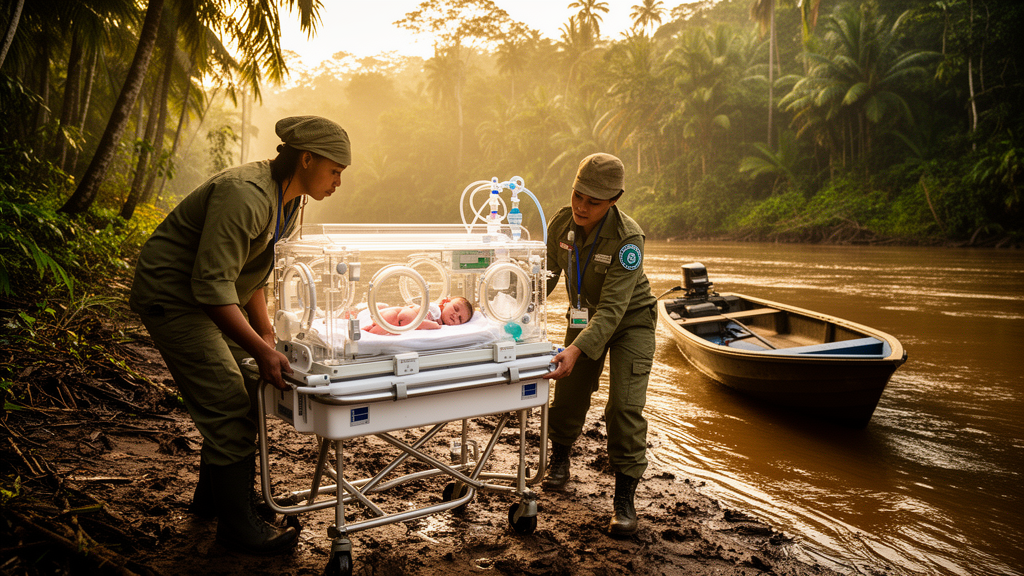
Two critically ill newborns received noninvasive continuous positive airway pressure through a novel bubble CPAP device during long-distance transport along the Amazon River in Brazil, according to a two-case report. The cases provide limited evidence that the device can be used during neonatal transport in a remote, low-resource setting, but they do not establish its safety, effectiveness or superiority over other approaches. Timely treatment with noninvasive continuous positive airway pressure, or CPAP, improves outcomes in neonates with respiratory distress syndrome.

However, the report notes that little has been described about using CPAP during transport in low-resource settings. The reported journeys followed a training and donation effort conducted in July and November 2024. The team trained medical staff and donated novel bubble CPAP devices to a general hospital and a local ambulance service in a remote region of the Brazilian Amazon.

In the two cases presented, critically ill newborns were treated with the device while being carried over long distances on the Amazon River. This case report also reviews the essential elements identified for maintaining quality care of neonates during transport. The authors describe the two journeys as a possible new opportunity for supporting small and sick newborns in similar settings.

The report therefore demonstrates a limited feasibility observation rather than proof of clinical benefit or reliable success in neonatal transport. Larger studies would be required to characterize the device’s role more broadly, although the present cases document an actual use of bubble CPAP during river transport in the Brazilian Amazon.

Subject of Research: Neonatal bubble CPAP during long-distance transport in the Brazilian Amazon

Article Title: Use of a novel bubble CPAP device during long-distance neonatal transport in the Brazilian Amazon: a report of two cases

Article References: Layer, A., Brasil, L., Garg, L. F., & Burke, T. F. (2026). Use of a novel bubble CPAP device during long-distance neonatal transport in the Brazilian Amazon: a report of two cases. BMC Pediatrics. https://doi.org/10.1186/s12887-026-07579-8

Image Credits: AI Generated

DOI: 10.1186/s12887-026-07579-8

Keywords: neonatal transport, bubble CPAP, newborn respiratory support, respiratory distress syndrome, premature newborns, Brazilian Amazon, Amazon River, low-resource healthcare, case report, novel, bubble, CPAP

News Source: Harold Sullivan. (October 22, 2026). Bubble CPAP Used During Two Amazon Neonatal Transports. Scienmag.


Tags: Amazon RiverBrazilian Amazonbubblebubble CPAPcase reportCPAPlow-resource healthcareneonatal transportnewborn respiratory supportnovelpremature newbornsRespiratory Distress Syndrome
Share12Tweet7Share2ShareShareShare1

Related Posts

Sphenopalatine ganglion block reduced epidural patch use in 14-patient headache cohort

Sphenopalatine ganglion block reduced epidural patch use in 14-patient headache cohort

October 22, 2026
Ayurvedic phytochemicals offer a multi-target route against antimicrobial resistance

Ayurvedic phytochemicals offer a multi-target route against antimicrobial resistance

October 22, 2026

Zuranolone Shows Consistent Effects Across Japanese Depression Subgroups

October 22, 2026

DHA and arachidonic acid linked to modest attention gains in select preterm children

October 22, 2026

POPULAR NEWS

  • In-Situ Graphene Networks Strengthen Nickel Composites

    In-Situ Graphene Networks Strengthen Nickel Composites

    29 shares
    Share 12 Tweet 7
  • Sphenopalatine ganglion block reduced epidural patch use in 14-patient headache cohort

    29 shares
    Share 12 Tweet 7
  • Bubble CPAP Used During Two Amazon Neonatal Transports

    29 shares
    Share 12 Tweet 7
  • Ayurvedic phytochemicals offer a multi-target route against antimicrobial resistance

    29 shares
    Share 12 Tweet 7

About

We bring you the latest biotechnology news from best research centers and universities around the world. Check our website.

Follow us

Recent News

In-Situ Graphene Networks Strengthen Nickel Composites

Sphenopalatine ganglion block reduced epidural patch use in 14-patient headache cohort

Bubble CPAP Used During Two Amazon Neonatal Transports

Subscribe to Blog via Email

Enter your email address to subscribe to this blog and receive notifications of new posts by email.

Join 85 other subscribers
  • Contact Us

Bioengineer.org © Copyright 2023 All Rights Reserved.

Welcome Back!

Login to your account below

Forgotten Password?

Retrieve your password

Please enter your username or email address to reset your password.

Log In
No Result
View All Result
  • Homepages
    • Home Page 1
    • Home Page 2
  • News
  • National
  • Business
  • Health
  • Lifestyle
  • Science

Bioengineer.org © Copyright 2023 All Rights Reserved.