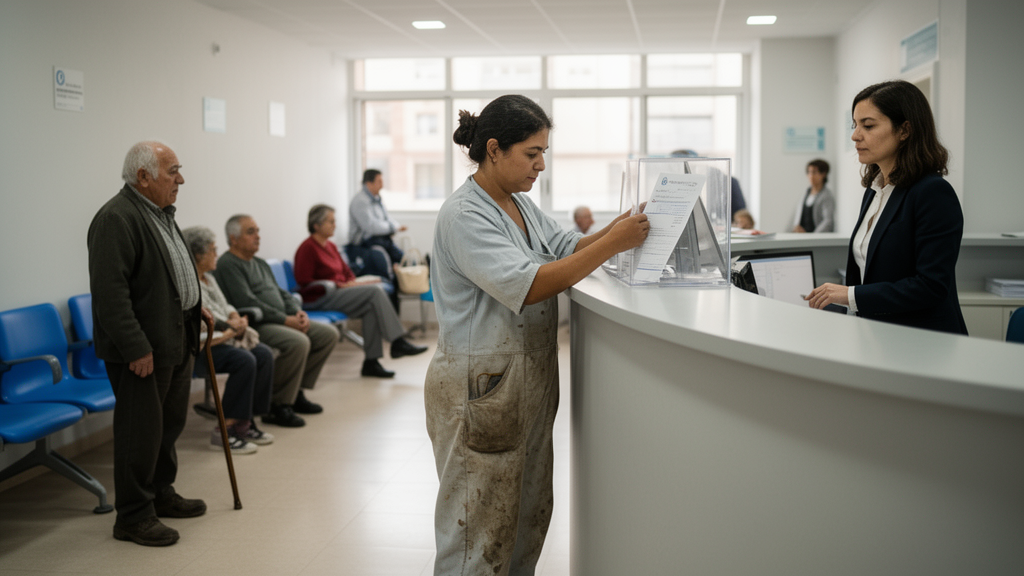
A population-based analysis of three national health surveys found that socioeconomic status remained independently associated with different patterns of healthcare use in Spain between 2017 and 2023. People in lower socioeconomic groups reported more use of primary care and, during the earlier survey years, emergency services, while specialist consultation was less common. These differences persisted after the analysis accounted for health need and other predisposing and enabling factors, according to the study, which analyzed 66,193 responses from people aged 15 or older.
The study used data from Spain’s national health surveys conducted in 2017, 2020 and 2023, including 22,038 responses in 2017, 22,077 in 2020 and 22,078 in 2023. It examined general practitioner visits, specialist consultations, hospital admissions and emergency department use across public and private sectors. Participants were classified into high, medium and low socioeconomic-status groups, and researchers fitted generalized linear models with negative binomial distributions and robust standard errors. Interaction terms tested whether socioeconomic patterns changed across survey years, while the analysis was also stratified by gender. The design was cross-sectional, so the results identify associations rather than demonstrating that socioeconomic position caused particular patterns of care.
Health need was the strongest influence across the different services, but it did not fully account for the observed inequalities. In primary care, low socioeconomic status was associated with higher utilisation, producing an incidence rate ratio of 1.11, with a 95% confidence interval of 1.01–1.22. Women also had higher primary-care use than men, with an incidence rate ratio of 1.21 and a 95% confidence interval of 1.18–1.25. The researchers found no significant interaction between socioeconomic status and survey year for primary-care use, indicating that this pattern was broadly stable across the study period.
Specialist care showed the opposite gradient. Compared with the high socioeconomic-status group, medium-status participants had an incidence rate ratio of 0.77, with a 95% confidence interval of 0.69–0.85, and low-status participants had a ratio of 0.70, with a 95% confidence interval of 0.63–0.78. Women reported more specialist use than men, with an incidence rate ratio of 1.23 and a 95% confidence interval of 1.1–1.28. Specialist use was also higher among Spanish nationals, with an incidence rate ratio of 1.13 and a 95% confidence interval of 1.05–1.21, and among people living with a partner. Relative to 2020, specialist use was higher in both 2017, with an incidence rate ratio of 1.38 and a 95% confidence interval of 1.19–1.61, and 2023, with a ratio of 1.21 and a 95% confidence interval of 1.02–1.42.
Hospital admissions were described by the researchers as being driven mainly by need. Although there was a significant interaction between socioeconomic status and survey year, with a p-value of 0.004, socioeconomic status had no independent effect in 2020. Emergency care displayed a time-dependent gradient: lower socioeconomic groups had higher emergency use in 2017 and 2020, but no such differences were detected in 2023. The interaction test was significant at p = 0.013. Emergency use in 2023 was 19% higher than in 2020, with an incidence rate ratio of 1.19 and a 95% confidence interval of 1.01–1.41. Taken together, the results suggest that the broader pattern of more primary and emergency care but less specialist care among lower-status groups remained recognizable around the COVID-19 pandemic period, even though some service-specific patterns varied by year.
Subject of Research: Socioeconomic inequalities in healthcare service utilisation in Spain from 2017 to 2023
Article Title: Socioeconomic inequalities in health service utilisation in Spain: a population-based analysis of national health surveys data (2017–2023)
Article References: Martín-Fernández, J., Polentinos-Castro, E., Alonso-Safont, T., Olmedo-Galindo, J., Rodríguez-Martínez, G., Ariza-Cardiel, G., & del-Cura-González, I. (2026). Socioeconomic inequalities in health service utilisation in Spain: a population-based analysis of national health surveys data (2017–2023). BMC Health Services Research. https://doi.org/10.1186/s12913-026-15543-6
Image Credits: AI Generated
DOI: 10.1186/s12913-026-15543-6
Keywords: health inequalities, Spain, healthcare use, national health surveys, primary care, specialist care, emergency care, socioeconomic status, COVID-19, Socioeconomic, inequalities, health
News Source: Ophelia Keating. (October 22, 2026). Spain’s healthcare use shows persistent socioeconomic divides, survey analysis finds. Scienmag.