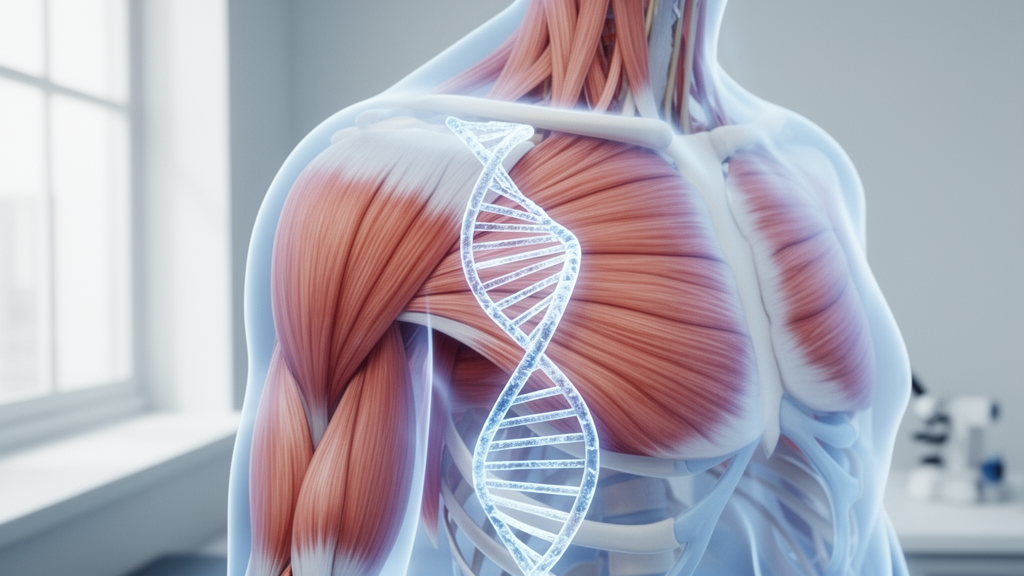
A nationwide Danish twin study estimates that additive genetic effects account for about half of the variation in liability to clinically diagnosed rotator cuff tear. Among monozygotic and dizygotic twin pairs born from 1940 to 1980 and alive on January 1, 1980, researchers found evidence of familial aggregation consistent with genetic effects. The disorder was also diagnosed more frequently in men than women, although genetic estimates were less precise among women.
The population-based investigation linked the Danish Twin Registry with the Danish National Patient Registry. Investigators used relevant ICD-8 and ICD-10 codes to identify rotator cuff tear diagnoses recorded between 1994 and 2014. They then estimated cumulative incidence and assessed whether a rotator cuff tear diagnosis in one twin was associated with the same diagnosis in the co-twin.
By age 70, the estimated cumulative incidence of receiving a rotator cuff tear diagnosis was 6.5% in men, with a 95% confidence interval of 6.0% to 7.2%. Among women, the corresponding estimate was 3.8%, with a 95% confidence interval of 3.4% to 4.3%. These estimates concern recorded diagnoses, which may not capture every rotator cuff tear that was present but never entered into the medical record.
For twins in which one member had received a rotator cuff tear diagnosis, the risk of the same diagnosis in the co-twin was generally higher for monozygotic than dizygotic twins. The difference was clearest among men. The preferred biometric twin model, known as the AE model, attributed 49% of the variance in liability to rotator cuff tear to additive genetic effects, with a 95% confidence interval of 27% to 70%.
Unique environmental effects accounted for the remaining 51% of the modeled variance, with a 95% confidence interval of 30% to 73%. Sex-stratified results suggested a stronger genetic contribution among men, while estimates among women were less precise. The authors characterized clinically diagnosed rotator cuff tear as a common, partially heritable musculoskeletal disorder.
Their results support considering inherited susceptibility alongside occupational and environmental exposures when assessing population-level risk and clinical management. Because the analysis was based on nationwide clinical registries rather than direct examination of every participant, it characterizes variation in liability to a recorded clinical diagnosis rather than proving that genes alone cause an individual tear.
Subject of Research: Genetic and environmental contributions to clinically diagnosed rotator cuff tears in a nationwide Danish twin cohort.
Article Title: Genetic and environmental influences on rotator cuff tears: a population-based twin study
Article References: Jørgensen, C. D., von Bornemann Hjelmborg, J., Lindahl-Jacobsen, R., & Frich, L. H. (2026). Genetic and environmental influences on rotator cuff tears: a population-based twin study. BMC Medicine. https://doi.org/10.1186/s12916-026-05284-y
Image Credits: AI Generated
DOI: 10.1186/s12916-026-05284-y
Keywords: rotator cuff tears, twin study, heritability, Danish registries, genetic susceptibility, environmental effects, shoulder disorders, population-based research, clinical diagnoses, Genetic, environmental, influences
News Source: Juliet Wilcox. (October 22, 2026). Danish Twin Study Links Rotator Cuff Tear Liability to Genetics. Scienmag.