A laboratory study of Cascabela thevetia leaves found that liquid-nitrogen pretreatment followed by extraction in pure water produced the highest recovery among six ethanol–water mixtures and the strongest activity in antioxidant, antibacterial and antifungal assays. Researchers prepared leaf powder by quenching freshly collected leaves in liquid nitrogen, then extracted the material for two days in solvents containing 0%, 20%, 40%, 60%, 80% or 100% ethanol. The water-based extract yielded 31.08 ± 0.03% of extract and outperformed the ethanolic preparations in every biological assay reported. This was an in vitro study of one plant species collected in Pakistan, and its results show activity in laboratory tests rather than therapeutic efficacy or safety in people.
The investigators selected the water extract for closer phytochemical analysis because it combined the greatest yield with the highest measured activity. Qualitative screening detected carbohydrates, tannins, saponins, terpenoids, flavonoids, phenols, alkaloids and cardiac glycosides in the leaf preparations. These tests indicate classes of chemical compounds but do not measure their concentrations or establish which individual constituents produced the observed effects. The researchers described the plant, commonly called yellow oleander or lucky nut and belonging to the Apocynaceae family, as a medicinal plant containing diverse phytochemicals. They also noted that it is poisonous, an important qualification given that the study examined crude leaf extracts rather than isolated or purified constituents.
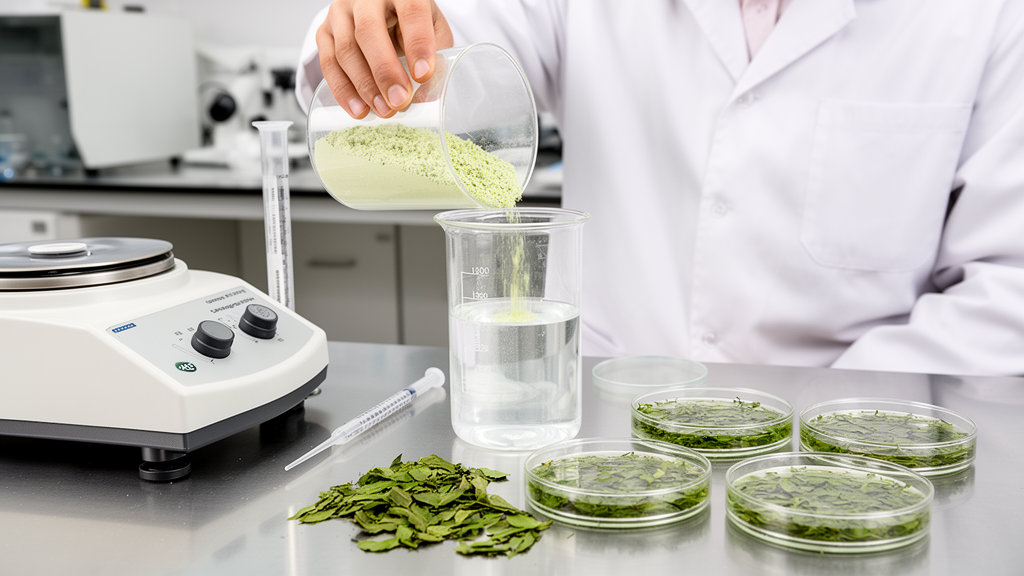
For the liquid-nitrogen pretreatment, cleaned leaves were immediately quenched and crushed into fine powder with a pestle and mortar. Approximately 5 g of powder was placed in each solvent composition, with each preparation totaling 100 mL. After two days in the dark, each mixture was sonicated for 30 minutes below 10 °C and agitated on an orbital shaker for three hours. Filtration, rotary evaporation and 72 hours of freeze-drying followed before extract yield was calculated. Rapid freezing at approximately −196 °C was intended to limit oxidative and enzymatic degradation and preserve heat-sensitive metabolites, while ice-crystal formation may also disrupt plant tissue and improve solvent penetration. Those mechanisms were proposed explanations rather than variables independently tested in this experiment.
Yield varied substantially with solvent composition. The aqueous preparation, designated E-1, produced 31.08 ± 0.03% extract, whereas the 60% ethanol preparation, E-4, produced the lowest yield. The pattern supports the researchers’ interpretation that water efficiently recovered polar constituents from the leaf matrix. Because every sample received the same cryogenic preparation, the comparison isolates the effect of solvent composition within the experiment; it does not establish how much the liquid-nitrogen step improved performance relative to ordinary drying or untreated leaves. The study therefore identifies water as the strongest of the six tested extraction media for this material and method, rather than providing a direct estimate of cryogenic extraction efficiency against all conventional alternatives.
Gas chromatography–mass spectrometry was used to examine the highest-yield aqueous extract after derivatization. Thirteen chromatographic peaks appeared in the total-ion chromatogram, and the researchers tentatively retained seven compounds for reporting after comparing retention data and mass spectra with NIST and WILEY library records. They excluded peaks judged likely to represent volatile aromatic hydrocarbons, solvent impurities, di-n-octyl phthalate or other processing-related contamination. The seven reported compounds constitute only the fraction compatible with derivatization and GC–MS, not the full chemical composition of the extract. The authors specifically cautioned that many polar and non-volatile constituents in a water-based plant extract would not be detected by this method, and they identified LC–MS/MS, HPLC and NMR as possible complementary techniques for broader profiling.
In the agar well-diffusion assay, the aqueous extract produced inhibition-zone diameters of 16.30 ± 0.20 mm against Escherichia coli and 15.32 ± 0.19 mm against Staphylococcus aureus. The corresponding bacterial results declined overall as the ethanol proportion rose. Against E. coli, the 20%, 40%, 60%, 80% and 100% ethanol preparations produced zones of 12.00 ± 0.10, 12.63 ± 0.15, 10.97 ± 0.06, 10.23 ± 0.15 and 10.03 ± 0.06 mm, respectively. For S. aureus, the corresponding values were 11.63 ± 0.11, 11.55 ± 0.13, 11.24 ± 0.12, 10.97 ± 0.06 and 11.03 ± 0.06 mm. One-way analysis of variance found significant differences among treatments for both bacteria, and Tukey’s honestly significant difference test distinguished the aqueous extract from the other preparations.
The aqueous preparation also gave the largest measured zone against Aspergillus niger, measuring 13.1 ± 0.19 mm after 72 hours. The 20%, 40%, 60%, 80% and 100% ethanol preparations yielded zones of 10.87 ± 0.15, 10.53 ± 0.14, 10.93 ± 0.18, 10.13 ± 0.18 and 9.93 ± 0.12 mm. Analysis of variance again showed significant variation among the six treatments, while the aqueous extract differed statistically from the others. Ciprofloxacin and nystatin served as reference drugs for the bacterial and fungal assays, respectively. The investigators proposed that polar phytochemicals recovered more efficiently in water may account for the stronger inhibition, while increasing ethanol appeared to hinder activity in their sample mixtures. This does not mean ethanol was chemically destroying the extract; it was present in both extraction and assay media, which complicates attribution of the effect.
Two radical-scavenging assays produced the same solvent ranking. In the DPPH assay, the aqueous extract showed the highest scavenging activity and the pure ethanol extract the lowest. Its half-maximal inhibitory concentration, expressed as the concentration required to scavenge 50% of DPPH radicals, was 9.16 µg/mL. The kinetic analysis indicated that scavenging occurred mainly during the first five minutes, after which the curves became nearly horizontal. In the ABTS assay, results were reported as Trolox equivalent antioxidant capacity: the aqueous preparation reached 8.96 mM, compared with 7.6 mM for the pure ethanol preparation. The researchers associated the stronger aqueous activity with polar phenolics, flavonoids and tannins, which can donate electrons or hydrogen atoms to radicals and stabilize the resulting intermediates, but they did not isolate or directly measure the contribution of each compound class.
The findings remain preliminary because the researchers used plate-based in vitro assays and did not determine minimum inhibitory or minimum bactericidal concentrations for bacteria, nor minimum fungicidal concentrations for the fungus. Those measurements would be needed for more precise comparison and to distinguish growth inhibition from killing. The active constituents were not isolated or structurally characterized, and cytotoxicity and animal studies were not performed. The authors therefore recommend follow-up work involving purified fractions, MIC, MBC and MFC assays, mechanistic studies and in vivo safety and efficacy models before any preclinical or clinical consideration. Taken together, the experiment provides a clear laboratory result: within the six solvent compositions tested after liquid-nitrogen pretreatment, pure water gave the highest extraction yield and the strongest measured antioxidant, antibacterial and antifungal performance of Cascabela thevetia leaf extract, without establishing a clinical use.
Subject of Research: In vitro comparison of solvent compositions for extracting bioactive compounds from cryogenically prepared Cascabela thevetia leaves
Article Title: Liquid nitrogen mediated cryogenic extract optimization, phytochemical analysis, antibacterial, antifungal, and antioxidant potential of Cascabela thevetia Leaf
Article References: Shehzad, B., Ahmad, R., Aslam, F., Rehman, T., Shafique, U., Baig, U., Wahab, A., & Ch, A. R. (2026). Liquid nitrogen mediated cryogenic extract optimization, phytochemical analysis, antibacterial, antifungal, and antioxidant potential of Cascabela thevetia Leaf. Discover Chemistry, 3(1), Article 585. https://doi.org/10.1007/s44371-026-01042-4
Image Credits: AI Generated
DOI: 10.1007/s44371-026-01042-4
Keywords: Cascabela thevetia, liquid nitrogen, cryogenic pretreatment, water extraction, phytochemical screening, GC-MS, antibacterial assay, antifungal assay, antioxidant assay, in vitro research, Liquid, nitrogen
News Source: Bethany Barker. (October 22, 2026). Water Extraction of Cryogenically Prepared Cascabela Leaves Shows In Vitro Activity. Scienmag.