

• HOME
  • NEWS
  • EXPLORE
    • CAREER
      • Companies
      • Jobs
    • EVENTS
    • iGEM
      • News
      • Team
    • PHOTOS
    • VIDEO
    • WIKI
  • BLOG
  • COMMUNITY
    • FACEBOOK
    • INSTAGRAM
    • TWITTER
Wednesday, April 1, 2026
BIOENGINEER.ORG
No Result
View All Result
  • Login
  • HOME
  • NEWS
  • EXPLORE
    • CAREER
      • Companies
      • Jobs
        • Lecturer
        • PhD Studentship
        • Postdoc
        • Research Assistant
    • EVENTS
    • iGEM
      • News
      • Team
    • PHOTOS
    • VIDEO
    • WIKI
  • BLOG
  • COMMUNITY
    • FACEBOOK
    • INSTAGRAM
    • TWITTER
  • HOME
  • NEWS
  • EXPLORE
    • CAREER
      • Companies
      • Jobs
        • Lecturer
        • PhD Studentship
        • Postdoc
        • Research Assistant
    • EVENTS
    • iGEM
      • News
      • Team
    • PHOTOS
    • VIDEO
    • WIKI
  • BLOG
  • COMMUNITY
    • FACEBOOK
    • INSTAGRAM
    • TWITTER
No Result
View All Result
Bioengineer.org
No Result
View All Result
Home NEWS Science News Biology

A hair-trigger for cells fighting infection

Bioengineer by Bioengineer
September 13, 2017
in Biology
Reading Time: 3 mins read
0
Share on FacebookShare on TwitterShare on LinkedinShare on RedditShare on Telegram
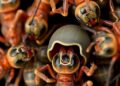
IMAGE

Credit: Dr Manuel Díaz-Muñoz

To fight infections cells in the immune system play a dangerous game with their own genes. Damaging genes allows B cells to make antibodies that are specifically equipped to target to specific causes of illness, but damaging genes also puts them at risk of becoming cancerous. A new study led by scientists at the Babraham Institute in Cambridge, UK identifies Tia1 as a hair-trigger protein that stop our body's defences from turning against us.

All cells experience DNA damage but it's usually minor and can be repaired. The latest research, published in the journal Nature Communications, highlights that standard repair processes are too slow for B cells, where intentional DNA damage is more severe. The results show that B cells plan ahead, priming the DNA repair process early, so when they intentionally damage their own DNA it can be fixed before it causes lasting harm.

As the paper's first author, Dr Manuel Díaz-Muñoz said: "B cells walk a fine line, some DNA damage is needed for them to make effective antibodies to fight infections, but too much and they become harmful. It's a tough situation to manage biochemically. Tia1 controls the production of a number of proteins that help cells respond to damaged DNA. Tia1 allows a rapid response from B cells so they can repair DNA damage at a moment's notice."

Each illness requires a specific antibody to defeat it. By damaging and repairing the genetic instructions that make antibodies, each B cell produces a unique antibody type and the most effective ones are then used to fight disease. This causes extensive damage to the DNA inside B cells and must be rapidly repaired or genetic mistakes may weaken the immune system or even cause cancer.

Scientists believed that B cells only turn on DNA repair genes when they are needed to repair damage. Yet, these new results completely change this view. These genes are constantly active, but cells only use the information in these genes to make proteins when there is a lot of DNA damage. B cells prepare templates for the proteins but don't go on to make the proteins themselves.

Tia1 is the protein that enables B cells to stop making DNA repair proteins part way through. When DNA damage is low, Tia1 gathers together the protein templates, called mRNAs, for lots of different DNA repair proteins. When DNA damage increases Tia1 can quickly release all the mRNAs it collected and the cell uses them to make lots of the proteins it needs to fix its genes.

Head of the Lymphocyte Signalling Programme at the Babraham Institute and senior scientist on the paper, Dr Martin Turner, said: "Remarkably, our data suggest that regulation of mRNAs by Tia1 rather than protein destruction controls DNA repair in activated B cells. This is an attractive and little explored mechanism that we are now starting to understand. Controlling protein production in this way is important in other healthy and diseased cells and it will be interesting to see if a similar system exists in other places."

###

Media Contact

Jonathan Lawson
[email protected]
01-223-496-230
@babrahaminst

http://www.babraham.ac.uk/

Original Source

http://www.babraham.ac.uk/news/2017/09/a-hairtrigger-for-cells-fighting-infection http://dx.doi.org/10.1038/s41467-017-00454-2

Share12Tweet7Share2ShareShareShare1

Related Posts

Chikungunya Virus Lingers in Joint Macrophages, Causes Chronic Disease

Chikungunya Virus Lingers in Joint Macrophages, Causes Chronic Disease

April 1, 2026
Unveiling How Two Genes Collaborate to Shape Dental and Facial Features

Unveiling How Two Genes Collaborate to Shape Dental and Facial Features

April 1, 2026

Do Your Genes Influence How Lifestyle Choices Affect Aging?

April 1, 2026

Combining Single-Cell Multiomics Unlocks Precise Identification of Rare Cell Types and States

March 31, 2026
Please login to join discussion

POPULAR NEWS

  • blank

    Revolutionary AI Model Enhances Precision in Detecting Food Contamination

    96 shares
    Share 38 Tweet 24
  • Imagine a Social Media Feed That Challenges Your Views Instead of Reinforcing Them

    1006 shares
    Share 398 Tweet 249
  • Promising Outcomes from First Clinical Trials of Gene Regulation in Epilepsy

    51 shares
    Share 20 Tweet 13
  • Popular Anti-Aging Compound Linked to Damage in Corpus Callosum, Study Finds

    43 shares
    Share 17 Tweet 11

About

We bring you the latest biotechnology news from best research centers and universities around the world. Check our website.

Follow us

Recent News

Correcting Clock and Bmal1’s Role in Cancer Cells

Phages Modify Cytosine via Hydroxylation and Arabinofuranosylation

New Aurodox Compound from Streptomyces Shows Antibacterial Promise

Subscribe to Blog via Email

Enter your email address to subscribe to this blog and receive notifications of new posts by email.

Join 78 other subscribers
  • Contact Us

Bioengineer.org © Copyright 2023 All Rights Reserved.

Welcome Back!

Login to your account below

Forgotten Password?

Retrieve your password

Please enter your username or email address to reset your password.

Log In
No Result
View All Result
  • Homepages
    • Home Page 1
    • Home Page 2
  • News
  • National
  • Business
  • Health
  • Lifestyle
  • Science

Bioengineer.org © Copyright 2023 All Rights Reserved.