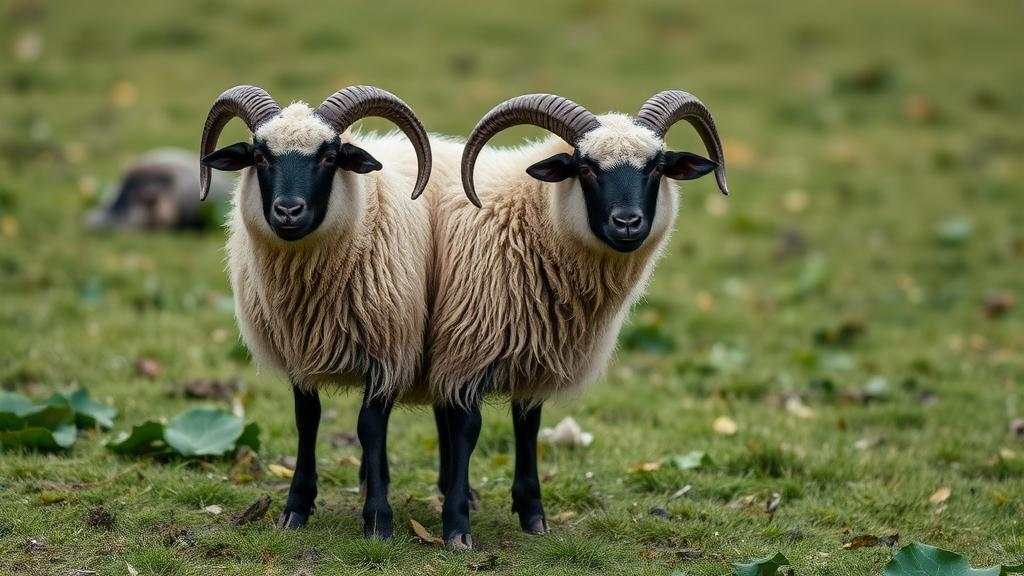
Microsatellite analysis of eight indigenous Pramenka sheep varieties in Serbia found moderate to high genetic diversity across the populations, alongside measurable differences among them. Researchers genotyped 409 unrelated animals representing Bardoka, Sjenica, Lipska, Svrljig, Krivovirska, Karakachan, Pirotska and Vlashko-Vitoroga sheep at 26 microsatellite loci. Observed heterozygosity ranged from 0.66 to 0.74, showing that substantial genetic variation remains within the sampled varieties.
The study aimed to characterize the genetic diversity and population structure of the eight varieties and provide a basis for their conservation and sustainable management. Its results present the first comprehensive genetic overview of these Serbian Pramenka varieties currently bred in the country. The analysis showed a shared genetic background alongside population-specific differentiation: the varieties were related, but they were not genetically interchangeable. The authors concluded that conservation and management should account for both the diversity retained within populations and the genetic integrity of individual varieties.
Pairwise FST values revealed low to moderate differentiation overall, with Lipska showing the highest genetic distinctiveness. The separation of Lipska from the other varieties was consistently supported by multidimensional scaling and discriminant analysis of principal components, or DAPC. Together, these results indicate that Lipska has a comparatively isolated genetic background within the sampled Pramenka population. The authors identified Lipska as requiring particular attention in conservation strategies.
Closer relationships appeared between Pirotska and Karakachan, and between Svrljig and Sjenica. The researchers associated these patterns with shared ancestry and possible historical gene flow. The analysis also detected private alleles, which were particularly evident in Vlashko-Vitoroga and Karakachan. These population-specific alleles provide additional evidence that the varieties retain distinctive components of genetic variation, including in populations that showed closer relationships with other varieties.
Several microsatellite loci departed from Hardy–Weinberg equilibrium. The authors linked these deviations to demographic processes, breeding practices or possible selection signals, rather than treating them as evidence of one specific cause. The findings therefore depict eight Serbian Pramenka varieties as distinct genetic entities with a common background, shaped by historical management and local adaptation. Because the study sampled 409 unrelated animals and examined 26 microsatellite loci, its conclusions apply to the analyzed populations and markers; the abstract does not provide the full sample size for each variety or detailed results for individual loci. Even with those limits, the study supplies a broad baseline for managing Pramenka diversity and assessing the genetic distinctiveness of the country’s local sheep populations.
Subject of Research: Genetic diversity and population structure among eight indigenous Pramenka sheep varieties in Serbia
Article Title: Genetic diversity and population structure of indigenous Pramenka sheep in Serbia revealed by microsatellite analyses
Article References: Davidović, S., Erić, P., Erić, K., Cekić, B., Ćosić, I., Maksimović, N., Delić, N., Ružić-Muslić, D., & Tanasković, M. (2026). Genetic diversity and population structure of indigenous Pramenka sheep in Serbia revealed by microsatellite analyses. Frontiers in Animal Science, 7, Article 1915831. https://doi.org/10.3389/fanim.2026.1915831
Image Credits: AI Generated
DOI: 10.3389/fanim.2026.1915831
Keywords: Pramenka sheep, Serbia, microsatellite markers, genetic diversity, population structure, livestock conservation, heterozygosity, private alleles, indigenous breeds, sheep genetics, Genetic, diversity
News Source: Juliet Wilcox. (October 22, 2026). Microsatellites reveal distinct structure among Serbia’s Pramenka sheep. Scienmag.