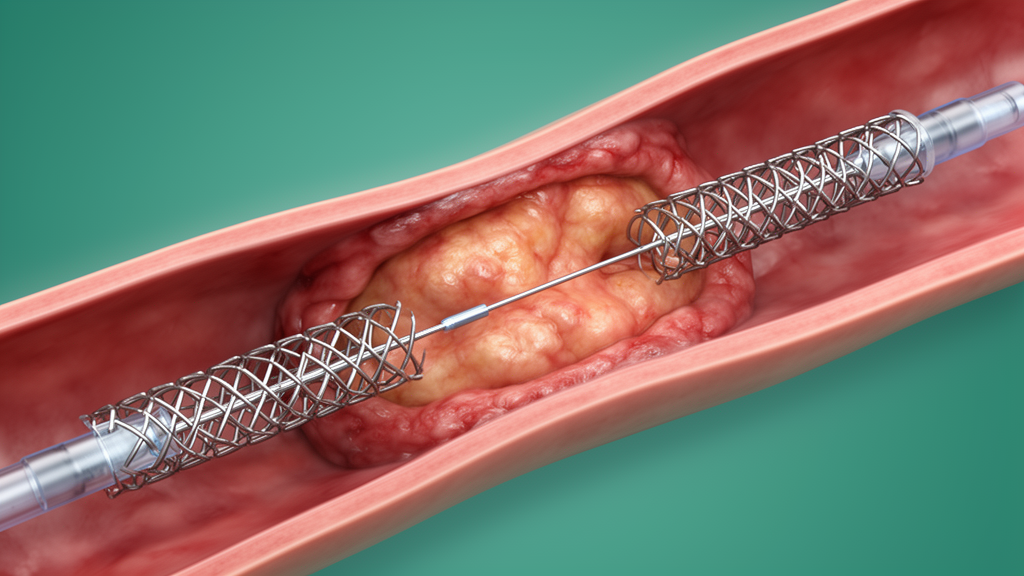
In a 2026 single-patient case report, vascular surgeons used two overlapping bare-metal stents to repair a methicillin-sensitive Staphylococcus aureus-infected pseudoaneurysm of the left subclavian artery while preserving blood flow through the dominant vertebral artery. The 70-year-old man entered the hospital with intermittent hemoptysis, which the clinicians attributed to erosion of the vascular lesion into a neighboring bronchial wall. Blood cultures identified MSSA, and imaging showed a 30-mm pseudoaneurysm beside severe stenosis at the origin of his dominant left vertebral artery. His symptoms resolved after the endovascular procedure, and follow-up imaging showed complete thrombosis and occlusion of the sac at three months, followed by shrinkage to 20 mm at six months. He remained asymptomatic through 12 months, but the authors emphasize that the approach is not a routine treatment and requires exceptional patient selection, prolonged surveillance and further validation.
Infected subclavian artery aneurysms are exceptionally rare vascular lesions associated with risks that include rupture, uncontrolled infection and major hemorrhage. They represent a small subset of peripheral arterial aneurysms and can arise through several mechanisms, including atherosclerosis, trauma, iatrogenic injury, thoracic outlet compression, connective-tissue disorders and infection. Infection can invade the arterial wall and cause inflammatory destruction of its structure, compromising vessel integrity and creating a high-risk lesion. The anatomical setting is especially demanding because the subclavian artery lies close to the brachial plexus, lung apex, thoracic duct and vertebral artery. Patients may also have multiple illnesses, complicating both open repair and endovascular intervention.
The evidence available for treatment remains sparse and consists predominantly of case reports. A 2023 scoping review cited by the report included 33 infected subclavian artery aneurysm patients treated between 2000 and 2023. Three patients, representing 9.1% of the group, died before surgery because of rupture. Among the 29 who received definitive treatment, 42.4% achieved complete disease resolution; postoperative complications occurred in 27.3%, reintervention was required in 18.2%, and overall mortality reached 27.3%. These figures describe outcomes reported in a small literature, not the results of a controlled comparison. Open surgical repair has traditionally been the first-line option because it permits removal of infected tissue, aneurysm resection and bypass reconstruction, although the operation can be extensive and may lead to graft infection, abscess formation or persistent bacteremia.
The reported patient had recently undergone revision hip arthroplasty and had also been treated with mechanical thrombectomy and temporary placement of an inferior vena cava filter for left femoropopliteal venous thrombosis. His hip incision was healed, ultrasound showed no collection around the prosthesis, echocardiography revealed no valvular vegetations, and no skin, urinary or respiratory source of infection was identified. The authors therefore considered transient bacteremia associated with a recent invasive procedure to be the most likely route, although they could not confirm the source. Non-contrast chest computed tomography initially showed a 38-by-16-mm left upper-lobe soft-tissue mass suspicious for malignancy. Contrast-enhanced CT instead identified the 30-mm left subclavian artery pseudoaneurysm and severe proximal stenosis of the dominant vertebral artery. Pulmonary embolism and malignancy were excluded.
Initial laboratory findings supported an inflammatory process despite a normal white-cell count and normal procalcitonin: the erythrocyte sedimentation rate was 150 mm/h and high-sensitivity C-reactive protein was 44.8 mg/L. Rivaroxaban was stopped when the patient was admitted, but his hemoptysis continued. Clinicians began empirical intravenous ceftriaxone and vancomycin, then changed to cefazolin once MSSA was confirmed. Because an infected aneurysm carries a substantial risk of rupture, operative treatment was indicated. The patient was technically suitable for open surgical repair, which remained the recommended first-line approach, but he and his family declined the operation after discussion of its perioperative risks. The team consequently selected an individualized endovascular strategy, explicitly treating it as an alternative rather than a standardized protocol.
Under local anesthesia, the procedure was performed through the left radial artery with a 7-French sheath. A 5-French pigtail catheter was advanced into the ascending aorta, and angiography confirmed the 30-mm pseudoaneurysm and severe vertebral-origin stenosis with continuing antegrade perfusion. Two 14-by-60-mm bare-metal stents were deployed in an overlapping configuration across the pseudoaneurysm orifice. Completion angiography showed that both stents were patent, the aneurysm sac retained contrast opacification, and flow through the vertebral artery was preserved. The procedure was completed without reported complications, and the patient recovered uneventfully. His hemoptysis disappeared completely after intervention.
The rationale for using two bare-metal stents rather than a covered stent graft or a single stent combined anatomical, infectious and hemodynamic considerations. Because the pseudoaneurysm was adjacent to the ostium of the dominant vertebral artery, a stent graft could have covered that opening and compromised posterior-circulation blood flow. Overlapping bare-metal stents covered the diseased parent vessel while retaining antegrade vertebral perfusion. The uncovered design also left the sac partially perfused, which the authors proposed could improve antibiotic access to the infected focus. Reduced inflow and lower pressure within the sac, together with turbulent flow and the absence of outflow branches, were intended to promote gradual thrombosis. This controlled perfusion also carried a theoretical risk of rupture before the sac became fully thrombosed, making intensive monitoring and repeated imaging essential.
Severe vertebral-origin stenosis was not treated at the same time. The patient had no neurological symptoms, the lesion lay close to the aneurysm, and dual antiplatelet therapy would have increased bleeding risk. Antithrombotic treatment was also withheld after the stent procedure because the clinicians judged hemorrhage and suppression of intrasac thrombosis to outweigh the short-term thrombotic risk. The large-caliber artery and minimal residual chronic thrombus in the previously treated leg supported that individualized decision, but no high-level evidence exists for withholding anticoagulation or antiplatelet therapy in infected subclavian artery aneurysms. Subsequent imaging found no extension of venous thrombosis. The patient experienced no posterior-circulation neurological symptoms, transient ischemic attack or stroke during the reported follow-up.
Antibiotic treatment consisted of four weeks of intravenous cefazolin followed by oral cefuroxime axetil at 500 mg twice daily for suppressive therapy. Serial blood cultures after targeted treatment remained negative. The erythrocyte sedimentation rate fell to 86 mm/h at one month and 12.1 mm/h at three months, while high-sensitivity C-reactive protein declined to 23.9 and 7.8 mg/L, respectively. At three months, CT angiography showed complete thrombosis and occlusion of the sac with patent subclavian and vertebral arteries. At six months, the sac’s maximum diameter had decreased to 20 mm and branch-vessel patency remained stable. All inflammatory markers were then normal. The patient remained asymptomatic at 12 months, completed the full antibiotic course and discontinued suppressive treatment without recurrence during the reported period, although longer surveillance is continuing.
Because this was a single-case report, it cannot establish that overlapping bare-metal stents are safer or more effective than open repair or other endovascular techniques. The infected arterial wall was not removed, leaving a residual infectious focus in the sac; permanent implants may also acquire biofilm, and recurrent infection, pseudoaneurysm recurrence or delayed rupture cannot be excluded. The optimal duration of suppressive antibiotics remains undefined, and the authors’ decision to stop antibiotics after 12 months rested on symptom control, negative cultures, normalized inflammatory markers and favorable imaging rather than a validated protocol. The report therefore supports dual bare-metal stenting only as a potentially feasible option for carefully selected patients who cannot tolerate or decline open repair, with prolonged antimicrobial therapy and serial imaging surveillance still required. Its favorable one-year course is encouraging for this individual, but not proof of general safety or efficacy.
Subject of Research: Endovascular repair of an MSSA-infected subclavian artery pseudoaneurysm using overlapping bare-metal stents
Article Title: Staphylococcus aureus-associated infected subclavian artery pseudoaneurysm treated with dual bare-metal stent implantation: a case report
Article References: Li, R., Shen, S., Cao, Y., Jiang, J., & Ding, X. (2026). Staphylococcus aureus-associated infected subclavian artery pseudoaneurysm treated with dual bare-metal stent implantation: a case report. Frontiers in Cardiovascular Medicine, 13, Article 1965965. https://doi.org/10.3389/fcvm.2026.1965965
Image Credits: AI Generated
DOI: 10.3389/fcvm.2026.1965965
Keywords: infected pseudoaneurysm, subclavian artery, bare-metal stents, endovascular repair, Staphylococcus aureus, MSSA, vertebral artery, antimicrobial therapy, case report, vascular surgery, Staphylococcus, aureus-associated
News Source: Ophelia Keating. (October 22, 2026). Dual bare-metal stents repair infected subclavian pseudoaneurysm in case report. Scienmag.