• HOME
  • NEWS
  • EXPLORE
    • CAREER
      • Companies
      • Jobs
    • EVENTS
    • iGEM
      • News
      • Team
    • PHOTOS
    • VIDEO
    • WIKI
  • BLOG
  • COMMUNITY
    • FACEBOOK
    • INSTAGRAM
    • TWITTER
Thursday, October 22, 2026
BIOENGINEER.ORG
No Result
View All Result
  • Login
  • HOME
  • NEWS
  • EXPLORE
    • CAREER
      • Companies
      • Jobs
        • Lecturer
        • PhD Studentship
        • Postdoc
        • Research Assistant
    • EVENTS
    • iGEM
      • News
      • Team
    • PHOTOS
    • VIDEO
    • WIKI
  • BLOG
  • COMMUNITY
    • FACEBOOK
    • INSTAGRAM
    • TWITTER
No Result
View All Result
Bioengineer.org
No Result
View All Result
Home NEWS Science News Biology

PDIM and EsxA drive distinct stages of vacuole damage in mycobacteria

by
October 22, 2026
in Biology, Health
Reading Time: 2 mins read
0
PDIM and EsxA drive distinct stages of vacuole damage in mycobacteria

PDIM and EsxA drive distinct stages of vacuole damage in mycobacteria

Share on FacebookShare on TwitterShare on LinkedinShare on RedditShare on Telegram

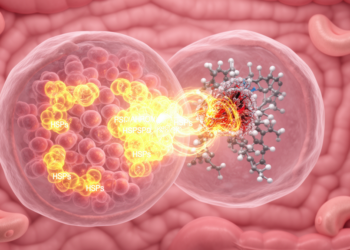
Pathogenic mycobacteria initially occupy a membrane-bound compartment, the Mycobacterium-containing vacuole, where the ESX-1 effector proteins EsxA and EsxB cause damage that can be repaired by the host. A new infection study in the amoeba Dictyostelium discoideum identifies a distinct role for the cell-envelope lipid phthiocerol dimycocerosate (PDIM): rather than initiating membrane lesions, PDIM appears to help damaged vacuoles progress beyond host repair and toward catastrophic rupture. Both systems were required for full intracellular virulence, but their effects occurred at different stages.

To distinguish these stages, the researchers combined bacterial mutants with host reporters for membrane injury, endosomal sorting complexes required for transport (ESCRT) recruitment, autophagy and the acquisition of cytosolic perilipin. Removing EsxA/EsxB strongly reduced the recruitment of ESCRT and autophagy reporters to the Mycobacterium-containing vacuole. These observations indicate that the ESX-1 effectors initiate repairable membrane lesions and make them visible to host membrane-repair pathways. The finding places EsxA activity upstream of the recruitment of at least two repair systems rather than showing that EsxA simply disrupts vacuole integrity.

PDIM-deficient bacteria behaved differently. They still recruited early damage reporters and ESCRT machinery, suggesting that PDIM loss did not prevent the initial formation of membrane damage. However, the mutants showed reduced autophagy-associated repair, failed to acquire cytosolic perilipin coating efficiently and remained largely confined within the vacuole. They also induced recruitment of lysenin, a reporter of sphingomyelin exposure, but progression from that lesion to autophagy engagement was strongly decreased. Together, the results support a two-step model in which EsxA starts the injury process and PDIM enables lesions to evade or overcome host repair, increasing the likelihood of rupture, cytosolic escape and dissemination.

The genetic experiments also separated membrane damage from the host response that normally contains it. Disrupting host autophagy restored cytosolic access and increased the intracellular growth of PDIM-deficient bacteria, indicating that these mutants remained viable but were held back by autophagy-dependent repair. The same sequence was observed in murine microglial BV-2 cells, where the requirement for EsxA and PDIM at successive stages was conserved beyond the amoeba model. Because the study used bacterial mutants, reporter systems and targeted disruption of a host repair pathway, it resolves a previously unclear division of labor: EsxA initiates vacuolar membrane injury, whereas PDIM promotes its escalation toward catastrophic rupture. The work does not directly demonstrate outcomes in human infection, but it identifies an experimentally supported mechanism by which mycobacterial proteins and lipids can promote escape from a repairable intracellular niche.

Subject of Research: Distinct roles of EsxA and PDIM in mycobacterial vacuole membrane damage and host repair

Article Title: PDIM drives the transition from repairable to catastrophic EsxA-mediated vacuole membrane damage during Mycobacterium marinum infection

Article References: Michard, C., Perret, A., Foulon, M., Koliwer-Brandl, H., Hilbi, H., & Soldati, T. (2026). PDIM drives the transition from repairable to catastrophic EsxA-mediated vacuole membrane damage during Mycobacterium marinum infection. PLOS Pathogens, 22(10), e1014721. https://doi.org/10.1371/journal.ppat.1014721

Image Credits: AI Generated

DOI: 10.1371/journal.ppat.1014721

Keywords: Mycobacterium marinum, PDIM, EsxA, ESX-1, vacuole rupture, host membrane repair, autophagy, ESCRT, cytosolic escape, mycobacterial infection, drives, transition

News Source: Kristina Jarvis. (October 21, 2026). PDIM and EsxA drive distinct stages of vacuole damage in mycobacteria. Scienmag.

Tags: autophagycytosolic escapedrivesESCRTESX-1EsxAhost membrane repairmycobacterial infectionMycobacterium marinumPDIMtransitionvacuole rupture
Share12Tweet7Share2ShareShareShare1

Related Posts

Research report: Progress in the Mechanism of Heat Shock Proteins in Gastric Cancer: From Biomarkers to Therapeutic Targets

Research report: Progress in the Mechanism of Heat Shock Proteins in Gastric Cancer: From Biomarkers to Therapeutic Targets

October 22, 2026
Nursing homes still deny buprenorphine after federal prescribing rules changed

Nursing homes still deny buprenorphine after federal prescribing rules changed

October 22, 2026

RXLR effectors of Phytophthora infestans: delivery, host targets and immune suppression

October 22, 2026

Single-fibre multi-omics links inflammation to altered myosin energetics in ICU weakness

October 22, 2026

POPULAR NEWS

  • Research report: Progress in the Mechanism of Heat Shock Proteins in Gastric Cancer: From Biomarkers to Therapeutic Targets

    Research report: Progress in the Mechanism of Heat Shock Proteins in Gastric Cancer: From Biomarkers to Therapeutic Targets

    29 shares
    Share 12 Tweet 7
  • Nursing homes still deny buprenorphine after federal prescribing rules changed

    29 shares
    Share 12 Tweet 7
  • RXLR effectors of Phytophthora infestans: delivery, host targets and immune suppression

    29 shares
    Share 12 Tweet 7
  • Single-fibre multi-omics links inflammation to altered myosin energetics in ICU weakness

    29 shares
    Share 12 Tweet 7

About

We bring you the latest biotechnology news from best research centers and universities around the world. Check our website.

Follow us

Recent News

Research report: Progress in the Mechanism of Heat Shock Proteins in Gastric Cancer: From Biomarkers to Therapeutic Targets

Nursing homes still deny buprenorphine after federal prescribing rules changed

RXLR effectors of Phytophthora infestans: delivery, host targets and immune suppression

Subscribe to Blog via Email

Enter your email address to subscribe to this blog and receive notifications of new posts by email.

Join 85 other subscribers
  • Contact Us

Bioengineer.org © Copyright 2023 All Rights Reserved.

Welcome Back!

Login to your account below

Forgotten Password?

Retrieve your password

Please enter your username or email address to reset your password.

Log In
No Result
View All Result
  • Homepages
    • Home Page 1
    • Home Page 2
  • News
  • National
  • Business
  • Health
  • Lifestyle
  • Science

Bioengineer.org © Copyright 2023 All Rights Reserved.